



கம்பராமாயணம் 1788 · அயோத்தியா 4.106
பாடல் · The poem
Tap a word to see its gloss in the commentary and where else it occurs.
பாட வேறுபாடு · Project Madurai reads
பொருள் · Meaning in Tamil
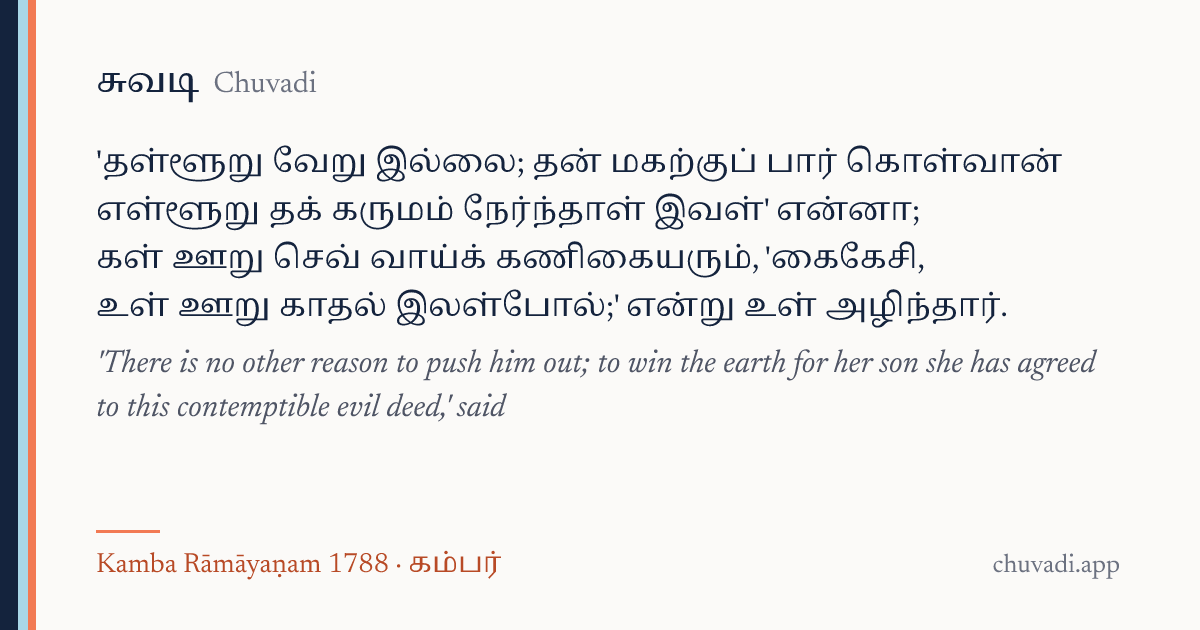
கள் ஊறு செவ்வாய்க் கணிகையரும் - எப்பொழுதும் குடிப்பதால் கள் ஊறுகின்ற சிவந்த வாயை உடைய பரத்தையரும்; “இவள் - இக்கைகேயி; தள்ளூறு வேறு இல்லை - தள்ளுவதற்கு வேறு காரணம் இல்லை; தன் மகற்குப் பார்கொள்வான் - தன் மகனாகிய பரதனுக்கு அரசு கொள்ள ஆசைப்பட்டு; எள்ளூறு தீக்கருமம் நேர்ந்தாள் - உலகரால் இகழப்படுகின்ற தீச்செயலைச் செய்ய உடன்பட்டாள்; என்னா - என்று சொல்லி; கைகேசி உள் ஊறு காதல் இலள் - மன்னன் மாட்டு அகம் பொருந்தி எழும் அன்புடையாள் இல்லை; என்று - ; உள் அழிந்தார் - மனம் கெட்டு வருந்தினர்.
அந்நகரக் கணிகையர் தம்மைப்போலவே கைகேயியும் தயரதனாகிய நாயகன்பால் அன்பின்றி மண்ணாசை யாகிய பொருட்பற்றினால் இத்தீய செயலைச் செய்திருக்கிறாள் என்றனர். கணவன் இறப்பைப் பொருட் படுத்தாது தன் மகனுக்கு அரசு பெறுவதில் குறியாய் இருத்தலின் அன்பினால் முயங்காது பொருளாசையால் முயங்கும் கணிகையார் நிலை கைகேயிமாட்டு உள்ளதாம். தீக்கருமம் - கணவன் இறக்கவும், மகன் காடு செல்லவும் செய்தலாகிய செயற்கு முன்னிலையாகிய வரம். இதுகாறும் இராமன்பாலும் தயரதன்பாலும் அன்புடையாள் ஆக இருந்தாள் ஆதலின் தள்ளுறுதற்கு அதாவது இராமனை அகற்றி விடுவதற்கு வேறு காரணம் இல்லை. தன் மகனாகிய பரதனுக்குப் பார் கொள்ள வேண்டியே என்று முடிவு கட்டினர். தள்ளுறு, எள்ளுறு என்பன எதுகை நோக்கி, தள்ளூறு, எள்ளூறு என நீண்டன. இலள் போல்' போல் உரையசை தள், உள்: முதனிலைத் தொழிற்பெயர்கள்.
ஆங்கிலம் · English translationAI
Translation
- 'There is no other reason to push him out; to win the earth for her son
- she has agreed to this contemptible evil deed,' said
- even the courtesans with red mouths that overflow with wine; 'Kaikēci
- has no love welling within her,' they said, and were heartbroken.
What the poem says
Even the courtesans of the city, whose trade is love for gain, judge Kaikēyi. She had loved Irāmaṉ and the king until now; there can be no reason to drive Irāmaṉ out except greed to win the kingdom for her son.
They conclude that, like themselves, she has no real love for her husband, only desire for wealth, since she cares nothing that he will die. The commentary notes the long vowels in taḷḷūṟu and eḷḷūṟu are lengthened for rhyme.