



கம்பராமாயணம் 1787 · அயோத்தியா 4.105
பாடல் · The poem
Tap a word to see its gloss in the commentary and where else it occurs.
பாட வேறுபாடு · Project Madurai reads
பொருள் · Meaning in Tamil
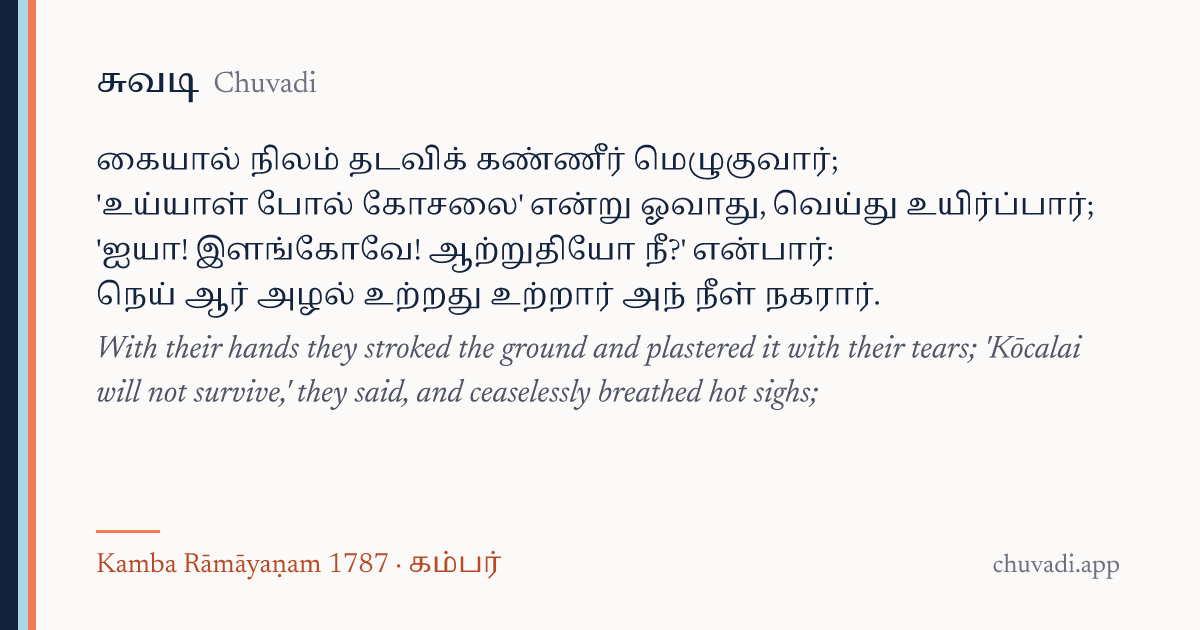
அந்நீள் நகரார் - அந்தப் பெரிய அயோத்தி நகரத்தில் உள்ளவர்கள்; கையால் நிலம் தடவிக் கண்ணீர் மெழுகுவார் - கையால் தரையைத் தடவித் தம் கண்ணீர் கொண்டு அதனை மெழுகுவாராயினர்; “கோசலை உய்யாள்” என்று - “இனிக் கோசலை பிழைக்கமாட்டாள்' என்று சொல்லி; ஓவாது வெய்து உயிர்ப்பார்- இடைவிடாமல் வெப்பப் பெருமூச்சு விடுவார்கள்; “ஐயா! இளங்கோவே! நீ ஆற்றுதியோ? - ஐயனே இளைய அரச குமாரனாகிய இலக்குவனே நீ இதனைப் பொறுத்துக் கொள்வாயோ; ' என்பார் -; நெய் ஆர் அழல் உற்றது உற்றார் - நெய் பொருந்திய நெருப்பில் விழுந்தால் ஒத்த தன்மையை அடைந்தார்கள்.
'போல்' என்பது உரையசை. 'ஆங்க உரையசை' ஒப்பில் போலியும் அப்பொருட்டாகும்' (தொல். சொல். 279, 280) என்னும் நூற்பாக்களைப் பார்த்து அறிக. இராமன்பால் அன்பிற்செறிந்தவன் ஆதலின் இராமனுக்கு வந்த தீங்கை இலக்குவன் பொறுத்துக்கொண்டு சும்மா இரான் என்பது மக்கள் கணிப்பு.
ஆங்கிலம் · English translationAI
Translation
- With their hands they stroked the ground and plastered it with their tears;
- 'Kōcalai will not survive,' they said, and ceaselessly breathed hot sighs;
- 'Sir! Young prince! Will you bear this?' they said;
- the people of that great city were like ghee fallen into fire.
What the poem says
The citizens sit on the ground and smear it with their tears, sighing that Kōcalai will not live through this.
They turn to Ilakkuvaṉ, the young prince, and ask whether he will put up with it, since they know his devotion to Irāmaṉ will not let him stay quiet in the face of such wrong. Their state is like ghee poured on fire.