



கம்பராமாயணம் 186 · பால 5.18
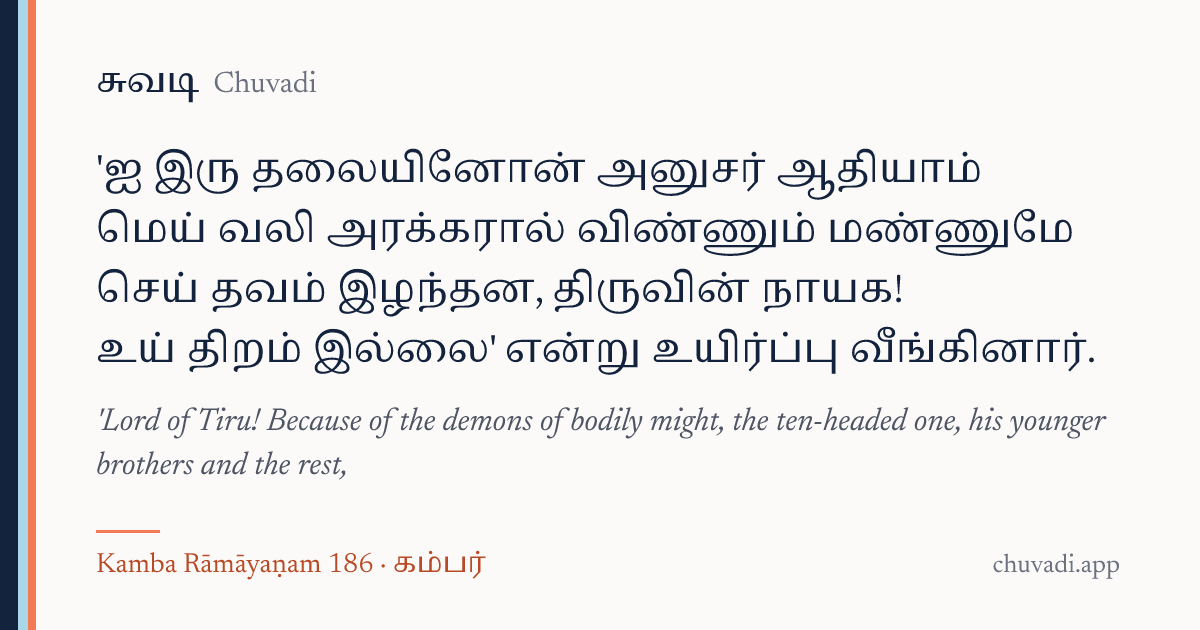
பாடல் · The poem
Tap a word to see its gloss in the commentary and where else it occurs.
பாட வேறுபாடு · Project Madurai reads
பொருள் · Meaning in Tamil
திருவின் நாயக - இலக்குமிக்கு நாயகனாகிய பெருமானே!; ஐயிரு தலையினோன் அனுசர் ஆதியாம் மெய்வலி அரக்கரால் - பத்துத்தலைகளை உடைய இராவணன் அவனுக்குப் பின் பிறந்தவர்கள் முதலான உடல்வலிமை மிக்க அரக்கர்களால், விண்ணும் மண்ணுமே செய்தவம் இழந்தன - விண்ணுலகமும், மண்ணுலகமும் தாம் செய்துள்ள புண்ணியங்களை இழந்து வருந்துகின்றன; உய்திறம் இல்லை என்று உயிர்ப்பு வீங்கினார் - அவை உய்வதற்கு வழியே இல்லை என்று கூறி, பெரு மூச்சு விட்டனர்.
ஐயிரு தலையினோன்: பத்துத்தலைகளை உடைய இராவணனது கொடுமையை நினைத்து அவனைக் குறிப்பிட்டனர். அனுசர்: தம்பியர் கும்பகருணன், கரன், திரிசிரன், தூடணன் ஆகியோராம். ‘விண்ணும் மண்ணும்’ இடவாகு பெயராய் விண்ணுளோரையும் மண்ணுளோரையும் குறித்தது. ‘செய்தவம் உய்திறம்’ என்பன வினைத்தொகைகள். ‘திருவின் நாயக’ என்றது அவ்விருவரும் ராமனாகவும், சீதையாகவும் அவதரிக்க வேண்டினர் என்பதை உணர்த்திநின்றது.
தவம் செய்ய இயலாமையைக் குறித்தது. செய்தவம் எதிர் காலப்பொருளது.
ஆங்கிலம் · English translationAI
Translation
- 'Lord of Tiru! Because of the demons of bodily might,
- the ten-headed one, his younger brothers and the rest,
- both heaven and earth have lost the fruit of their penance;
- there is no way to be saved,' and they heaved great sighs.
What the poem says
The gods lay out their complaint. Irāvaṇaṉ the ten-headed and his brothers, including Kumpakaruṇaṉ, Karaṉ and others, have robbed both heaven and earth of the rewards of their good deeds, and no one can even practise penance any more.
They address Viṣṇu as the husband of Lakṣmī. The commentary takes this as a hint that both of them are being asked to be born on earth, as Irāmaṉ and Cītai.