



கம்பராமாயணம் 1954 · அயோத்தியா 5.37
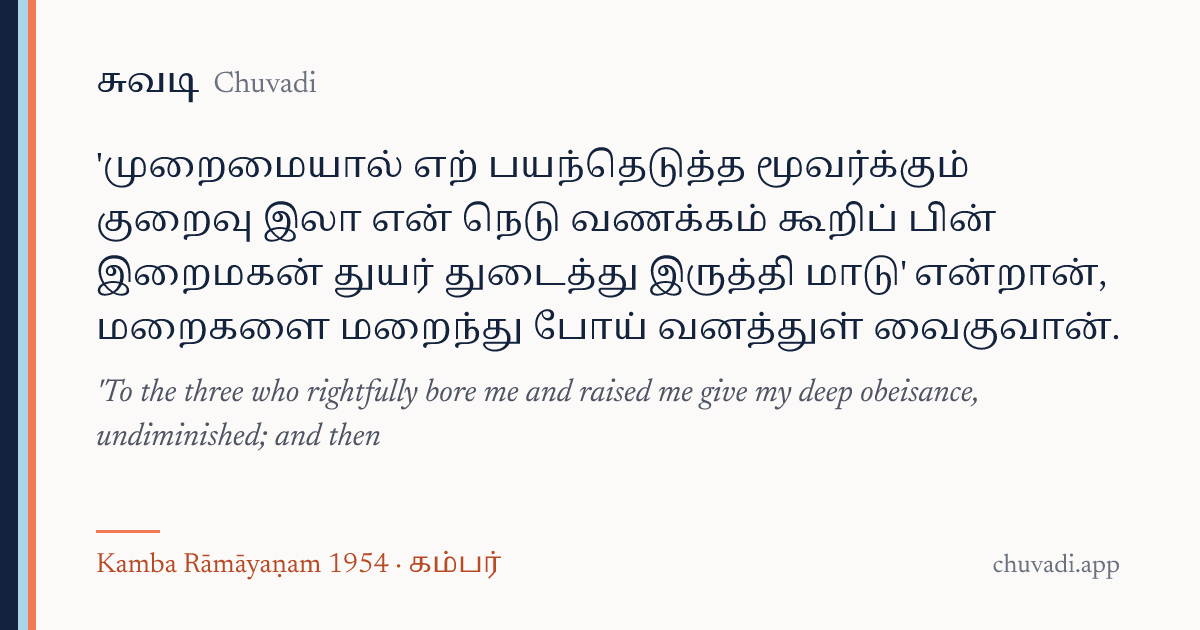
பாடல் · The poem
Tap a word to see its gloss in the commentary and where else it occurs.
பொருள் · Meaning in Tamil
மறைகளை மறைந்து போய் - வேதங்களுக்கு எட்டாமல் மறைந்து நின்று; வனத்துள் வைகுவான் - எடுத்த அவதாரத்திற்கேற்ப வனத்தின்கண் வசிப்பவனாகிய இராமன்; என் பயந்து எடுத்த மூவர்க்கும் - என்னைப் பெற்றெடுத்த தாயர்: மூவர்க்கும் - மூன்று பேர்க்கும்; முறைமையால் - முறைமைப்படி; குறைவு இலா - சிறிதும் குறைவுபடாத, என் நெடு வணக்கம் கூறி - என்னுடைய பெரிய வணக்கத்தைச் சொல்லி; பின் - பிறகு; இறை மகன் துயர் துடைத்து - தயரதனது துன்பத்தை நீக்கி; மாடு - அவன் பக்கல்; இருத்தி” - நீங்காது இருப்பாயாக; என்றான் -.
அன்னையர்க்குச் சொல்ல வேண்டியதைச் சுமந்திரன்பால் கூறினன். 'வேதம்...... தெரிலொ௮ஆதி தேவர்' (25/6). இப்படலத்து 26 ஆம் பாடலால் தூய மெய்யுணர்வால் அணுகும் காட்சியான் என்று சொல்லி, இங்கே “மறைகளை மறைந்து போய் வனத்துள் வைகுவான்' என்று முடித்துள்ள அருமைப்பாட்டை அறிந்து நுகர்க.
ஆங்கிலம் · English translationAI
Translation
- 'To the three who rightfully bore me and raised me
- give my deep obeisance, undiminished; and then
- wipe away the king's grief and stay at his side,' said
- he who, hidden even from the Vedas, was going to dwell in the forest.
What the poem says
Finally Irāmaṉ asks Cumantiraṉ to give his deepest respects to all three of his mothers, Kōcalai, Kaikēyi and Cumittirai, and then to stay by the king and comfort him. The poet calls Irāmaṉ the one hidden even from the Vedas, who now goes to live in the forest. A few verses earlier he was called the one reached only by pure awareness.