



கம்பராமாயணம் 1981 · அயோத்தியா 5.64
பாடல் · The poem
Tap a word to see its gloss in the commentary and where else it occurs.
பாட வேறுபாடு · Project Madurai reads
பொருள் · Meaning in Tamil
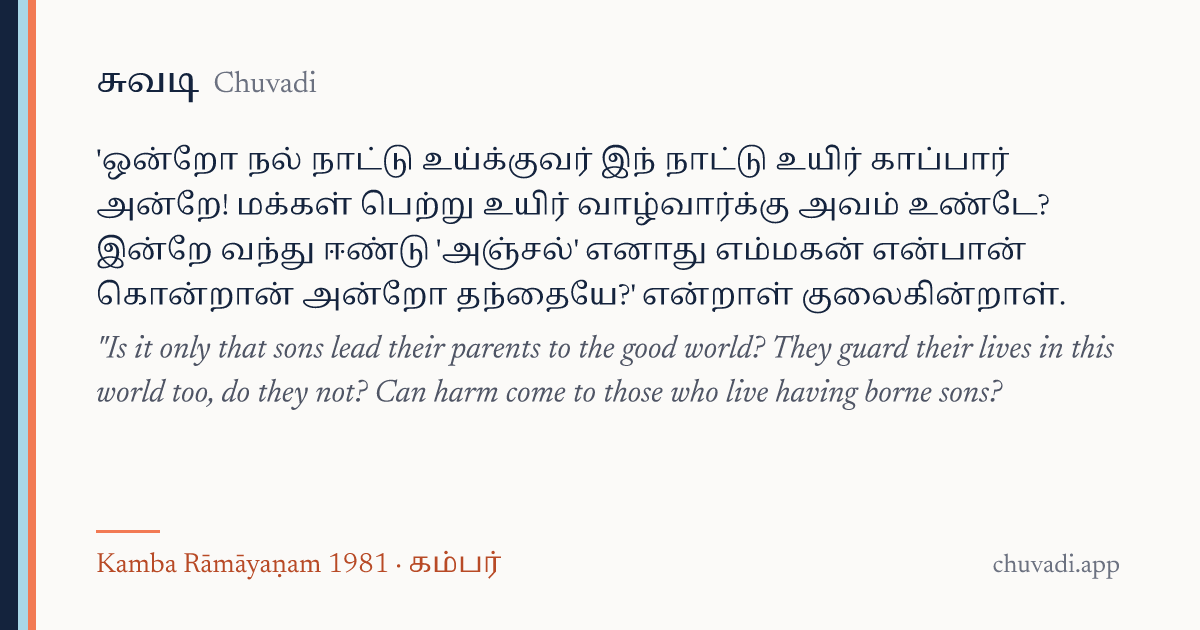
(மக்கள் தம்மைப் பெற்றோரை) “நல் நாட்டு உய்க்குவர் - மறுமையில் நரகத்தினின்று நீக்கி நற்கதியில் செலுத்துவர்; ஒன்றோ? - அம்மட்டோ; இந்நாட்டு உயிர் காப்பார் அன்றே - இந்த நாட்டிலே வாழும் பொழுதும் பெற்றோர் உயிரைப் பாதுகாப்பார்கள் அல்லவா (ஆகவே); மக்கள் பெற்று உயிர் வாழ்வார்க்கு அவம் உண்டே? - பிள்ளைகளைப் பெற்று உயிர் வாழ்கின்றவர்களுக்குத் தீங்கு உண்டாகுமா (அப்படி இருக்க); எம் மகன் என்பான் - எங்களுடைய மகனாகிய இராமன் என்பவன்; ஈண்டு - இவ்விடத்தில்; இன்றே வந்து - இன்றைக்கே வந்து; “அஞ்சல்” எனாது - பயப்படாதே என்று சொல்லி (உயிர் காத்து) ஆறுதல் அளிக்காமல்; தந்தையை - தன் தகப்பனை; கொன்றான் அன்றே?” - கொன்றுவிட்டான் அல்லவா; என்றாள் - என்று; குலைகின்றாள் - நடுங்குகிறாள்.
“இம்மை உலகத்து இசையொடும் விளங்கி, மறுமை உலகமும் மறுவின்று எய்துப, செறுநரும் விழையும் செயிர்தீர் காட்சிச் சிறுவர்ப் பயந்த செம்மலோர்” என்பதால் (அகநா. 66) புதல்வரைப் பெற்றோர்க்குப் புகழ், பாதுகாப்பு, மறுமையில் நற்கதி ஆகியவை உண்டு என்பது நூலோரும், உலகமும் துணிந்த துணிவு; அறிக. “மகன் என்பான்” என்ற தொடர் நயம் சிந்திக்கத் தக்கது.
ஆங்கிலம் · English translationAI
Translation
- "Is it only that sons lead their parents to the good world? They guard their lives in this world too,
- do they not? Can harm come to those who live having borne sons?
- Yet he who is called our son did not come here today and say 'Fear not';
- has he not killed his father?" she said, shaking.
What the poem says
Kōcalai voices the common belief, found in old poetry such as the Akanāṉūṟu, that sons bring their parents fame in this life, protection, and a good state after death. By that rule a father with a son like Irāmaṉ should have been safe.
Bitterly she turns the belief upside down: the one called our son did not come to reassure his father, and so in effect has killed him. The phrase he who is called our son carries the sting, since Irāmaṉ's absence was not his fault but the result of Kaikēyi's demand.