



கம்பராமாயணம் 1980 · அயோத்தியா 5.63
பாடல் · The poem
Tap a word to see its gloss in the commentary and where else it occurs.
பாட வேறுபாடு · Project Madurai reads
பொருள் · Meaning in Tamil
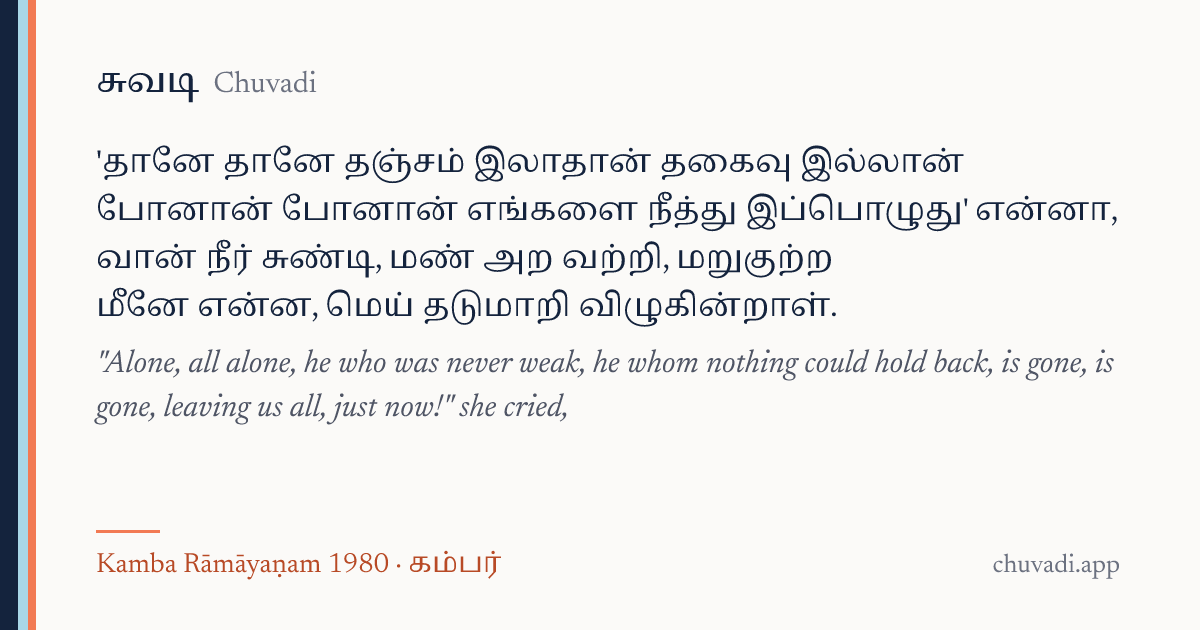
“தஞ்சம் இலாதான் - எளிமை இல்லாதவனும், தகைவு இல்லான் - எவற்றாலும் தடுக்க முடியாத பெரு வலிமை படைத்தவனும் ஆகிய தயரதன்; தானே! தானே - தனியாக; எங்களை நீத்து - எங்களை யெல்லாம் கைவிட்டு; இப்பொழுது போனான்! போனான்!” -; என்னா - என்று சொல்லி; வான் நீர் சுண்டி - மழை நீர் இல்லாமல் போய்; மண் அற வற்றி - மண்ணிலும் நீர் இல்லாமல் வறவி; மறுகுற்ற - கலங்குதல் அடைந்த; மீனே என்ன - மீனைப் போல (உயிர் ஊசலாட), மெய் தடுமாறி விழுகின்றாள் - உடம்பு நடுங்கி விழுகின்றாள்.
மேல் நீரும் கீழ் நீரும் இல்லாத பொழுது மீன் உயிர்வாழ இயலாமல் தடுமாறுதல் போல, தசரதனை இழந்தும், இராமனைப் பிரிந்தும் கோசலை தடுமாறினாள் என்றார். அடுக்குகள் அவலத்தின்கண் வந்தன. தஞ்சம் - பற்றுக்கோடு எனப் பொருள் கொண்டு, பற்றுக்கோடு அற்றவனாய்ப் போனான் எனக் கூறி, இராமனாகிய பற்றுக்கோட்டை இழந்தபடியால் என்பதும் ஒன்று. தஞ்சம் எண்மைப் பொருட்டாதலை “தஞ்சக் கிளவி எண்மைப் பொருட்டே” என்பதனால் (தொல். சொல். 268) அறிக. இஃது இடைச்சொல்.
ஆங்கிலம் · English translationAI
Translation
- "Alone, all alone, he who was never weak, he whom nothing could hold back,
- is gone, is gone, leaving us all, just now!" she cried,
- and like a fish floundering when the rain has dried up
- and the earth is drained of every drop, she trembled and fell.
What the poem says
Kōcalai cries out that Tacarataṉ, a king never feeble and never checked by any power, has gone off alone, abandoning his queens. The doubled words, alone, alone and gone, gone, are the poet's way of voicing a cry of grief.
The fish with no rain above and no water below pictures her double loss: her husband dead and her son Irāmaṉ sent away. The word for weakness can also be read as support, giving the sense that the king went away without his support, Irāmaṉ.