



கம்பராமாயணம் 2 · பால 1.2
பாடல் · The poem
Tap a word to see its gloss in the commentary and where else it occurs.
பொருள் · Meaning in Tamil
திருநீற்றைத் திருமேனி முழுதும் பூசிய; கடவுள் - சிவபிரானின்; நிறத்த - (வெள்ளை) நிறத்தை உடையவனாகிய, வான் - மேகங்கள்; ஆறு அணிந்து சென்று - போகும் வழிகளை அழகு செய்து கொண்டு போய்; ஆர்கலி - கடல்நீரை; மேய்ந்து - குடித்து; அகில் சேறு அணிந்த முலைத் திருமங்கைதன் - அகிற் குழம்பாகிய சேற்றினால் அழகு கொண்ட மார்பகத்தாளாகிய இலக்குமியால் ஏற்பட்ட; வீறு அணிந்தவன் மேனியின் - தனிச் சிறப்புடைய திருமாலின் (கரிய) நிறம் கொண்டு, மீண்டது - திரும்பின.
கடலை நோக்கிச் சென்றபோது நீறு பூசிய சிவன்போல வெண்ணிறம் கொண்டு, கடலில் நீர் கொண்டு திரும்பும்போது திருமகளால் சீர்பெறும் திருமால் போலக் கார்நிறம் கொண்டு மேகங்கள் இயங்கினவாம். கார்மேகத்தின் நிறத்துக்குத் திருமால் நிறம் உவமையாவதை 'ஊழிமுதல்வன் உருவம் போல் மெய் கறுத்து' என்ற நாச்சியார் வாக்காலும் அறியலாம். உவமைப் பொருத்தம் காண்க. பேராசை நிறைந்த தன்மை பற்றிக் கடலை ஆர்கலி (ஆர்: நிறைந்த, கலி: ஒலி) என்றார்; வினைத்தொகைப் புறத்துப் பிறந்த அன்மொழித் தொகை. வான் / ஆகுபெயர்.
ஆங்கிலம் · English translationAI
Translation
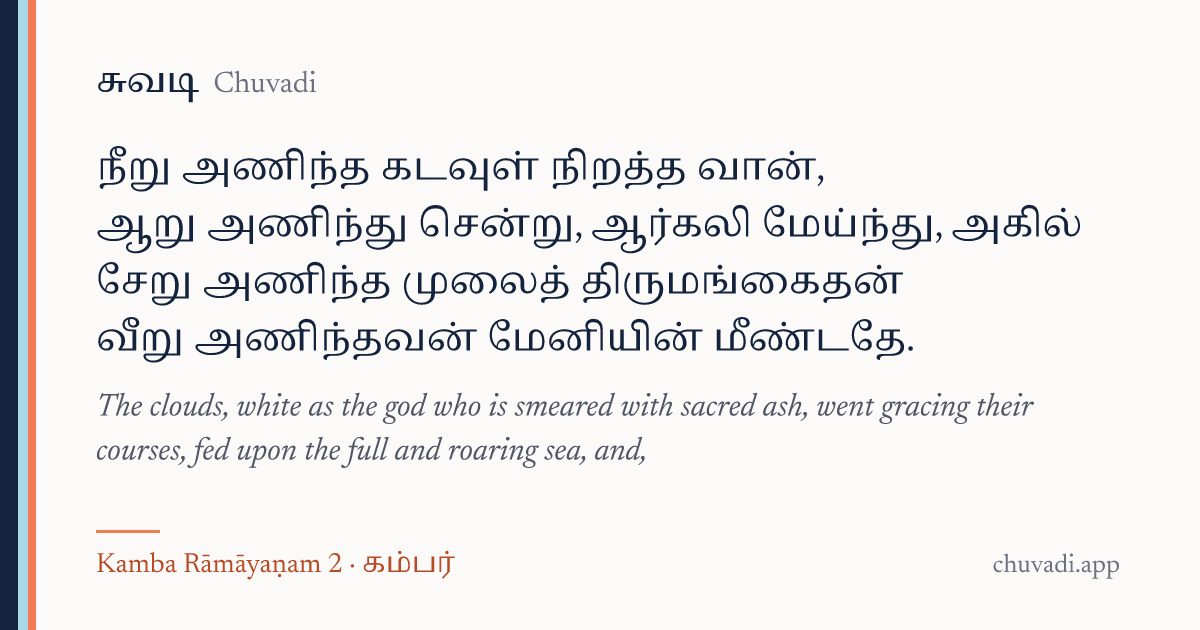
- The clouds, white as the god who is smeared with sacred ash,
- went gracing their courses, fed upon the full and roaring sea, and,
- dark as the one whom the goddess, her breasts adorned with aloe paste,
- graces with her splendour, they came back.
What the poem says
The poet describes the rain clouds that will feed the river. They set out to the sea white, like Śiva whose body is smeared with sacred ash. They drink the sea's water and return heavy and dark, the colour of Tirumāl (Vishnu), whose glory comes from Tirumakaḷ, the goddess Lakṣmī who dwells on his chest.
Comparing dark rain clouds to Vishnu's colour is an old convention; the poet Āṇṭāḷ also likens a cloud to the dark form of the Lord of the aeons. The sea is called ārkali, "the full and roaring one".