



கம்பராமாயணம் 20 · பால 1.20
பாடல் · The poem
Tap a word to see its gloss in the commentary and where else it occurs.
பொருள் · Meaning in Tamil
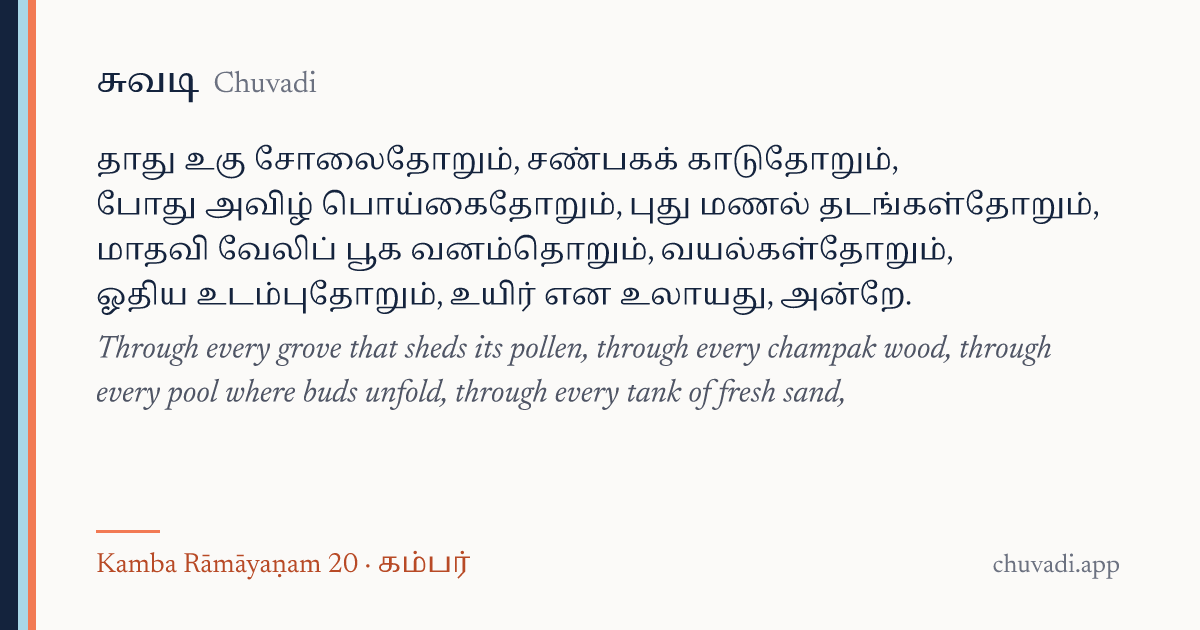
தாது உகு சோலைதோறும் - மகரந்தத்தூள் சிந்துகின்ற சோலை தோறும்; சண்பகக் காடுதோறும் - சண்பக மரம் செறிந்த காடுகள் தோறும்; போது அவிழ் பொய்கைதோறும் - முற்றிய அரும்புகள் முறுக்கு அவிழ்ந்து மலர்கின்ற பொய்கைதோறும்; புதுமணல் தடங்கள் தோறும் - புதுமணல் பரப்பையுடைய தடாகங்கள்தோறும்; மாதவி வேலிப் பூக வனம்தொறும் - குருக்கத்திக் கொடிபடர்ந்த வேலியையுடைய கமுகந் தோட்டந்தோறும்; வயல்கள்தோறும் - நெல்வயல்கள் தோறும் ஓதிய உடம்புதோறும் - உயிர் என - நான்கு கதிகளாக நூல்களால் ஓதப்பட்ட பல்வேறு உடம்புகள்தோறும் சென்று உலாவும் ஒரே உயிர்போல; உலாவியது - சரயுவின் வெள்ளம் பரவி உலாவிற்று.
சோலை முதலான பல்வேறு இடங்களிலும் ஒரே சரயுவின் நீர் உலாவியது. ஒரே ஆன்மா தான் பல உடல்களிலே உலவுகிறது என்ற தத்துவம் இங்கே கம்பரால் உவமையாகக் கொள்ளப்பட்டது. அயோத்தியா காண்டத்துக் கடவுள் வாழ்த்துப் பாடலில், "வான் நின்று இழிந்து வரம்பு இகந்த மா பூதத்தின் வைப்பு எங்கும் ஊனும் உயிரும் உணர்வுபோல் உள்ளும் புறத்தும் உளன் என்ப" (1313) என்று பரம்பொருள் தத்துவத்தைக் கம்பர் விளக்குவார் இங்கு அதனை இணைத்து உணரலாம்.
இப் படலத்தின் இறுதி மூன்று பாடல்களில் சமய, தத்துவக் கோட்பாடுகளை இயற்கைக் காட்சிகளுக்கு உவமையாக்கி விளக்கிய திறமும் காணாப்பொருளை உவமையாக்கும் திறமும் போற்றத் தக்கன.
ஆங்கிலம் · English translationAI
Translation
- Through every grove that sheds its pollen, through every champak wood,
- through every pool where buds unfold, through every tank of fresh sand,
- through every areca grove hedged with mādhavi creeper, through every field,
- like the one life within every body the scriptures tell of, it moved.
What the poem says
The Chapter of the River closes with the Sarayū flowing everywhere: through groves, champak woods, lotus pools, tanks, areca gardens and rice fields. The poet compares it to the life or soul that moves through every kind of body the scriptures describe, one life in many forms.
This is the last of three verses in which the poet uses religious and philosophical ideas to illuminate natural scenes, a striking reversal of the usual practice of explaining the unseen through the seen. At the start of the next book, the Ayodhyā Kāṇḍam, Kampaṉ describes God in similar terms, present within and without all things as body, life and awareness.