



கம்பராமாயணம் 2053 · அயோத்தியா 6.50
பாடல் · The poem
Tap a word to see its gloss in the commentary and where else it occurs.
பொருள் · Meaning in Tamil
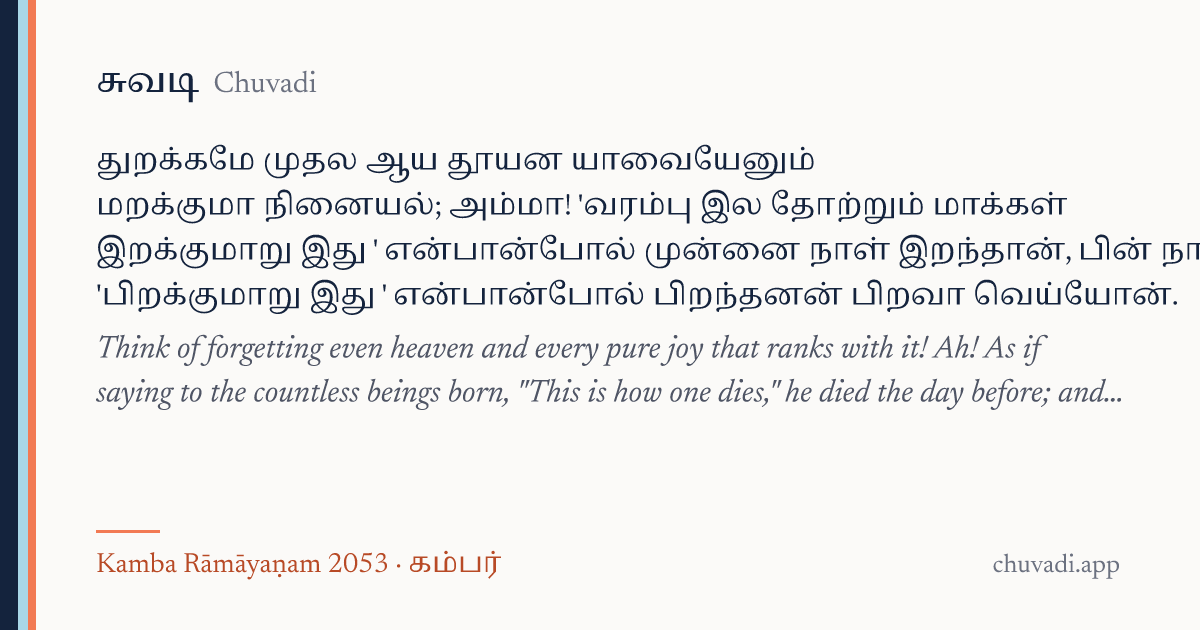
பிறவா வெய்யோன் - என்றும் பிறவாது ஒருபடித்தாகவே உள்ள சூரியன்; வரம்பு இல தோற்றும் மாக்கள் - எண்ணிலவாய் உலகில் தோன்றும் மக்கள்; இறக்குமாறு இது என்பான்போல் முன்னை நாள் இறந்தான் - இறப்பது இவ்வாறு என்று அவர்களுக்கு எடுத்துக் கூறுவானைப் போல முதல் நாள் மாலை அத்தமித்தான்; பின் நாள் - மறுநாள் (காலையில்); பிறக்குமாறு இது என்பான் போல் பிறந்தனன் - பிறப்பது இவ்வாறு என்று எடுத்துக் கூறுவான் போலத் தோன்றினான் (இறப்பும் பிறப்பும் மாறிமாறி வருதலை உணர்வாறி; துறக்கமே முதல ஆய தூயன யாவையேனும் - சுவர்க்காதிபோகங்களாகச் சொல்லப்படுகின்ற தூயனவாகிய மேலான எவையும்; (நிலையற்றவை என்பது உணரப்படுதலின்) மறக்குமா நினையல் அம்மா! - மறக்கும்படி நினையல் வேண்டும்படியாயினவாறு என்னே!
இறப்பும் பிறப்பும் மாறி மாறி வருதலைச் சூரியனால் உணர்ந்த மாக்கள் எவ்வளவு உயர்ந்த சுவர்க்கம் முதலியனவும் நிலையிலாதவை என உணர்த்தலின் மறப்பாராவர் என்பதாம். அம்மா! வியப்பிடைச் சொல். இதனால் மக்கள் உண்மை உணர்ந்து இறப்பு பிறப்பு அற்று என்றும் மீளா உலகம் ஆகிய முத்தியையே வேண்டுதற்குச் சூரியன்
ஆங்கிலம் · English translationAI
Translation
- Think of forgetting even heaven and every pure joy that ranks with it! Ah! As if saying
- to the countless beings born, "This is how one dies," he died the day before; and the next day,
- as if saying, "This is how one is born,"
- the sun, who is never born, was born.
What the poem says
Dawn comes again. The sun, which in truth never dies or is born, set the evening before and rises in the morning, as though demonstrating to all creatures what death and birth are like.
Seeing birth and death follow each other endlessly, people should realise that even heaven and its pleasures are impermanent and set them aside, longing instead for liberation, the state from which there is no return. The exclamation ah! expresses the poet's wonder.