



கம்பராமாயணம் 219 · பால 5.51
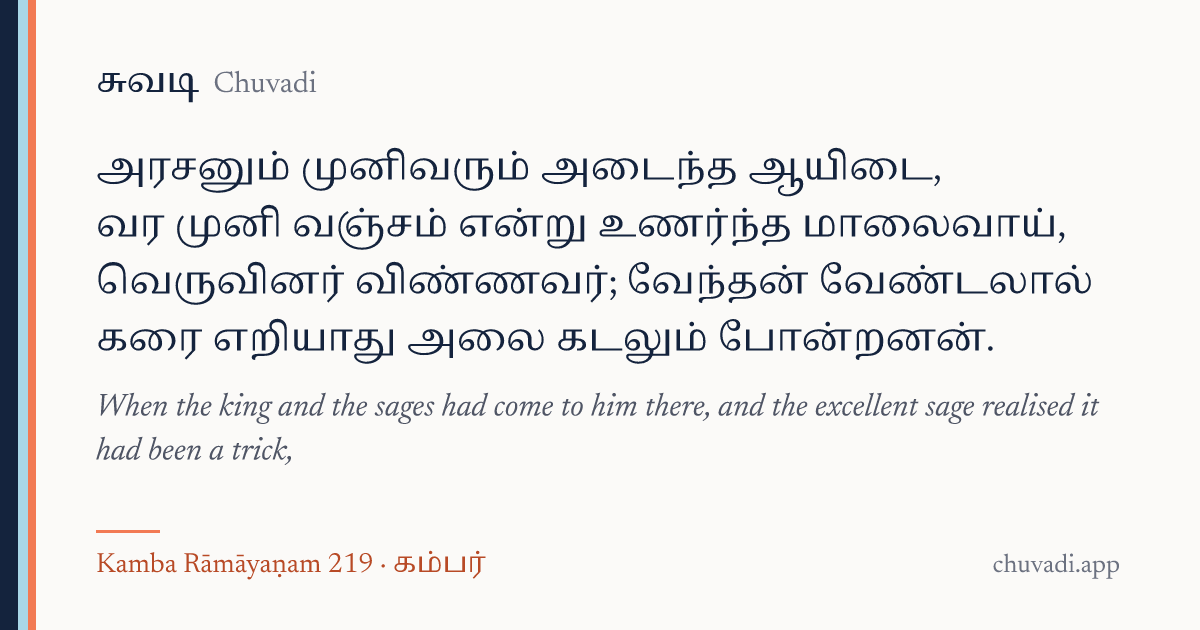
பாடல் · The poem
Tap a word to see its gloss in the commentary and where else it occurs.
பொருள் · Meaning in Tamil
அரசனும் முனிவரும் - உரோமபத மன்னனும் அவனைச் சூழ்ந்து வந்த முனிவர்களும்; அடைந்த ஆயிடை - தன்னை வந்தடைந்த காலத்தில்; வரமுனி - சிறந்த முனிவனாகிய கலைக்கோட்டு முனிவன்; வஞ்சம் என்று உணர்ந்த மாலைவாய் - தன்னை இங்கு அழைத்து வந்தது ‘வஞ்சகச் செயல்’ என்று தெளிந்த போதிலே; விண்ணவர் வெருவினர் - தேவர்கள் அஞ்சி நடுங்கினர்; வேந்தன் வேண்டலால் - அரசன் வேண்டிக் கொண்டதால்; கரை எறியாது அலை கடலும் போன்றனன் - கரையை மோதி அழித்துவிடாது அலைக்கும் கடல் போல அந்த முனிவன் கட்டுப்பட்டிருந்தான்.
ஆயிடை: அப்போது. ‘வரமுனி’ வரம் - முனி (வரம் தருமுனிவன்). உணர்ந்த: தெளிந்த (ஆய்ந்து தெளிந்த). மாலைவாய்: வாய் ‘ஏழாம்’ வேற்றுமை உருபு. ‘விண்ணவர் வெருவினர்’ என்ன நேருமோ என்று தேவர்கள் அஞ்சினர். கரை கடவாத கடல் போல, முனிவன் வஞ்சகம் என உணர்ந்தும் நிலை கடவாது பொறுமையுடன் இருந்தான். அலைகடல்: வினைத்தொகை.
ஆங்கிலம் · English translationAI
Translation
- When the king and the sages had come to him there,
- and the excellent sage realised it had been a trick,
- the gods of heaven trembled; but because the king entreated him,
- he was like the ocean whose waves do not break over the shore.
What the poem says
When the sage realises that he has been tricked into leaving his hermitage, the gods tremble, fearing what his anger might do.
But the king pleads with him, and the sage holds his anger in check, like an ocean that heaves and rolls but never breaks its shore.