



கம்பராமாயணம் 220 · பால 5.52
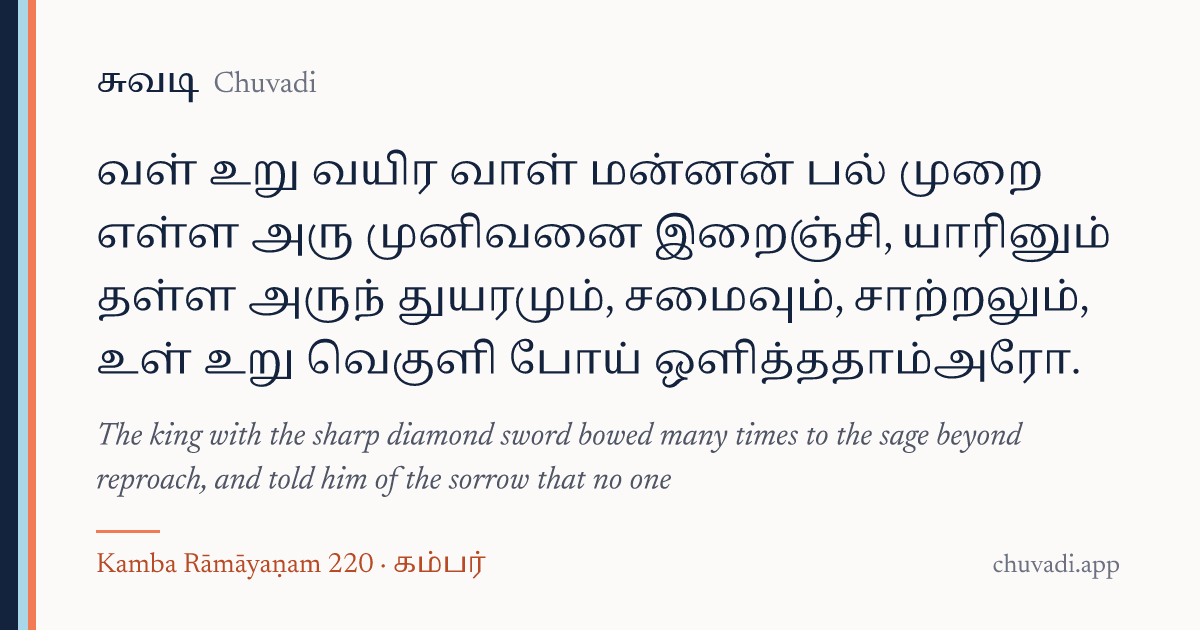
பாடல் · The poem
Tap a word to see its gloss in the commentary and where else it occurs.
பொருள் · Meaning in Tamil
வள் உறு வயிரவாள் மன்னன் - கூர்மை பொருந்திய வாளை உடைய அம்மன்னன்; பன்முறை எள்ளரு முனிவனை இறைஞ்சி - பலமுறையும் இகழ்தற்கரிய அந்த முனிவனை வணங்கி, யாரினும் தள்ள அரும் துயரமும் - யாராலும் போக்கமுடியாத (மழை இன்மையாகிய) துன்பத்தையும்; சமைவும் - (அத்தகைய துன்பம் முனிவன் வருகையால்) நீங்கியதனையும், சாற்றலும் - விரிவாகச் சொல்லவும்; உள்உறு வெகுளி போய் ஒளித்தது - (அம் முனிவனது) உள்ளத்தே உண்டான கோபம் நீங்கி மறைந்தது.
வள் உறு: கூர்மை பொருந்திய. யாராலும் இகழ்ந்து பேசமுடியாத நற்குணங்கள் அமைந்தவன் என்பதால் “எள்ளரு முனி” என்றார். எவராலும் போக்கமுடியாத துன்பத்தைத் “தள்ளருதுயர்” என்றார். சமைவு: நிகழ்ந்தது என்னும் பொருள் உடையது. நாட்டில் மழை இல்லாமையால் நேர்ந்த பஞ்சத் துயரையும் அதை நீக்க எவராலும் இயலாததையும் அம்முனிவனை அங்கு வருமாறு மேற்கொண்ட முயற்சியையும் அதனால் மழைபெய்ததான அப்போது நடந்ததையும் மன்னன் கூறினான் என்பது தோன்ற “சமைவும்” என்றார். உள்ளத்தே ஊன்றிய சினத்தை உள் உறு வெகுளி என்றார். சாற்றல்: விரித்துரைத்தல். ஆம், அரோ: அசைகள்.
ஆங்கிலம் · English translationAI
Translation
- The king with the sharp diamond sword bowed many times
- to the sage beyond reproach, and told him of the sorrow that no one
- could remove, and of how it had been resolved;
- and the anger lodged within the sage's heart vanished and hid itself.
What the poem says
Urōmapataṉ bows again and again to the sage. He explains the drought that no one could end, the plan to bring him there and the rain his coming has brought.
Understanding that the deception was meant to save a suffering kingdom, the sage lets his anger go completely.