



கம்பராமாயணம் 2227 · அயோத்தியா 9.50
பாடல் · The poem
Tap a word to see its gloss in the commentary and where else it occurs.
பாட வேறுபாடு · Project Madurai reads
பொருள் · Meaning in Tamil
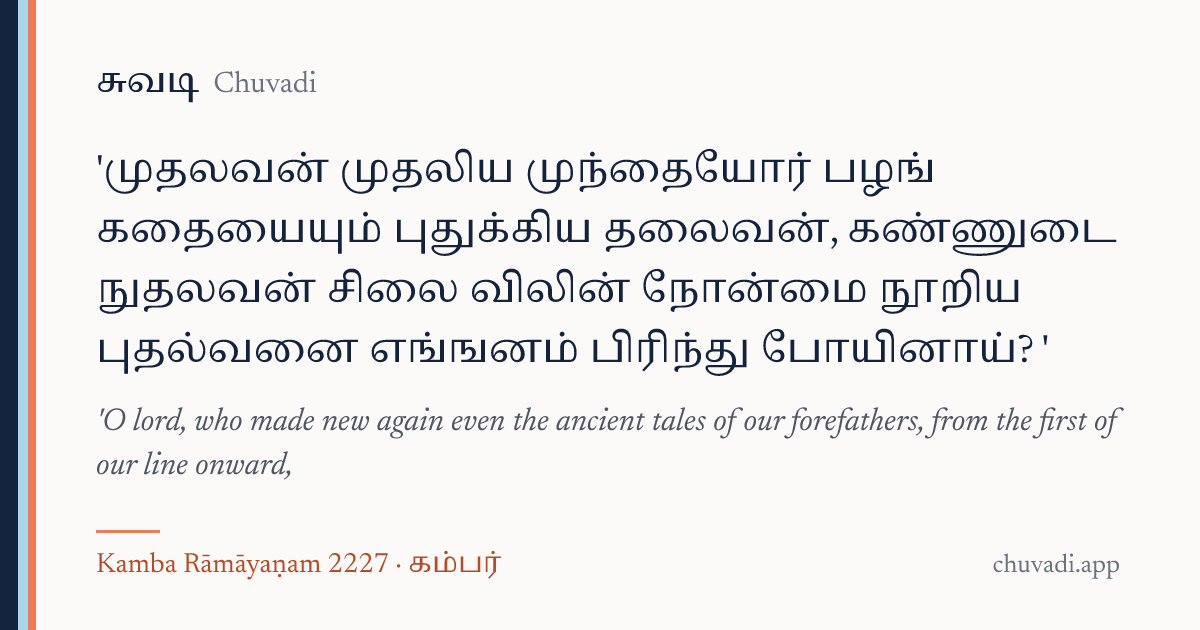
“முதலவன் முதலிய - சூரிய குலத்து முன்னோனாகிய ஆதித்தன், மனு, மாந்தாதா, சிபி, முசுகுந்தன் முதலிய, முந்தையோர் - முற்பட்ட அரசர்களது; பழங்கதையையும் - நெடுநாட்பட்ட வீர வரலாறுகளையும்; புதுக்கிய - உன் வீரச் செயல்களால் உண்மை என்று உலகறியச்செய்த; தலைவன்! - தலைவனாகிய தயரதனே!; நுதல்கண் உடையவன் - நெற்றியிற்கண் உடையவனாகிய சிவபிரானது; சிலைவிலின் - மேருமலையாகிய வில்லின்; நோன்மை - வலிமையை; நூறிய - பொடியாகும்படி செய்த; புதல்வனை - பெருவீரனாகிய இராமனை; எங்ஙனம் பிரிந்து போயினாய் - எவ்வாறு பிரிந்து சென்றாய்?
முன்னோர் கதைகளைத் தம் காலத்தவர் நம்ப வேண்டுதற்குத் தாமும் வீரச்செயல்களைச் செய்து மெய்ப்பித்தல் வேண்டும். அதனால், இவ்வீர வரலாறுகள் இக்குலத்தினர்க்கு இயல்பு, இயலாததன்று என்று உலகம் உணருமாதலின் 'புதுக்கிய' என்றார். சிலை - மலை; இங்கு மேருமலை; 'இமயம்' எனலும் ஒன்றே. “இமயவில் வாங்கிய ஈர்ஞ்சடை அந்தணன்” (கலித. 38) என்றதும் காண்க. இனி, வில் செய்தற்குரிய சிலை என்னும் மரத்தினாற் செய்யப்பட்ட வில் எனப் பொருள் உரைத்தல் சிவன் வில்லுக்கு ஏற்புடைத்தாகாமை அறிக. 'தலைவன்' நெஞ்சிற்கு நெருக்கமாதலின் அண்மைவிளி, இயல்பாய் நின்றது. இராமனிடத்திற் பெருங்காதல் உடைய தயரதன், மேலும் அவன் வீரச் செயல்கள் கண்டு அவனிடத்திற் கவரப் பெற்றவன். அவனை எங்ஙனம் பிரிந்து செல்ல வன்மை பெற்றான் என்ற பரதன் புலம்பல் 'இராமனைப் பிரிந்ததனால் தயரதன் இறந்தான்' என்னும் கருத்துக்கும் அடி அமைத்து நிற்றல் காண்க.
ஆங்கிலம் · English translationAI
Translation
- 'O lord, who made new again even the ancient tales
- of our forefathers, from the first of our line onward,
- how could you part from the son who broke the might
- of the mountain bow of him who has an eye in his forehead, and go away?'
What the poem says
Tacarataṉ's own heroic deeds proved that the old legends of the Solar dynasty's founders were true, so that they seemed new again.
How, Paratan asks, could such a father bear to leave the son who broke Civaṉ's (Śiva's) mighty bow, the feat by which Irāmaṉ won Cītai? Paratan still does not know Irāmaṉ has been exiled. Unknowingly, his question points to the truth: the king died of parting from Irāmaṉ.