



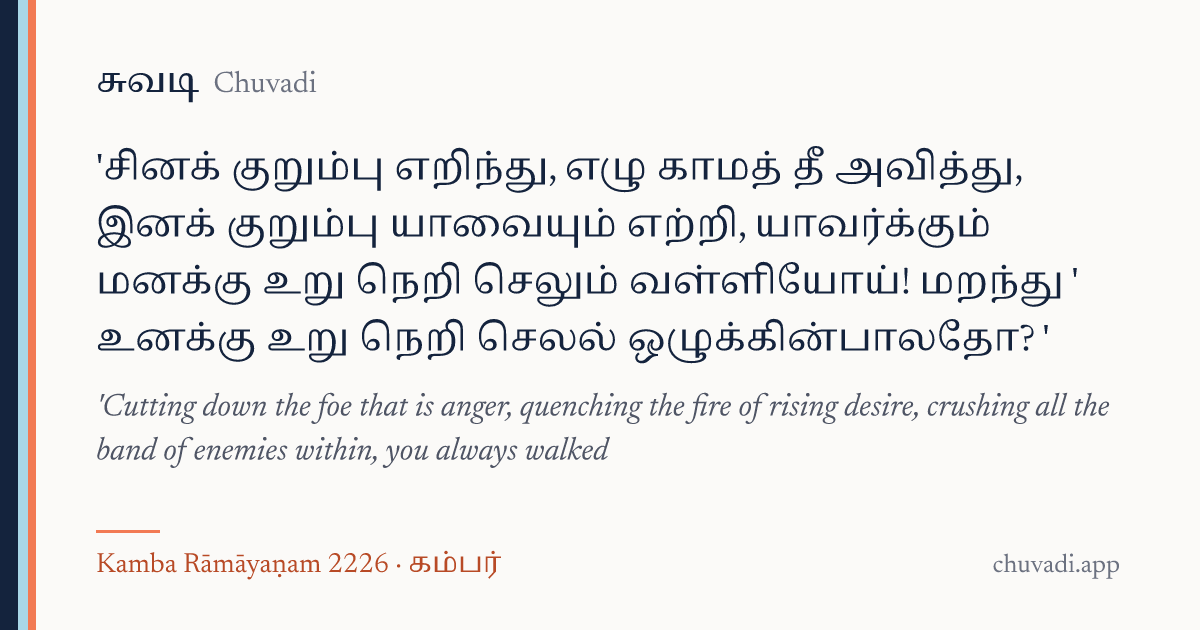
கம்பராமாயணம் 2226 · அயோத்தியா 9.49
பாடல் · The poem
Tap a word to see its gloss in the commentary and where else it occurs.
பாட வேறுபாடு · Project Madurai reads
பொருள் · Meaning in Tamil
“சினக்குறும்பு எறிந்து - வெகுளியாகிய பகையை வெட்டி அழித்து; எழு காமத் தீ அவித்து - மனத்தில் தோன்றுகின்ற காமம் ஆகிய நெருப்பை அணைத்து; இனக் குறும்பு யாவையும் எற்றி - கூட்டமாக உள்ள குற்றப் பகைகளாகிய உலோபம் முதலிய அனைத்தையும் அடித்துப் போட்டு; யாவர்க்கும் - எல்லா மக்களுடைய மனத்துக்கும்; உறுநெறி - ஏற்ற வழியிலே; செலும் வள்ளியோய்! - நடக்கின்ற வள்ளலே; மறந்து - (தற்போது அதனை) மறந்து; உனக்கு உறு நெறி செலல் - உனக்கு ஏற்ற வழியில் நடப்பது; ஒழுக்கின்பாலதோ? - நல்லொழுக்கத்திற் சேர்ந்ததாகுமா?
திரும்பத் திரும்பத் தொல்லை கொடுக்கும் பகையைக் 'குறும்பு' என்பது வழக்கம். காமம், வெகுளி, கடும்பற்றுள்ளம், மானம், உவகை, மதம் எனப்பட்ட குற்றங்கள் ஆறனுள் காமமும், வெகுளியும், 'சினக்குறும்பு' “காமத்தீ' என முன்னடியிற் கூறப் பெறுதலின் 'இனக்குறும்பு' என்பது ஏனைய நான்கையும் குறிக்கும். அகத்தே மறைந்திருந்து தொல்லை கொடுப்பன ஆதலின் “குறும்பு எனப்பெற்றன. பிறர்க்கு நன்மை செய்துவந்த தயரதன் இறந்து தனக்கு நன்மை தேடியவனாக ஆனான் என்பது பரதன் புலம்பல் - “மன்னுயிர்க்கு உறுவதே செய்து வைகினேன், என்னுயிர்க்கு உறுவதும் செய்ய எண்ணினேன்” (1327) என்ற தயரதன் கூற்றை ஈண்டுக் கருதுக. துறந்து செய்வதாகத் தயரதன் கூறியதை இறந்து செய்தானாகப் பரதன் புலம்பினன் என அறிக. “ஓ வினாப்பொருட்டு.
ஆங்கிலம் · English translationAI
Translation
- 'Cutting down the foe that is anger, quenching the fire of rising desire,
- crushing all the band of enemies within, you always walked
- the path that pleased the hearts of all, O generous one! To forget that now
- and walk the path that suits yourself: is that right conduct?'
What the poem says
Paratan goes on reproaching his father. All his life Tacarataṉ conquered the inner enemies, anger, lust and the other four of the six vices, and lived for the good of others.
Now, by dying, he has for once done what suited himself. The commentary recalls Tacarataṉ's earlier words: he had served the world and now meant to do what was good for his own soul by retiring. He meant renunciation; Paratan finds that he has done it by death.