



கம்பராமாயணம் 2225 · அயோத்தியா 9.48
பாடல் · The poem
Tap a word to see its gloss in the commentary and where else it occurs.
பொருள் · Meaning in Tamil
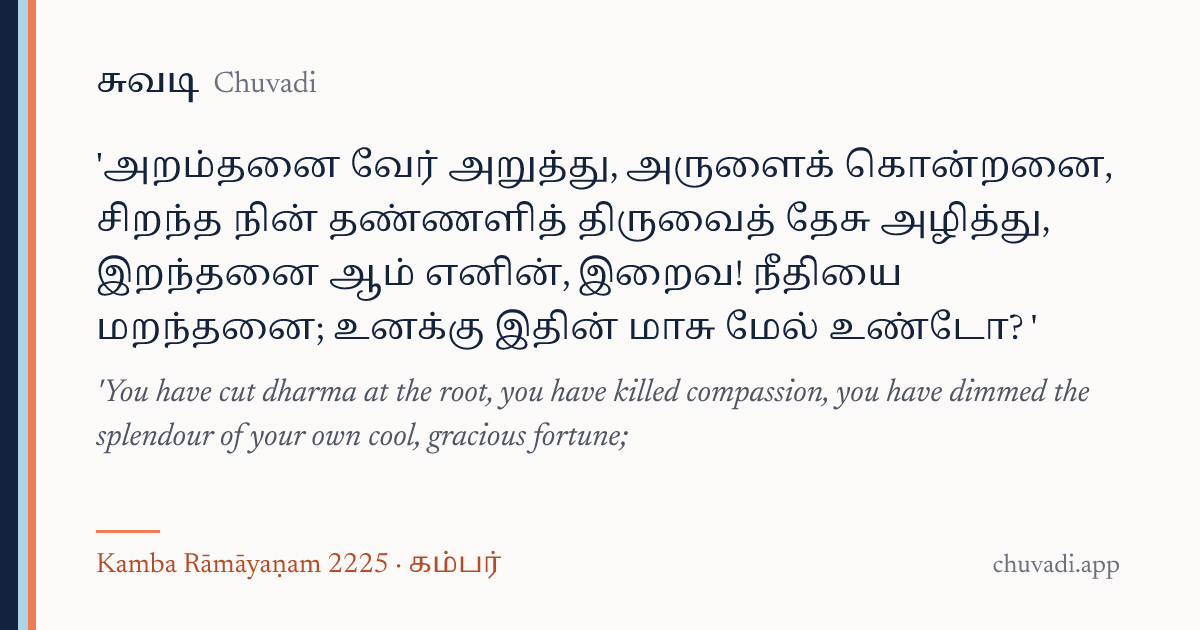
“இறைவ! - தயரத மன்னனே!; அறம்தனை வேர் அறுத்து - தருமத்தை வேரோடே அழித்து; அருளைக் கொன்றனை - அருளை உயிர் போக்கி; சிறந்த நின் தண் அளித் திருவைத் தேசு அழித்து - உயர்ந்து சிறந்த நின் குளிர்ந்த கருணைச் செல்வத்தை ஒளிகெடுத்து; இறந்தனை ஆம் எனின் - இறந்து பட்டாய் என்றால்; நீதியை மறந்தனை - நீதியை மறந்துவிட்டாய் ஆனாய்; உனக்கு -; இதின் - இதனைக் காட்டிலும்; மாசு - குற்றம்; மேல் உண்டோ - மேம்பட்டதுண்டோ?”
தயரதன் இறந்தபடியால் உலகில் அறம்காப்பார் இல்லாமையால் அறம் கெட்டது. தயரதன் இறப்பே அறம், அருள், ஒளி இவற்றை உலகில் நில்லாதபடி செய்துவிட்டது என்பது இதனாற் கூறியது. எனவே, தயரதன் ஆட்சிச் சிறப்புப் புலப்படுகிறது. “திருவுடை மன்னரைக் காணில் திருமாலைக் கண்டேனே” (இவ்வியப்-327/) என்பராதலின் அரசனை “இறைவ!” என்றான். வள்ளுவரும் “இறைமாட்சி” என்றது காண்க. தயரதன் இறவாதிருந்து இவற்றையெல்லாம் பழித்தாற்போலப் புகழையே கூறினானாம்.
ஆங்கிலம் · English translationAI
Translation
- 'You have cut dharma at the root, you have killed compassion,
- you have dimmed the splendour of your own cool, gracious fortune;
- if you have died, my lord, you have forgotten
- justice: what greater stain than this could there be for you?'
What the poem says
Paratan's lament, addressed to his dead father, begins. With Tacarataṉ gone, dharma, compassion and kindly rule have gone from the world, since he was their protector.
By dying, Paratan says, the king has done the one unjust thing of his life. The reproach is really praise: it shows what his reign meant. Paratan calls him iṟaivaṉ, "lord" or "god", in the old belief that a righteous king is a form of Viṣṇu.