



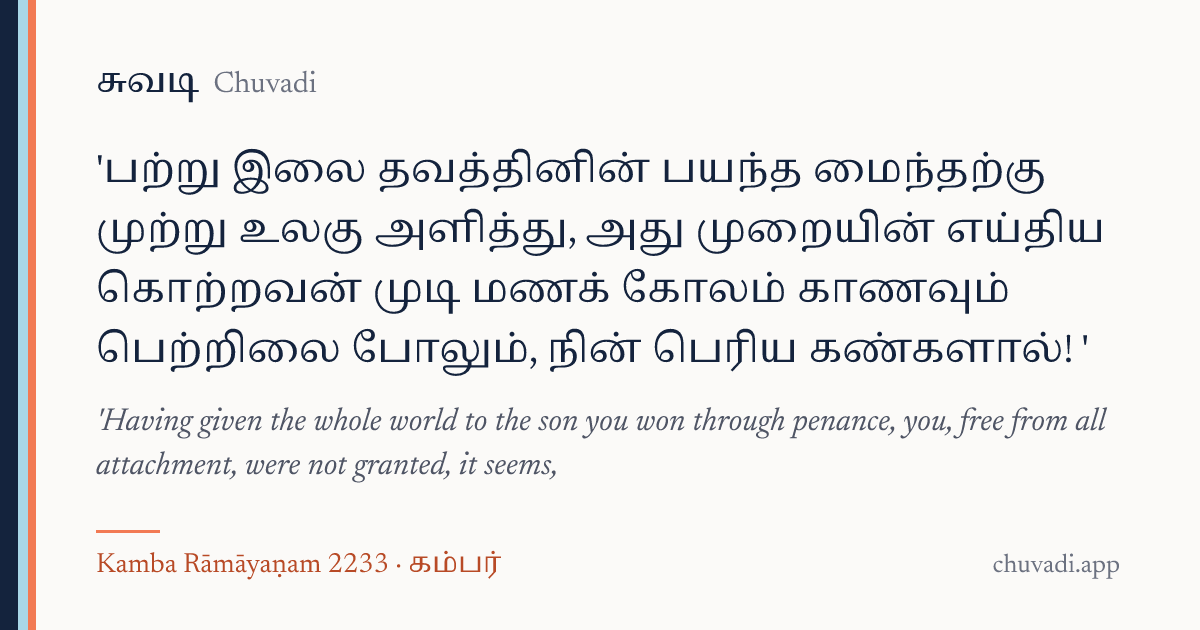
கம்பராமாயணம் 2233 · அயோத்தியா 9.56
பாடல் · The poem
Tap a word to see its gloss in the commentary and where else it occurs.
பாட வேறுபாடு · Project Madurai reads
பொருள் · Meaning in Tamil
பற்று இலை - ஆசை யற்றவன் (நீ) (பந்த பாசங்களை விலகியவன்); தவத்தினின் பயந்த மைந்தற்கு - தவம் முயன்று அரிதின் பெற்ற மைந்தனாகிய இராமனுக்கு; உலகு முற்று அளித்து - உலகம் முழுவதையும் கொடுத்து; அது - அவ்வுலகை; முறையின் எய்திய - அரச பரம்பரை முறைப்படி அடைந்த; கொற்றவன் - இராமனது; முடி மணக் கோலம் - முடிசூட்டுவிழாக் காட்சி அழகை; நின் பெரிய கண்களால் - உனது அகன்ற கண்களால்; காணவும் பெற்றிலை போலும் - கண்டு மகிழும் பேற்றையும் அடையாமல் விட்டாய் போலும்.
பற்றற்றவனாய் விண்ணுலகு சென்றான் தயரதன் என்பதை இதனாற் குறித்தான். இனி, 'பற்றிலை தவத்தினின்' என்று இணைத்து, தயரத மன்னனே! நீ தவத்தினில் பற்றுள்ளவனாயிருந்திருந்தால் இறவாமலே இராமனுக்கு முடி சூட்டு விழாச் செய்து, அக்காட்சி கண்டு மகிழ்ந்து, பின்னர்த் தவம் செய்யச் சென்றிருக்கலாம். அவ்வாறு தவத்திற் பற்றில்லாதவனாயிருந்ததால் இறந்து இராமன் முடிசூட வேண்டியதாக அம்முடிசூட்டு விழாக் காணும் பேறு வக்கம் பப்பு ஆய்விட்டாயே என்று புலம்பினன் என்க.
ஆங்கிலம் · English translationAI
Translation
- 'Having given the whole world to the son you won through penance,
- you, free from all attachment, were not granted, it seems,
- even to see with your own wide eyes
- the festive crowning of that king who came to it by right!'
What the poem says
Paratan still believes Irāmaṉ has been made king. He grieves that his father, after giving the whole world to the son born to him after long penance, did not live to see Irāmaṉ crowned.
He calls the king "free from attachment". The commentary also reads the line another way: had Tacarataṉ held fast to his plan of retiring into penance, he could have watched the coronation and then gone to the forest, instead of dying first.