



கம்பராமாயணம் 2234 · அயோத்தியா 9.57
பாடல் · The poem
Tap a word to see its gloss in the commentary and where else it occurs.
பாட வேறுபாடு · Project Madurai reads
பொருள் · Meaning in Tamil
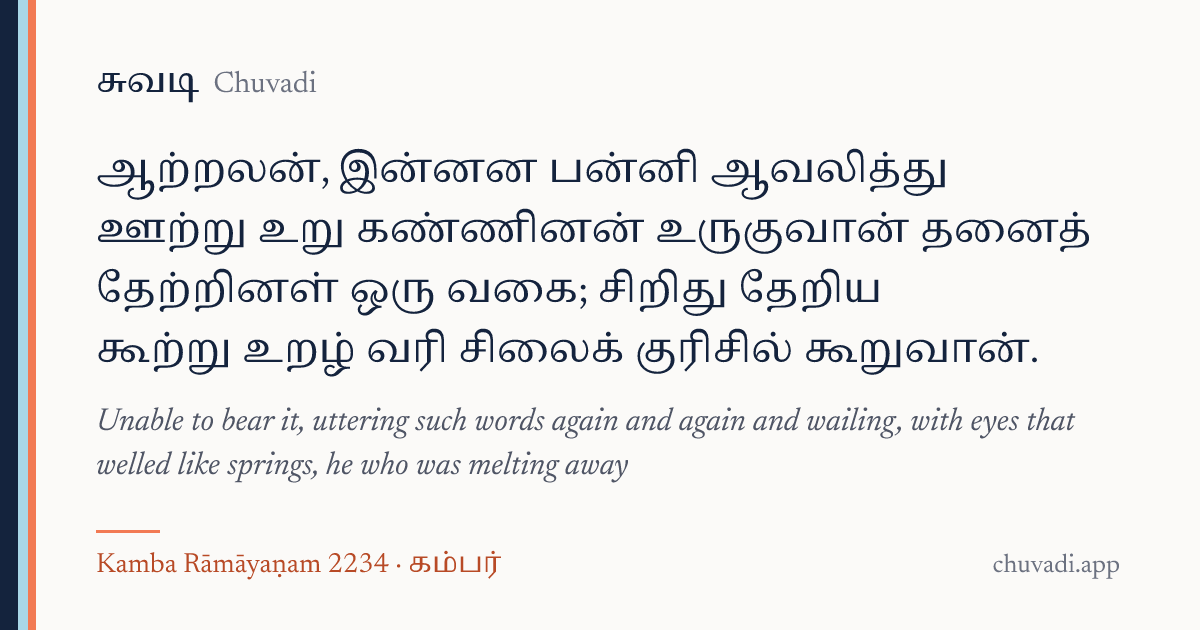
ஆற்றலன் - (தந்தை இறந்த துயரைப்) பொறுக்க மாட்டாதவனாய்; இன்னன - இவ்வாறமைந்த சொற்களை; பன்னி - பலமுறை சொல்லி; ஆவலித்து - அழுதிரங்கி; ஊற்று உறு கண்ணினன் - ஊற்றுப் போல மேலும் மேலும் பெருகுகின்ற கண்ணீரையுடையவனாய்; உருகுவான் - மனம் கரைந்து உருகும் பரதன்; தனை ஒருவகை தேற்றினன் - தன்னைத் (தானே) ஒருவகையாகத் தேற்றிக் கொண்டான்; சிறிது தேறிய - ஓரளவு மனத்தெளிவு அடைந்த; கூற்று உறழ் வரிசிலைக் குரிசில் - யமனை ஒத்த கட்டமைந்த வில்லினை உடைய பரதன்; கூறுவான் - சொல்லுவான் ஆனான்.
அவலித்து - அவலப்பட்டு (அழுகை அடைந்து) என்பது ஆவலித்து என முதல் நீண்டது துக்கமிகுதியைக் காட்டியது. ஊற்று உறு கண் - ஊற்றில் நீர் பெருகுவது போல கண்ணிலிருந்து துன்பத்தால் நீர் பெருகுகிறது என்பதாம். ‘கூற்று உறழ்’ என்பதனைக் குரிசில் என்பதனோடு கூட்டுக. யமனை ஒத்த கட்டமைந்த வில் எனலும் ஆம்.
ஆங்கிலம் · English translationAI
Translation
- Unable to bear it, uttering such words again and again and wailing,
- with eyes that welled like springs, he who was melting away
- steadied himself somehow; a little composed,
- the prince of the banded bow that rivals Death began to speak.
What the poem says
Paratan has returned to Ayōttī and has just learned from his mother Kaikēyi that his father Tacarataṉ is dead. After pouring out his grief, he weeps with eyes like springs that keep refilling, and at last gathers himself enough to speak.
The poet calls him the prince whose bow is like Kūṟṟu, the god of death, a reminder that this grieving son is also a formidable warrior. The word āvalittu, 'wailing', has its first vowel lengthened, which conveys the excess of his sorrow.