



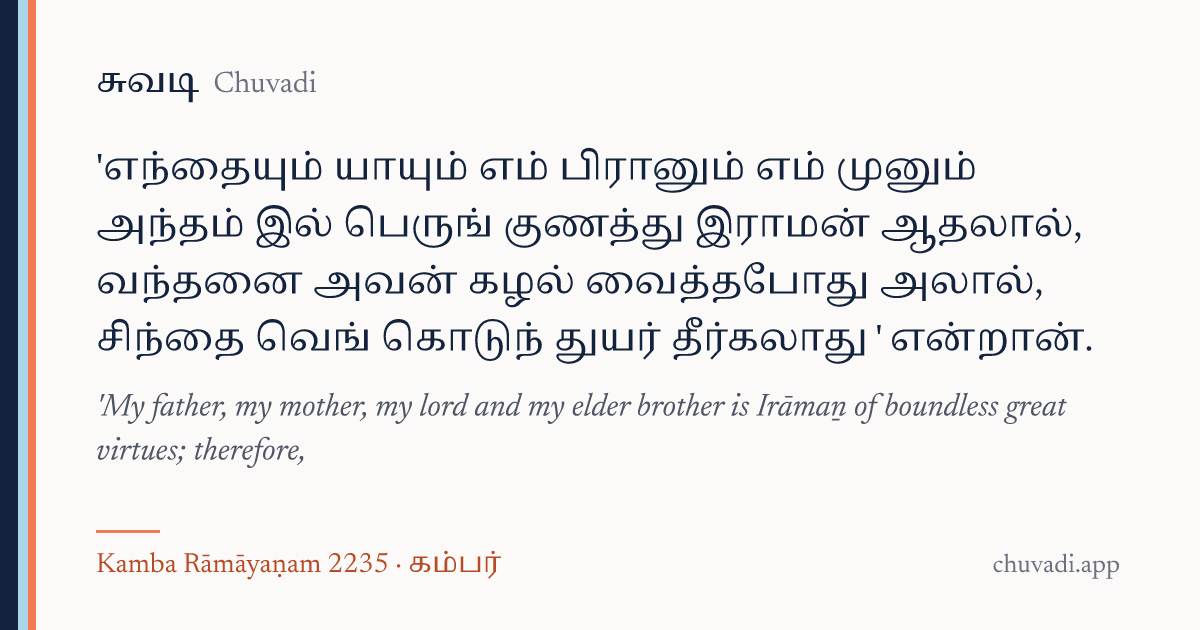
கம்பராமாயணம் 2235 · அயோத்தியா 9.58
பாடல் · The poem
Tap a word to see its gloss in the commentary and where else it occurs.
பொருள் · Meaning in Tamil
எந்தையும் - என் தந்தையும்; யாயும் - என் தாயும்; எம்பிரானும் - என் கடவுளும்; எம்முனும் - என் அண்ணனும்; அந்தம் இல் பெருங்குணத்து இராமன் - எல்லையில்லாத பெருங்குணங்களை யுடைய இராமபிரானே யாவன்; ஆதலால்; அவன் கழல் - அவனுடைய திருவடிகளை; வந்தனை வைத்த போது அலால் - வணங்குதல் செய்தபோது அல்லாமல்; சிந்தை - என் மனத்து; வெங்கொடுந்துயர் - (தந்தையின் இறப்பினால் உண்டாகிய) மிகக் கொடிய துன்பம்; தீர்கலாது - நீங்காது; என்றான்.
மகன், அடியான், தம்பி என்னும் மூன்று நிலைகளில் தன்னை இராமனுக்கு ஆட்படுத்திக்கொண்ட அன்பு சான்ற பரதனை இங்கே காண்கிறோம். ‘அந்தம் இல் பெருங்குணம்’ (2143) ஒப்பு நோக்குக. “தனக்குவமை இல்லாதான் தாள் சேர்ந்தார்க் கல்லால், மனக்கவலை மாற்றல் அரிது” என்னும் குறளை (குறள் 7) இச்செய்யுளின் பின்னிரண்டு அடிகளொடும் ஒப்புநோக்குக.
ஆங்கிலம் · English translationAI
Translation
- 'My father, my mother, my lord and my elder brother
- is Irāmaṉ of boundless great virtues; therefore,
- unless I lay my worship at his feet,
- the cruel burning grief in my heart will not end,' he said.
What the poem says
Paratan tells Kaikēyi that Irāmaṉ is everything to him: father, mother, god and elder brother. Now that Tacarataṉ is gone, only bowing at Irāmaṉ's feet can ease his grief.
Paratan places himself before Irāmaṉ as son, servant and younger brother at once. The last two lines echo Tirukkuṟaḷ 7: only those who reach the feet of the one beyond compare can be rid of sorrow of mind.