



கம்பராமாயணம் 2236 · அயோத்தியா 9.59
பாடல் · The poem
Tap a word to see its gloss in the commentary and where else it occurs.
பொருள் · Meaning in Tamil
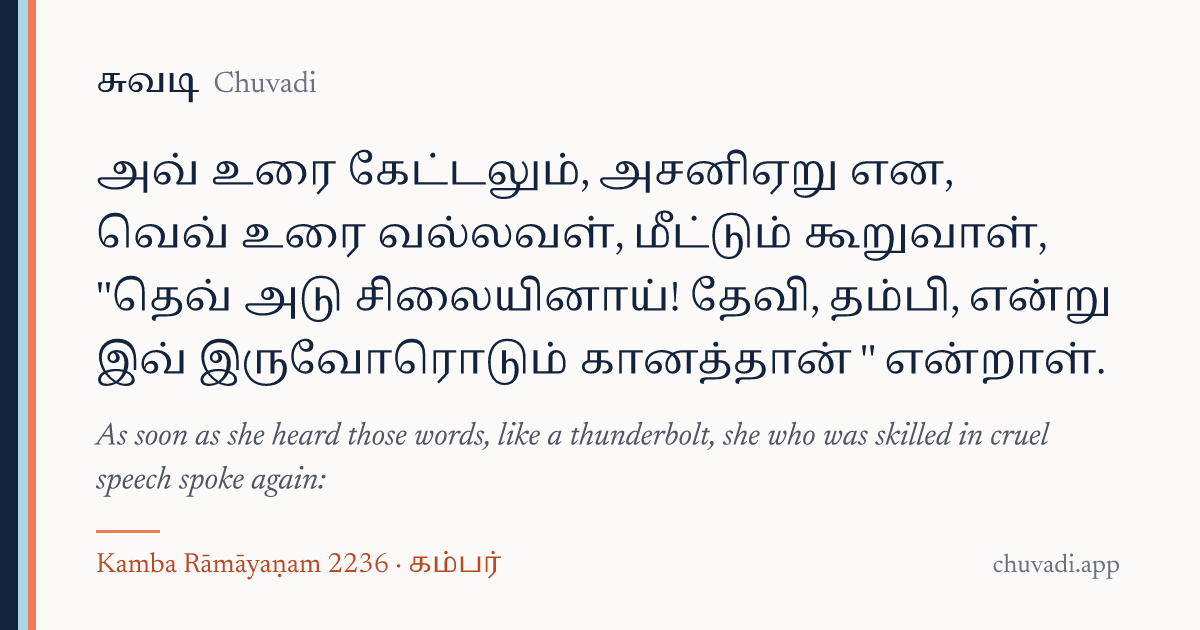
அவ் உரை கேட்டலும் - (பரதன் கூறிய) அவ் வார்த்தைகளைக் கேட்டவுடனே; அசனி ஏறு என - பேரிடிபோல; வெவ் உரை வல்லவள் - கொடுஞ்சொற்களைச் சொல்லும் ஆற்றல் படைத்தவளாய கைகேயி; மீட்டும் கூறுவாள் - மறுபடியும் கூறத் தொடங்க; “தெவ் அடு சிலையினாய்! - பகைவரைக் கொல்லும் வில்லுடைய பரதனே! (இராமன்) தேவி, தம்பி என்று இவ் இருவோரொடும் - தன் மனைவியும், தம்பியும் ஆகிய சீதை, இலக்குவன் ஆகிய இந்த இரண்டு பேரோடும்; கானத்தான் - காட்டின்கண் உள்ளான்;” என்றாள்.
‘அசனி ஏறு’ போலக் கொடுஞ்சொல் கூற வல்லவள் கைகேயி என்றார். இது இப்படலத்து 45ஆம் பாடலிலும் வந்துள்ளது. இராமன் ஒருவனே காடு செல்ல வேண்டியவன் ஆதலின் ‘கானத்தான்’ என்று கூறி, இருவரும் தம் விருப்பத்தால் தாமே உடன் சென்றனர் என்பது தோற்ற, ‘இவ் இருவோரொடும்’ என்று அவர்கள் இருவரையும் குறித்தாள்.
ஆங்கிலம் · English translationAI
Translation
- As soon as she heard those words, like a thunderbolt,
- she who was skilled in cruel speech spoke again:
- 'O you whose bow slays enemies! With his wife and his brother,
- these two, he is in the forest,' she said.
What the poem says
Hearing Paratan say he must bow at Irāmaṉ's feet, Kaikēyi, whose words strike like a thunderbolt, delivers the second blow: Irāmaṉ is in the forest, with his wife Cītai and his brother Ilakkuvaṉ.
Only Irāmaṉ was required to go into exile, so she says 'he is in the forest' and then mentions the other two as companions who went with him of their own will.