



கம்பராமாயணம் 226 · பால 5.58
பாடல் · The poem
Tap a word to see its gloss in the commentary and where else it occurs.
பொருள் · Meaning in Tamil
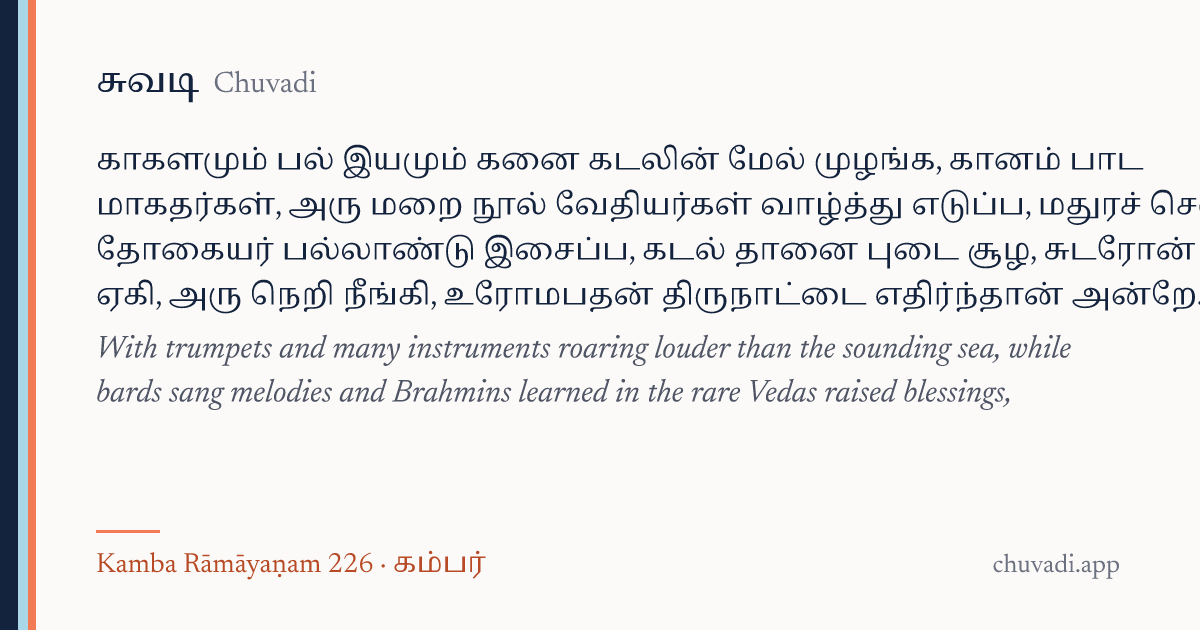
காகளமும் பல் இயமும் கனை கடலின் மேல் முழங்க - எக்காளமும், வேறுபல வாத்தியங்களும் ஒலிக்கின்ற கடலை விடப் பேரொலி செய்து முழங்கவும்; மாகதர்கள் கானம் பாட - பாடகர்கள் இன்னிசை பாடவும்; அருமறை நூல் வேதியர்கள் வாழ்த்து எடுப்ப - அரிய மறைவல்ல அந்தணர்கள் வேத மந்திரங்களைக் கூறி வாழ்த்திசைக்கவும்; மதுரச் செவ்வாய்த் தோகையர் பல்லாண்டு இசைப்ப - இன்மொழி கூறும் வாயினரான மயில் போன்ற மங்கையர் பல்லாண்டு பாடவும்; கடல் தானைபுடை சூழ - கடல் போன்ற படைகள் தன்னைச் சூழ்ந்து வரவும்; சுடரோன் என்ன ஏகி - சூரியனைப் போல விரைந்து சென்று; அரு நெறி நீங்கி - அரியநெறிகளையெல்லாம் கடந்து சென்று; உரோமபதன் திருநாட்டை எதிர்ந்தான் - உரோமபத மன்னனது அழகிய நாட்டை அடைந்தான்.
அன்றே: அசை. காகளம்: எக்காளம் என்னும் ஒருவகைக் கொம்பு. கனை கடல்: வினைத்தொகை. கானம்: இன்னிசை. மாகதர்: பாடகர்கள். அரசனுக்கு மெய்க்கீர்த்தி பாடுதல் மாகதர் தொழில். மதுரம்: இனிமை குணவாகு பெயராய்க் குரலைக் குறித்து நின்றது. தோகை: மயில். தோகையர்: பெண்கள் உவமையாகு பெயர். பல்லாண்டு: பல ஆண்டுகள் வாழ்க எனக் குறிக்கும் வாழ்த்துப்பாடல். கடல்தானை: உவமைத் தொகை. உரோமபதன் ஆண்ட நாடு “அங்க நாடு” எனப்படும். எதிர்தல்: அடைதல்.
பலவகை வாத்தியங்கள் முழங்க - மாகதர் பாட, வேதியர் வாழ்த்த, தோகையர் பல்லாண்டிசைப்ப - தானை புடை சூழ - நெறி நீங்கி - திருநாட்டை அடைந்தான்.
ஆங்கிலம் · English translationAI
Translation
- With trumpets and many instruments roaring louder than the sounding sea, while
- bards sang melodies and Brahmins learned in the rare Vedas raised blessings,
- while peacock-like women with sweet red lips sang 'Many years!' and his sea-like army surrounded him, like the sun
- he went on, passed through hard roads, and reached the fair land of Urōmapataṉ.
What the poem says
Tacarataṉ's journey is a royal procession: kāhaḷam horns and other instruments, court bards (mākatar) singing his praises, Brahmins chanting, women singing the 'pallāṇṭu' song wishing him long life, and an army as vast as the sea.
Like the sun crossing the sky, he passes the difficult roads and arrives in Urōmapataṉ's country, known as Aṅga.