



கம்பராமாயணம் 2295 · அயோத்தியா 9.118
பாடல் · The poem
Tap a word to see its gloss in the commentary and where else it occurs.
பொருள் · Meaning in Tamil
(கோசலை), தூய வாசகம் - (தன் மனத்) தூய்மையை அறிவிக்கும் சூளுரைகளை; சொன்ன தோன்றலை - சொல்லிய பரதனை; திருவின் நீங்கி - அரசுச் செல்வத்தைவிட்டு விலகி; தீய கானகம் - கொடிய காட்டின் கண்; முன் போயினான் - முன்பு சென்றவனாகிய இராமன்; வரக்கண்ட - திரும்பிவரப் பார்த்தாற்போன்ற; பொம்மலாள் - மகிழ்ச்சியை உடையவளாய்; ஆய காதலால் - அந்த இராமனிடத்து வைத்த அத்தகைய அன்போடு; புல்லி அழுதாள் - தழுவிக் கொண்டு அழுதாள்.
குணங்களால் இராமனுக்கும் பரதனுக்கும் வேற்றுமை இல்லை என்பதை உணர்ந்தனள். ஆதலால், போனவன் வந்ததைப் பார்த்தாற் போன்ற மகிழ்ச்சியடைந்தாள் எனவும், அவனிடத்து வைத்த அத்தகைய அன்போடு புல்லினாள் எனவும் கூறினார். அழுதலும் புல்லுதலும் ஒரே சமயத்தில் நிகழ்தலின் ‘அழுது புல்லினாள்’ என்றாராயினும் ‘புல்லுதல்’ முதற்கண் வெளிப்பாடாதலின் ‘புல்லி அழுதாள்’ என மாற்றி உரைக்கப்பட்டது.
ஆங்கிலம் · English translationAI
Translation
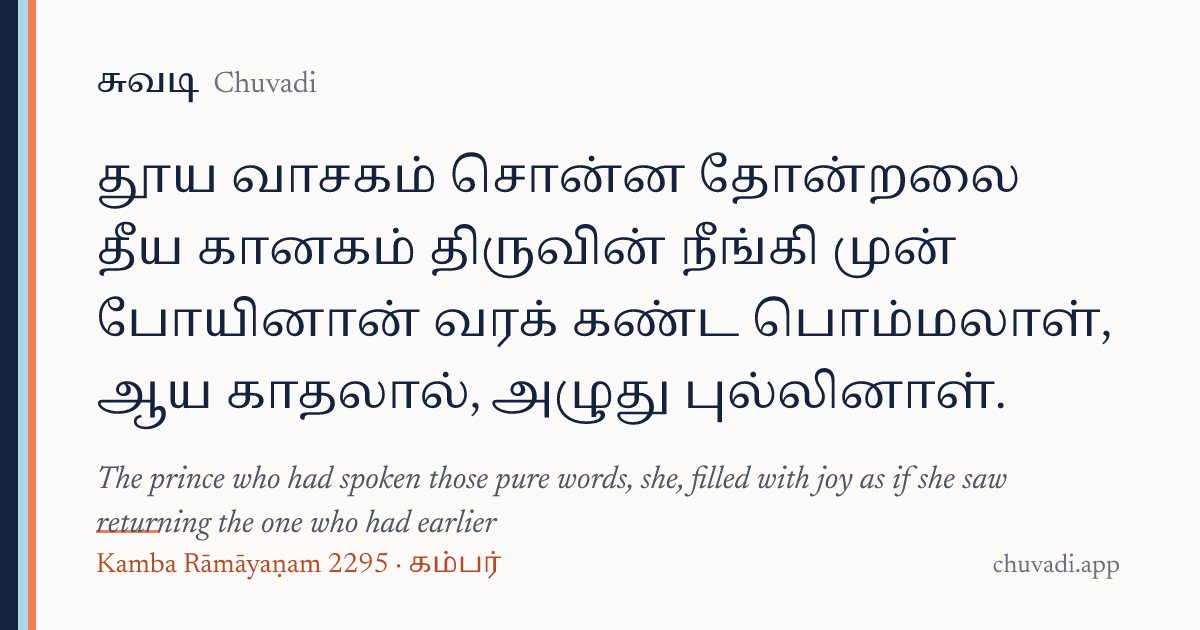
- The prince who had spoken those pure words,
- she, filled with joy as if she saw returning the one who had earlier
- left his royal fortune and gone to the cruel forest,
- with that same love embraced him, weeping.
What the poem says
Hearing Paratan's oaths, Kōcalai is convinced of his innocence. She sees that in character he is no different from Irāmaṉ, so it is as though the son who left his fortune for the harsh forest had come home.
Filled with that joy, and with the same love she bears Irāmaṉ, she takes Paratan in her arms and weeps.