



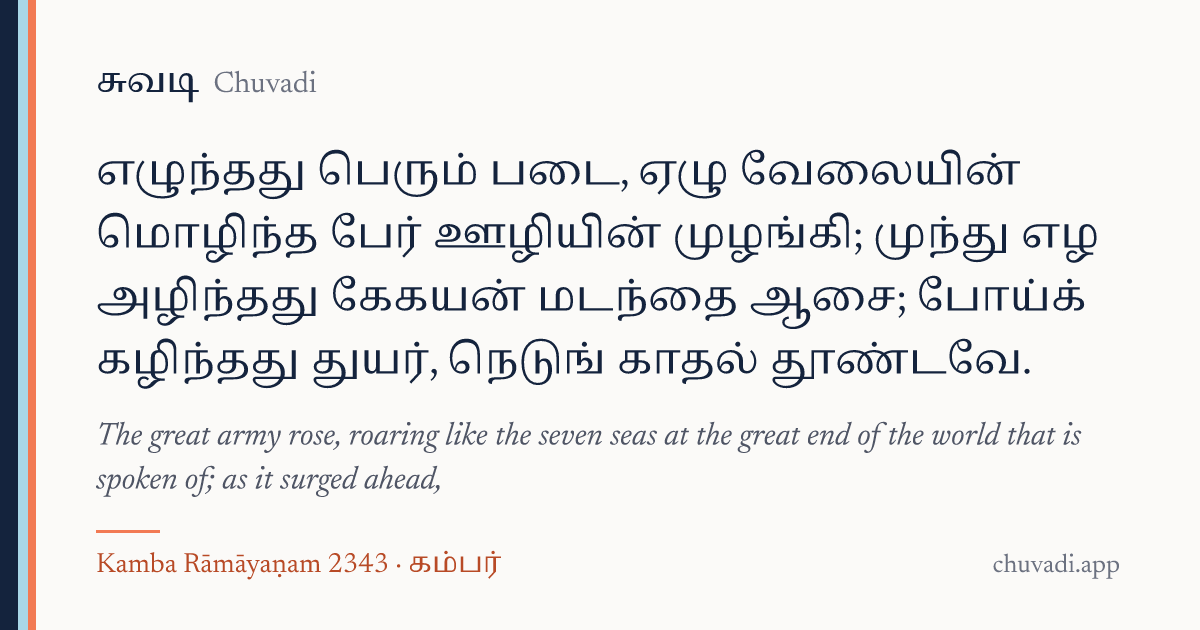
கம்பராமாயணம் 2343 · அயோத்தியா 10.25
பாடல் · The poem
Tap a word to see its gloss in the commentary and where else it occurs.
பாட வேறுபாடு · Project Madurai reads
பொருள் · Meaning in Tamil
பெரும் படை - பெரிய (அந்தச்) சேனை; மொழிந்த பேர் ஊழியின் - (எல்லோராலும்) பேசப்படுகின்ற உலக இறுதிக் காலத்தில்; ஏழு வேலையின் - ஏழுகடல்களும் பொங்கி எழுந்தது போல; முழங்கி - பேரொலி செய்து; முந்து எழ - முற்பட்டுப் புறப்பட; (அதனால்) கேகயன் மடந்தை ஆசை - கைகேயியின் (தன் மகன் அரசாள வேண்டும் என்னும்) ஆசை; அழிந்தது - கெட்டழிந்தது; பானது உள் நின்று செலுத்திவிட; துயர் - (இராமனைப் பிரிந்ததனாலும், பிரித்ததனாலும்) உண்டாகிய துன்பம்; போய்க் கழிந்தது - மிகவும் அதிகமாகியது.
ஊழிக் காலத்துக் கடல்களின் ஆரவாரத்தில் அழிவன பல; அதுபோல் சேனைகள் செய்த பேராரவாரத்தில் கைகேயியின் ஆசை போன திசை தெரியவில்லை. காதல் பெருக்கின் மிகுதியால் எழுந்த ஆரவாரத்தால் அவளும் மனம் மாறினாள் என்று கூறுவாரும் உளர். அவ்வாறாயின், துயர் என்பது ஈண்டு இவ்வளவு துன்பங்களுக்குக் காரணம் ஆனோமே என்பதனால் ஏற்பட்ட கழிவிரக்கம் ஆகும்.
யுகாந்த காலத்தில் ஏழு கடல்களும் ஒன்றாகச் சேர்ந்து பொங்கி எழும் என்பராதலின் அப்போதைய பேரொலி போன்றது சேனைகளின் புறப்பாட்டினால் உண்டாகிய ஒலி என்று உவமையாயிற்று.
‘போய்க் கழிந்தது துயர்’ என்பதற்குக் கைகேயியின் துயர் போய்க் கழிந்தது என்பாரும் உளர். வான்மீகத்தில் இப்படி ஒரு கருத்து உண்டு. ‘ஏ’ காரம் ஈற்றசை.
ஆங்கிலம் · English translationAI
Translation
- The great army rose, roaring like the seven seas
- at the great end of the world that is spoken of; as it surged ahead,
- the desire of the Kēkaya king's daughter was destroyed;
- and sorrow grew beyond measure, as their deep love drove them on.
What the poem says
The vast army rises with a roar like the seven seas at the end of an age, when they are said to merge and surge together. In that uproar Kaikēyi's ambition for her son is swept away.
Driven by their love for Irāmaṉ, the people's grief at his absence swells. Some read the verse as meaning that Kaikēyi herself relented, her sorrow now being remorse; others take the last line to say that her sorrow ended, as Vālmīki suggests.