



கம்பராமாயணம் 2377 · அயோத்தியா 10.59
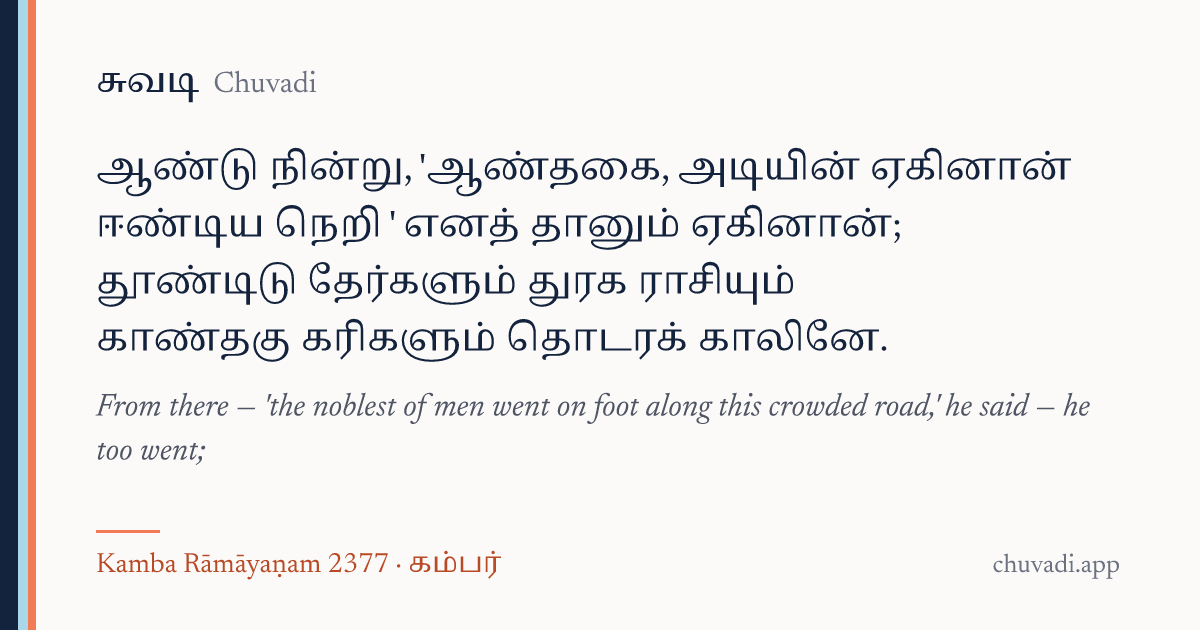
பாடல் · The poem
Tap a word to see its gloss in the commentary and where else it occurs.
பொருள் · Meaning in Tamil
ஆண்டு நின்று - அங்கிருந்து; ஆண்தகை - ஆடவர் திலகனாய இராமன்; ஈண்டிய நெறி - நெருங்கிய வழியிலே; அடியின் ஏகினான் - காலால் நடந்துசென்றான்; என - என்று (அறிந்து); தானும் - பரதனும்; தூண்டிடு தேர்களும் - செலுத்தப்படும் தேர்களும்; துரகராசியும் - குதிரைத் தொகுதிகளும்; காண்தகுகரிகளும் - காட்சிக்குப் பொருந்திய யானைகளும்; தொடர - (தன்னைப்) பின்பற்றிவர; காலின் ஏகினான் - காலால் நடந்து சென்றான்.
இராமன் நடந்து சென்ற பாதையில் தானும் நடந்தே செல்லவேண்டும் என நினைத்தது அவன் அன்பு மிகுதியைப் புலப்படுத்தும். “காண்தகு கரிகள்” என்பதனை, “யானையுடைய படை காண்டல் மிக இனிதே” என்பதனுடன் (இனியவை. 4) ஒப்பிடுக. “படை தனக்கு யானை வனப்பாகும்” என்பதும் (சிறுபஞ்ச. 5) இக்கருத்தை வலியுறுத்தும். “ஏ” காரம் ஈற்றசை.
ஆங்கிலம் · English translationAI
Translation
- From there — 'the noblest of men went on foot
- along this crowded road,' he said — he too went;
- with the driven chariots, the troops of horses
- and the stately elephants following, he went on foot.
What the poem says
Leaving the grove, Paratan learns that Irāmaṉ walked from here. So he gets down and walks too, while the chariots, horses and fine elephants of his army follow behind him.
Choosing to tread the same road on foot shows how deeply he loves his brother. The commentary notes that older didactic poems also praise elephants as the glory of an army.