



கம்பராமாயணம் 2379 · அயோத்தியா 11.2
பாடல் · The poem
Tap a word to see its gloss in the commentary and where else it occurs.
பொருள் · Meaning in Tamil
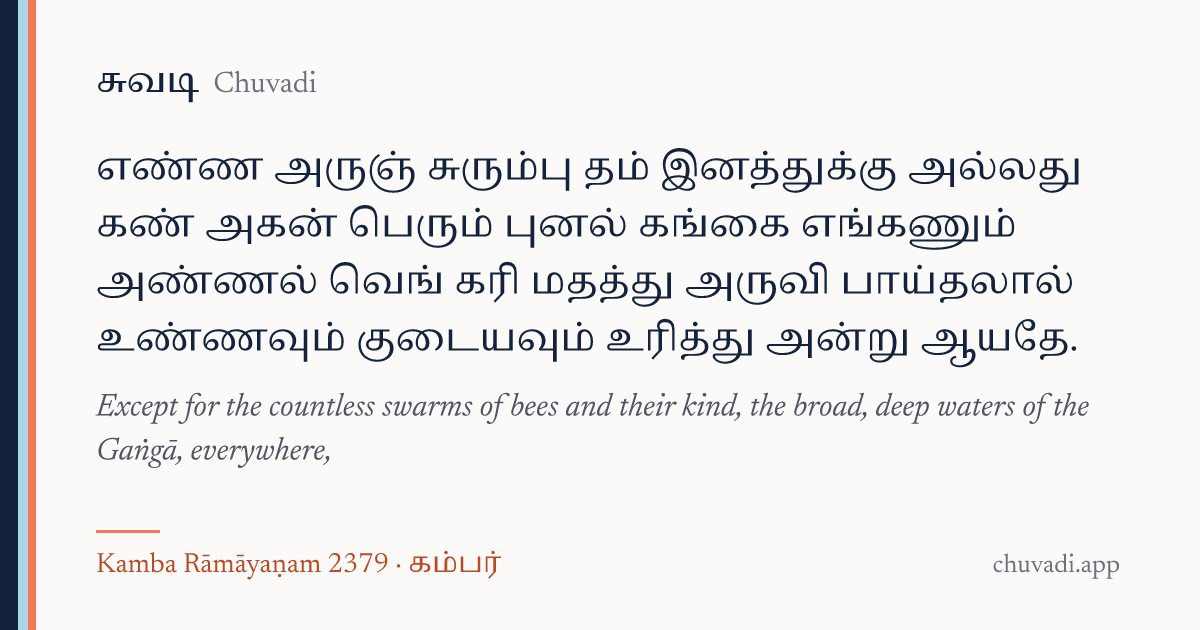
கண் அகன் - இடம் அகன்ற; பெரும் புனல் - மிக்க நீரை உடைய; கங்கை - கங்கையாறு; அண்ணல் - பெருமையுடைய; வெங்கரி - கொடிய யானைகளின்; மதத்து அருவி - மத நீர்ப் பெருக்காகிய அருவி; எங்கணும் பாய்தலால் - எல்லா இடங்களிலும் பாயப் பெறுதலால்; எண்ண அரும் சுரும்பு தம் இனத்துக்கல்லது - கணக்கிட முடியாத வண்டுக் கூட்டங்களுக்கெல்லாமல் (ஏனைய உயிர்களுக்கு); உண்ணவும் - குடிக்கவும்; குடையவும் - குளித்து மூழ்கவும்; உரித்தன்று ஆயது - உரிமையுடையதல்லாததாக ஆயிற்று.
கங்கை நீரினும் யானைகளின் மதநீர்ப் பெருக்கு மிகுதி என்றதாம். எனவே, யானைகளின் மிகுதி கூறியவாறு. வண்டுகள் மதநீரிற் படிந்து குடைந்து உண்ணும் இயல்பின ஆதலின் அவற்றுக்கு இப்போது கங்கை நீர் உரியதாயிற்று. மதம் பிடித்த யானையின் உடல் வெப்பம் அதிகமாக இருக்கும் ஆதலின், வெம்மையுடைய கரி
ஆங்கிலம் · English translationAI
Translation
- Except for the countless swarms of bees and their kind,
- the broad, deep waters of the Gaṅgā, everywhere,
- since the cascades of must from the great fierce elephants poured into them,
- were no longer fit for anyone to drink or bathe in.
What the poem says
The army reaches the Gaṅgā. So many elephants in rut are there that the must streaming down their temples pours into the river until there seems to be more must than water.
No creature can drink or bathe in the Gaṅgā now, except the bees, who love to wallow in elephant must and so have the river to themselves. It is a playful way of showing the vast number of elephants.