



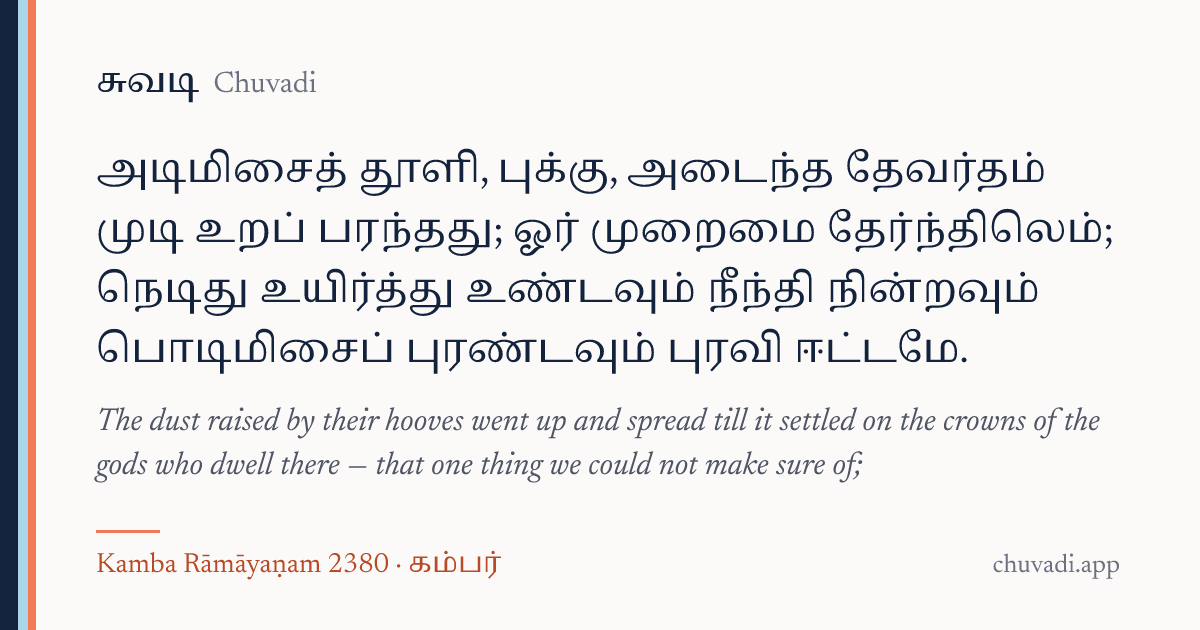
கம்பராமாயணம் 2380 · அயோத்தியா 11.3
பாடல் · The poem
Tap a word to see its gloss in the commentary and where else it occurs.
பாட வேறுபாடு · Project Madurai reads
பொருள் · Meaning in Tamil
அடிமிசைத் தூளி புக்கு - (குதிரைகளின் அடியின் மேல் எழுந்த தூசி (அமரருலகத்தில்) புகுந்து; அடைந்த தேவர்தம் - அங்கே உள்ள தேவர்களது; முடி உற - தலைமீது படும்படி; பரந்தது - (தேவருலகு முழுமையும்) பரவியது (ஆகிய); ஓர் முறைமை தேர்ந்திலெம் - ஒரு தன்மையை (அனுமானிக்க முடிகிறதன்றி) மனிதராகிய (எம்மால்) ஆராய்ந்தறிய இயலவில்லை; நெடிது உயிர்த்து உண்டவும் - பெருமூச்சு விட்டு (நீரைப் பருகியவையும்; நீந்தி நின்றவும் - (நீரில்) நீந்திக்கொண்டு இருந்தவையும்; பொடிமிசைப் புரண்டவும் - மண்ணில் விழுந்து புரண்டவையும்; (எல்லாம்) புரவி ஈட்டமே - குதிரைத் தொகுதிகளே. (வேறில்லை)
புழுதி, மேல் படர்ந்து சென்று வானுலகத்தில் தேவர்களை முழுக்காட்டிய செய்தி நாம் அறியோம். ஆயினும், இங்கே நீரிலும் நிலத்திலும் நின்றவை யெல்லாம் குதிரைகளே என்றது குதிரைப் படையின் மிகுதி கூறியவாறு. 'ஏ' காரம் ஈற்றசை.
ஆங்கிலம் · English translationAI
Translation
- The dust raised by their hooves went up and spread till it settled
- on the crowns of the gods who dwell there — that one thing we could not make sure of;
- but those that drank with long, heavy breaths, those that stood swimming,
- and those that rolled about in the dust — all were troops of horses.
What the poem says
Now the cavalry. The poet half-jokingly says he cannot vouch for whether the dust kicked up by the horses rose to heaven and powdered the crowns of the gods; a mortal cannot check that.
What he can say is what anyone at the riverbank saw. Everything drinking with deep snorts, swimming in the water or rolling in the dust was a horse, and nothing else could be seen.