



கம்பராமாயணம் 2388 · அயோத்தியா 11.11
பாடல் · The poem
Tap a word to see its gloss in the commentary and where else it occurs.
பொருள் · Meaning in Tamil
ஒருங்கு அடை நெடும் படை - ஒன்று சேர்ந்து வந்த பெரிய (வேட்டுவச் சேனை; அருங் கடை உகம்தனில் - அரிய கடையூழிக் காலத்தில்; அசனி மா மழை - இடியோடு கூடிய மேகமும்; கருங்கடல் - கரிய கடலும்; கிளர்ந்து என - (ஒலித்து) மிக்கு எழுந்தார் போல; கலந்து சூழ - ஒன்று சேர்ந்து தன்னைச் சுற்றிவர; மருங்கு அடை - பக்கத்தில் உள்ள; தென்கரை - (கங்கையாற்றின்) தெற்குக் கரையில்; வந்து தோன்றினான் - (குகன் என முடிக்க)
படைகளின் மிகுதியும், ஆரவாரம் சூழ்தலும் பற்றி ஊழிக்காலத்து இடிமேகமும், பொங்குங்கடலும் சேர்ந்தது போல என்று உவமை கூறினார். வந்து சேர்ந்தான் என்னாது 'தோன்றினான்' என்றது, பரதனும் அவன் சேனையில் உள்ளாரும், பிறரும் தனது பேராற்றலும் வீராவேசமும் காணும்படி வந்தடைந்தான் என்பது பற்றி. வடகரையில் பரதனும், தென்கரையில் குகனும் நின்றார் ஆதலின் 'தோன்றினான்' என்றார் எனலும் ஆம். 'ஏ'காரம் ஈற்றசை.
ஆங்கிலம் · English translationAI
Translation
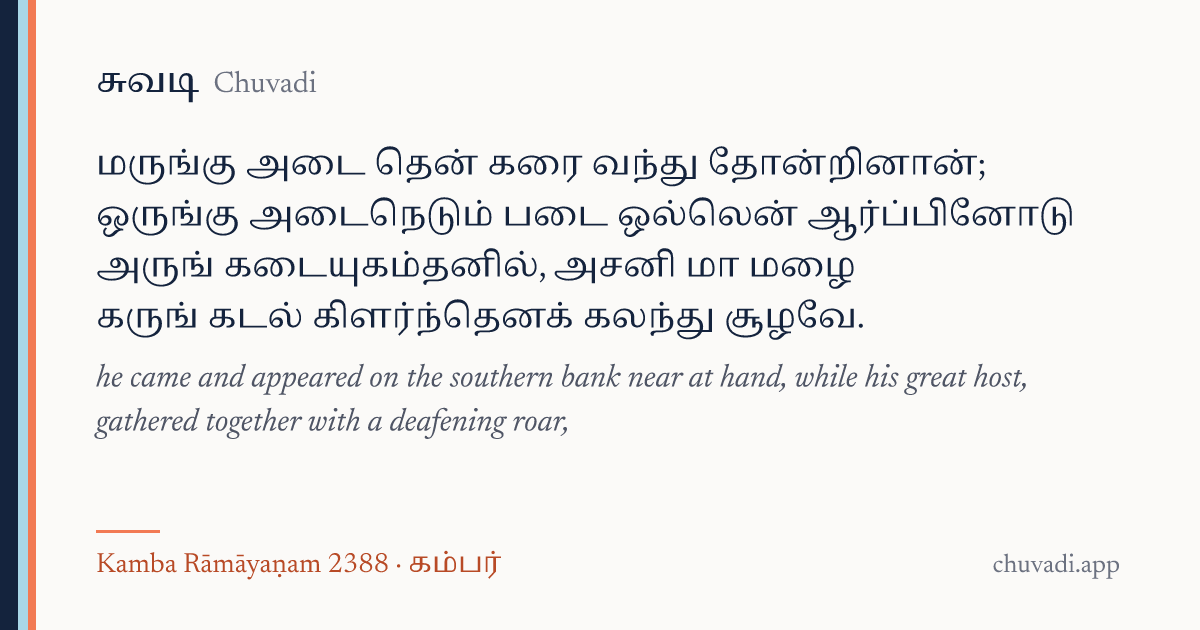
- he came and appeared on the southern bank near at hand,
- while his great host, gathered together with a deafening roar,
- closed in around him like the thunder-laden clouds
- and the dark sea rising together at the last dread end of an age.
What the poem says
Here the long sentence that began several verses back ends: Kukaṉ appears on the south bank of the Gaṅgā, facing Paratan, who is on the north bank.
His hunters crowd around him with a roar, like thunderclouds and the rising black ocean at the end of the world. The poet says he "appeared" rather than merely "arrived" because he means to be seen, so that Paratan and his whole army can see his strength and his fighting spirit.