



கம்பராமாயணம் 2420 · அயோத்தியா 11.43
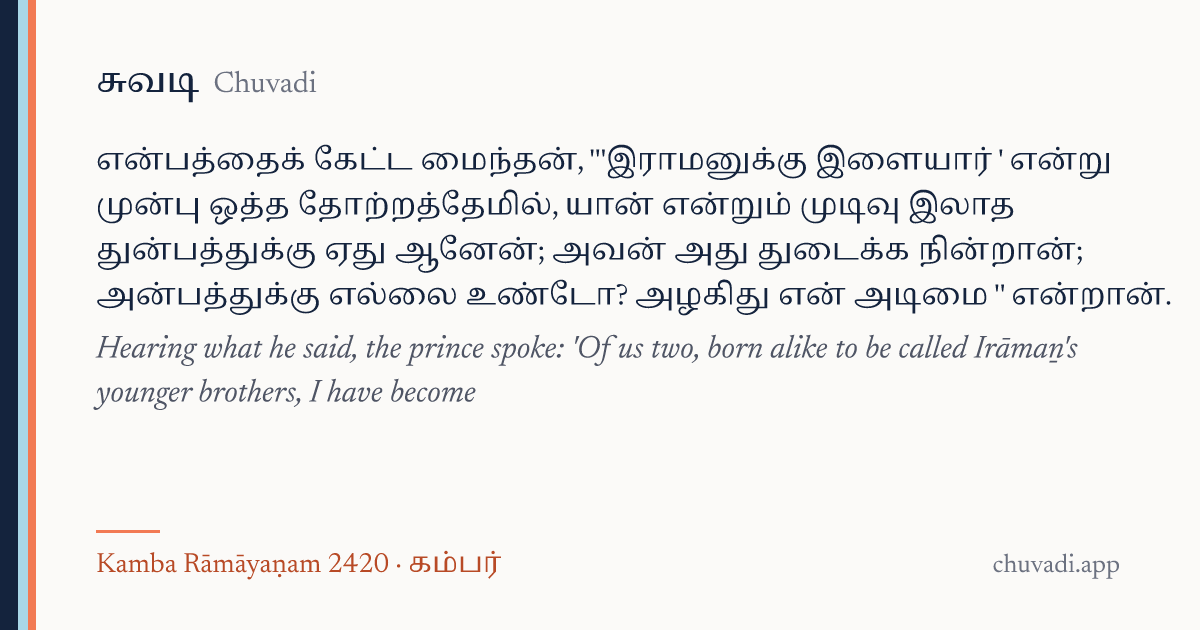
பாடல் · The poem
Tap a word to see its gloss in the commentary and where else it occurs.
பொருள் · Meaning in Tamil
என்பத்தை - என்று (குகன்) சொன்னதை; கேட்ட மைந்தன் - கேட்ட பரதன்; இராமனுக்கு இளையார் என்று - இராமனுக்குத் தம்பிகள் என்று சொல்லும்படி; முன்பு ஒத்த தோற்றத்தேமில் - பிறக்கும்பொழுது ஒத்த தன்மையான பிறப்பைப் பெற்ற எங்கள் இருவரிலும்; யான் - பரதனாகிய யான்; என்றும் முடிவு இலாத துன்பத்துக்கு ஏது ஆனேன் - எக்காலத்தும் கரைகாணாத பெருந்துன்பத்தை இராமன் அடைதற்குக் காரணமாக ஆய்விட்டேன்; அவன் - அந்த இலக்குவன்; அது - அத்துன்பத்தை; துடைக்க நின்றான் - இராமனிடமிருந்து நீக்கத் துணையாக இராமனுடன் நின்றான்; அன்புக்கு எல்லை உண்டோ? - அன்புக்கு ஒரு வரையறை உள்ளதோ; என் அடிமை அழகிது - நான் இராமனுக்குச் செய்யும் அடிமைத்திறம் நன்றாயிருந்தது; என்றான் - என்று கூறினான்.
'அன்பத்துக்கு எல்லை உண்டோ' இலக்குவன் செயல் குறித்து. 'என்பது' 'என்பத்து' என விரித்தல் விகாரம் செய்யுள் நோக்கி வந்தது. அன்புக்கு என்பது அன்பத்துக்கு என அத்துச்சாரியை பெற்றது. பிறப்பால் இருவரும் ஒரு தன்மையர் ஆயினும் அவன் சிறப்பாகிய அன்பினால் எல்லையின்றி உயர்ந்தான்; யான் அடிமையில் தாழ்ந்தேன் என்று பரதன் தன்னை நொந்து கூறினான்.
ஆங்கிலம் · English translationAI
Translation
- Hearing what he said, the prince spoke: 'Of us two, born alike
- to be called Irāmaṉ's younger brothers, I have become
- the cause of sorrow that will never end; he stood by to wipe it away.
- Is there any limit to love? Fine service mine has been!'
What the poem says
Paratan compares himself with Ilakkuvaṉ. Both were born as Irāmaṉ's younger brothers, alike in birth. Yet Paratan has become the cause of Irāmaṉ's endless suffering, while Ilakkuvaṉ stays at his side to ease it.
"Is there any limit to love?" he says, thinking of Ilakkuvaṉ. Then, bitterly: "Fine service I have given!" Ilakkuvaṉ has risen without limit through love, and Paratan feels he has failed as a servant.