



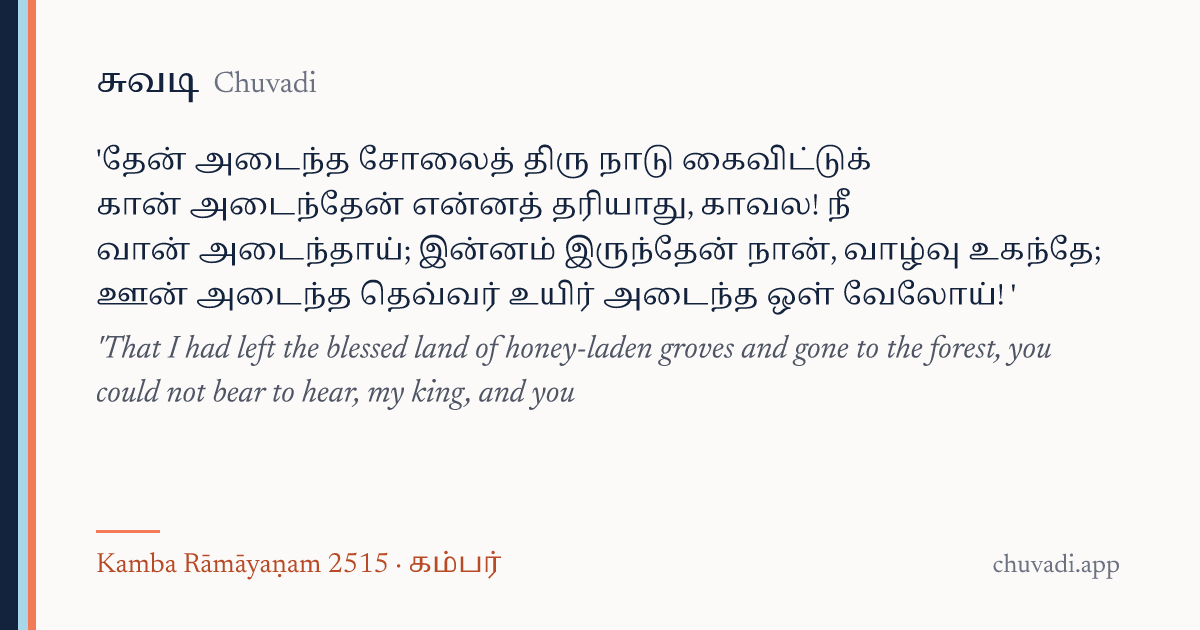
கம்பராமாயணம் 2515 · அயோத்தியா 12.66
பாடல் · The poem
Tap a word to see its gloss in the commentary and where else it occurs.
பொருள் · Meaning in Tamil
“காவல! - அரசனே!; ஊன் அடைந்த தெவ்வர் - உடற் கொழுப்பு மிக்க பகைவர்களது; உயிர் அடைந்த - உயிர்கள் தாமே வந்து புகலடைந்த; ஒள் வேலோய்! - ஒளி படைத்த வேலை உடையவனே; (யான்) தேன் அடைந்த சோலைத் திருநாடு - தேன் பொருந்திய சோலைகள் மிகுந்த கோசல நாட்டை; கைவிட்டு - நீங்கி; கான் அடைந்தேன் என்ன - வனம் புகுந்தேன் என்று சொல்லக் கேட்டு; தரியாது - ஆற்றாமல்; நீ வான் அடைந்தாய் - நீ இறந்த விண்ணுலகம் புகுந்தாய்; நான் இன்னம் வாழ்வு உகந்து இருந்தேன் - நானோ இன்னமும் (உயிர்விடாது) வாழ ஆசைப்பட்டு இருக்கின்றேன்.
பகைவரிடத்திருந்தால் அவ்வப்போது நீங்கி ஓட வேண்டியிருத்தலின்; தயரதன் கை வேலை அடைந்தால் என்றும் நீங்காது நிலையாகப் பாதுகாப்பாக இருக்கலாம் என்று கருதித் தெவ்வர் உயிர் அடைந்தது என்றது ஒரு நயம். பிரிந்த அளவிலே தாங்காது உயிர் விட்ட உனக்கும், நீ இறந்தும் உயிர் விடாத எனக்கும் அன்பில் உள்ள ஏற்றத்தாழ்வு எத்தகையது! அன்பிற் சிறந்த நீ அன்பு சிறிதும் அற்ற என்பால் அன்பு வைத்தாயே என்பதுபோலச் சொல்லி இரங்கினான் இராமன் என்க. ‘ஏ’ தேற்றம்.
ஆங்கிலம் · English translationAI
Translation
- 'That I had left the blessed land of honey-laden groves
- and gone to the forest, you could not bear to hear, my king, and you
- have gone to the sky; while I live on still, glad of life —
- you of the bright spear, in which the lives of fat-fleshed foes took refuge!'
What the poem says
Irāmaṉ contrasts his father's love with his own. Tacarataṉ could not bear even the news that his son had gone to the forest and died of it; Irāmaṉ, hearing of his father's death, is still alive and clinging to life. He reproaches himself for receiving such love when he gave so little back.
The image of the spear carries a conceit: an enemy's life, which must flee from place to place, finds a permanent home only when it 'takes refuge' on Tacarataṉ's spear.