



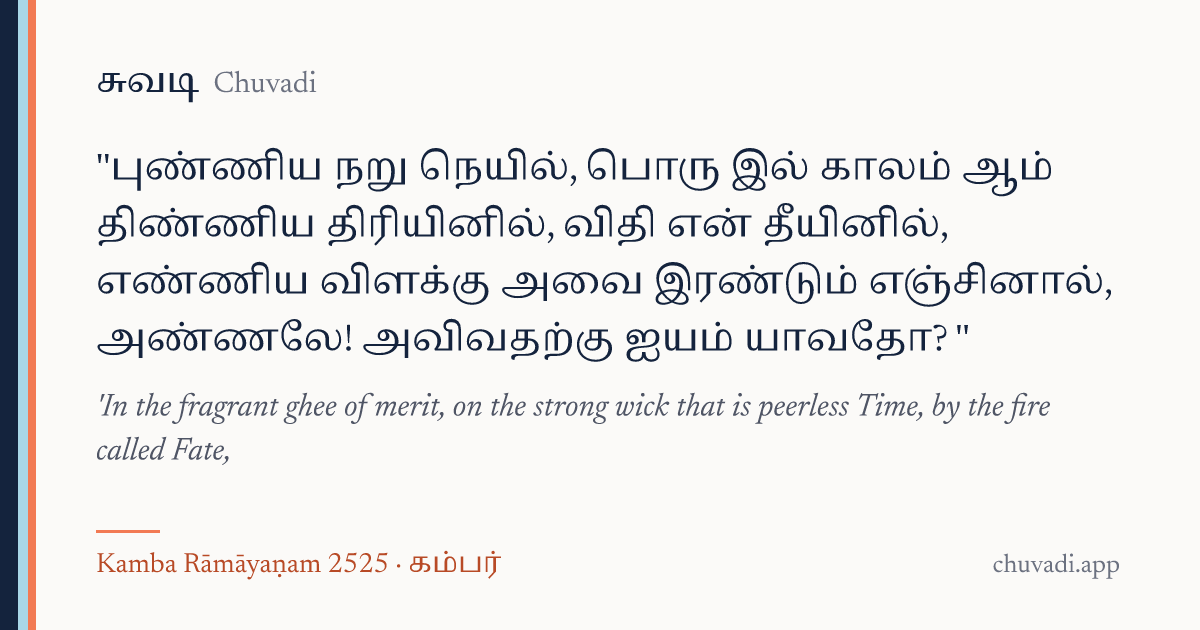
கம்பராமாயணம் 2525 · அயோத்தியா 12.76
பாடல் · The poem
Tap a word to see its gloss in the commentary and where else it occurs.
பொருள் · Meaning in Tamil
“அண்ணலே! - தலைமை பொருந்தியவனே!; புண்ணிய நறுநெய்யில் - புண்ணியம் என்கின்ற நல்ல நெய்யில்; பொரு இல் - ஒப்பற்ற; காலம் ஆம் திண்ணிய திரியினில் - காலமாகிய வலிய திரியில்; விதி என் தீயினில் - விதி என்கின்ற நெருப்பினால்; எண்ணிய - கருத்தோடு ஏற்றப்பெற்ற; விளக்கு - உயிர் வாழ்க்கை என்கிற தீபம்; அவை இரண்டும் எஞ்சினால் - (நெய்யும் திரியுமாகிய) புண்ணியமும் விதியும் ஒழிந்தால்; அவிவதற்கு - அணைந்து போவதற்கு; ஐயம் - சந்தேகம்; யாவதோ? - ஏனோ? (இல்லை என்றபடி).
நல்வினையும் விதியும் முடிந்தபொழுது உயிர்வாழ்க்கை முடிந்துபோகும். காலத் திரி விதி நெருப்பில் கரைந்து எரிந்து போகும். புண்ணியம் அனுபவித்து படத் உயிர் உடலைப் பிரியும்; இது இயற்கை நியதி என்றார்.
ஆங்கிலம் · English translationAI
Translation
- 'In the fragrant ghee of merit, on the strong wick
- that is peerless Time, by the fire called Fate,
- the lamp is lit as ordained; when those two are used up,
- my lord, what doubt can there be that it goes out?'
What the poem says
Vatiṭṭaṉ compares a life to an oil lamp. Merit is the ghee, the allotted span of time is the wick, and fate is the flame that lights it.
When the merit has been enjoyed and the wick of time has burned down in the flame of fate, the lamp of life goes out. That is simply the law of nature, and no one should be surprised by it.