



கம்பராமாயணம் 2553 · அயோத்தியா 12.104
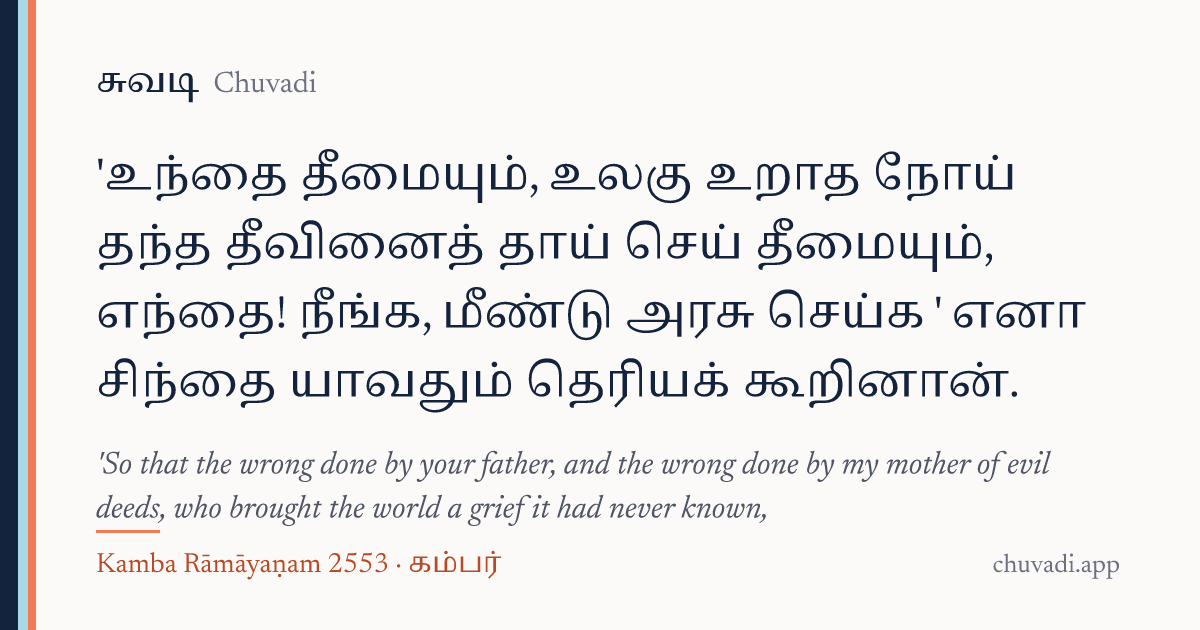
பாடல் · The poem
Tap a word to see its gloss in the commentary and where else it occurs.
பொருள் · Meaning in Tamil
“எந்தை - எம் தலைவனே!; உந்தை - உனக்குத் தந்தையாகிய தசரதன்; தீமையும் - (செய்த) தீமையும், உலகு - உலகத்துக்கு; உறாத நோய் - இதுவரை வராத துன்பத்தை, தந்த - கொடுத்த; தீவினைத் தாய் - பாவ வடிவமான என்தாய் கைகேயி; செய் தீமையும் - செய்த தீமையும்; நீங்க - எல்லாம் போக, மீண்டு - நாட்டுக்குத் திரும்பிவந்து; அரசு செய்க” - அரசாட்சி செய்வாயாக; எனா - என்று; சிந்தை யாவதும் தெரிய - தன் மனக்கருத்து முழுதும் விளங்கும்படி; கூறினான் - சொன்னான்.
இராமன் பிரிவினால் உலகைத் துன்புறச் செய்தது தயரதன் செய்த தீமை. தயரதனை ‘உந்தை’ என்றான். இங்கு இராமனை மீள அழைப்பதற்கு ஒரு காரணம் காட்ட விரும்புகின்றவன் ஆதலின், “உலகுக்குத் தந்தை செய்த தீமை” என்று அவனோடு நெருங்கிச் சொன்னான் என்க. இனி “மன்னேயாவான் வரும் அப்பரதன் தனையும் மகன் என்று உன்னேன்” எனத் துறந்தான் ஆதலால், அதுபற்றி உந்தை என்றான் எனலும் ஆம். இராமன் மீண்டு வந்து அரசேற்றலால் விளையும் நலம் இது எனக் கூறினான்.
ஆங்கிலம் · English translationAI
Translation
- 'So that the wrong done by your father, and the wrong done by
- my mother of evil deeds, who brought the world a grief it had never known,
- may be undone, my lord, come back and reign!' With these words
- he laid bare the whole of his mind.
What the poem says
Paratan states his purpose plainly. Tacarataṉ wronged the world by sending Irāmaṉ away; Kaikēyi wronged it with a misery it had never known. Only Irāmaṉ's return to rule can undo both.
He calls the king 'your father' rather than 'our father'. Either he is linking Irāmaṉ closely to the wrong so as to press him to repair it, or he is remembering that Tacarataṉ had disowned him as a son.