



கம்பராமாயணம் 269 · பால 5.101
பாடல் · The poem
Tap a word to see its gloss in the commentary and where else it occurs.
பாட வேறுபாடு · Project Madurai reads
பொருள் · Meaning in Tamil
வாங்கிய துயர் உடை மன்னன் - துயரம் நீங்கிய மன்னனாகிய தயரதன்; பின்னரும் பாங்கு உறுமுனிவர் தாள்பழிச்சி - பின்பு, கலைக்கோட்டு முனிவனைச் சூழ்ந்திருந்த முனிவர்களையெல்லாம் வணங்கிப் புகழ்ந்து; ஏத்தல் கொண்டு ஓங்கிய உவகையர் - போற்றிக் கொண்டாடியமையால் மகிழ்ச்சி கொண்ட அம்முனிவர்கள்; ஆசியோடு எழா நீங்கினர் - அரசனுக்கு ஆசிகூறி எழுந்து சென்றனர்; நேமிவேந்தன் இருந்தனன் - அத் தசரதவேந்தன் நலமே இருந்தனன்.
வாங்கியதுயர்: நீங்கிய துயரம். 'பாங்குடைமுனிவர்' என்பதற்கு நல்லொழுக்கம் உடைய முனிவர்கள் என்பதும் பொருளாம். பாங்கு: ஒழுக்கம். பழிச்சியேத்தல்: மிகுதியாக ஏத்துதலுமாம். நேமி: சக்கரம்; ஆணையாகிய நேமி என்பர். 'பின்னரும்' என்றது, கலைக்கோட்டு முனிவனை வணங்கிய பின்னர் மற்ற முனிவர்களையும் வணங்கினான் என்பதை உணர்த்தும். எழா: எழுந்து (செயா என்ற வாய்பாட்டு வினைஎச்சம்).
ஆங்கிலம் · English translationAI
Translation
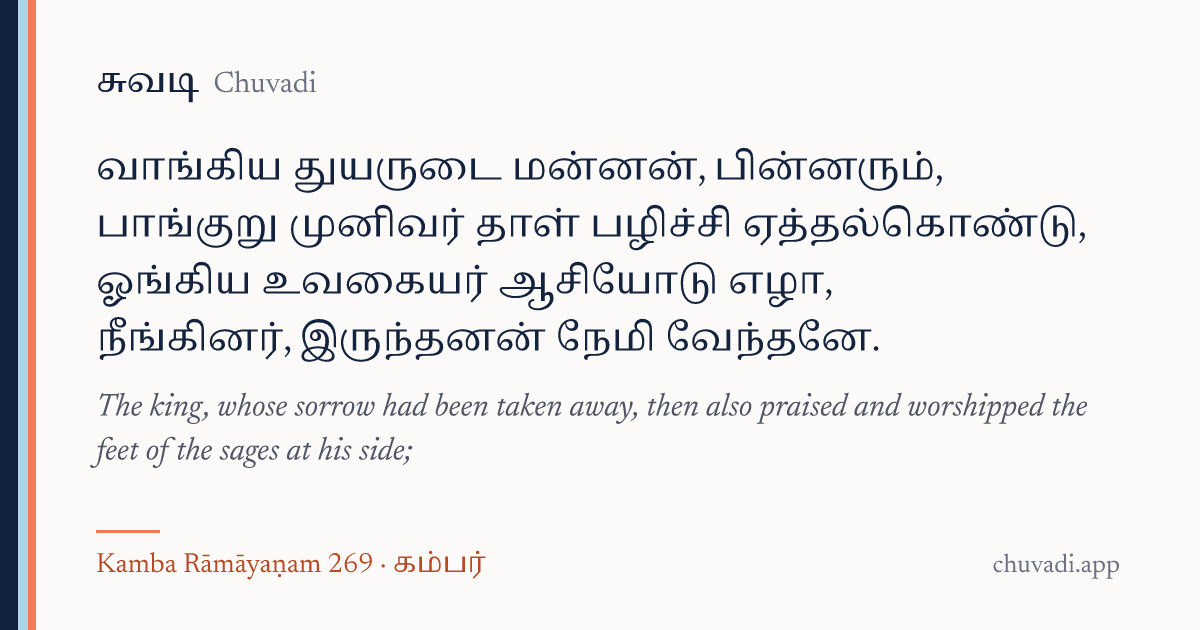
- The king, whose sorrow had been taken away, then also
- praised and worshipped the feet of the sages at his side;
- they, risen high in joy, rose with blessings
- and departed; and the king of the wheel remained.
What the poem says
Tacarataṉ also honours the other sages, who bless him and leave. 'King of the wheel' refers to the wheel of his authority, the emblem of a universal ruler. With his sorrow gone, Tacarataṉ stays on in his capital, content.