



கம்பராமாயணம் 2691 · ஆரணிய 2.28
பாடல் · The poem
Tap a word to see its gloss in the commentary and where else it occurs.
பாட வேறுபாடு · Project Madurai reads
பொருள் · Meaning in Tamil
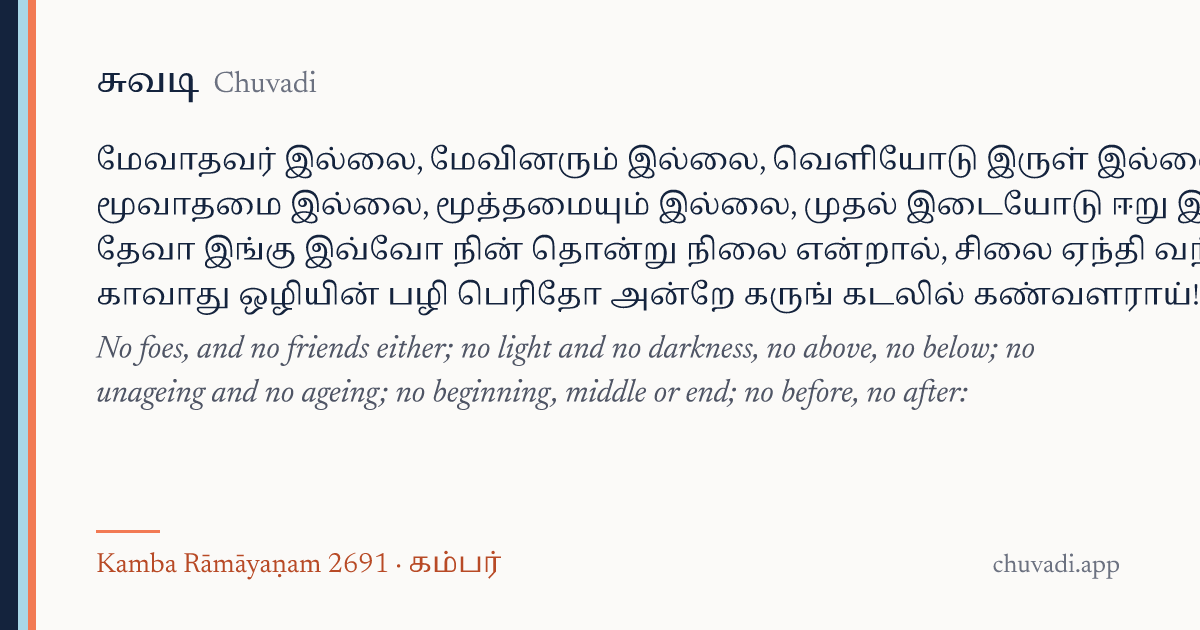
தேவா - எல்லாத் தேவர்க்கும் தேவனே; கருங்கடலில் கண் வளராய் - பெரிய பாற்கடலில் யோகநித்திரை கொள்பவனே!; மேவாதவர் இல்லை - பகைவர் இல்லை; மேவினரும் இல்லை - நண்பர்களும் இல்லை; வெளியோடு இருள் இல்லை - ஒளி இருள் என்ற மாறுபாடில்லை, மேல் கீழும் இல்லை - உனக்கு மேற்பட்டதும் கீழ்ப் பட்டதும் இல்லை; மூவாதமை இல்லை மூத்தமையும் இல்லை - உனக்கு இளமையும் இல்லை மூப்பும் இல்லை; முதல் இடையோடு ஈறு இல்லை- உனக்குத் தொடக்கம், நடு, முடிவு இல்லை; முன்னொடு பின் இல்லை -காலத்தால் உனக்கு முற்பட்டதும் பிற்பட்டதும் இல்லை; நின் தொன்று நிலை இங்கு இவ்வோ என்றால் - உன் பழைய நிலை இங்குக் கூறிய இவையோ என்றால், சிலை ஏந்தி, சேவடிகள் நோவ வந்து - வில்லைக் கையிலேந்தி சிவந்த அடிகள் நோகும்படி நடந்து வந்து; எம்மைக் காவாது ஒழியின் - எங்களைக் காவாமற் போனால்; பழி பெரிதோ - பெரும் பழி உண்டாகுமோ?; கைம்மாறும் உண்டோ - இதனால் நீ அடையும் மாற்றுப் பயன் ஏதேனும் உண்டோ; அன்றோ - அல்லவோ? (ஒன்றுமில்லை என்பதாம்)
கருங்கடல் என்பதற்குக் கரிய நிறமுள்ள கடல் என்று கூறிப் பரமன் பள்ளி கொண்டது பாற்கடல் வெளிது ஆயினும் அவன் திருமேனியின் கரிய நிழலிட்டதால் கரிய கடலாயிற்று என்பார். கண்வளராய் என்பதற்கு உடன்பாட்டுப் பொருளன்றி அவதாரத்திற்குப் பள்ளி கொண்டமையை நீத்து வந்தமையையும் குறிக்கும். கருங்கடல் என்பதற்குப் பிரளய காலத்தில் ஒரே பெரு வெள்ளமாய் இருப்பதையும் கொள்வர். பரம்பொருளுக்கு மாரிமாட்டுக் கைம்மாறு செய்ய இயலாதது போல யாவர் செய்ய ஆற்றலுடையார் எனக் கேட்டு அதன் பெருமையை உணர்த்தியவாறாம். பகை நட்பு, இருள் ஒளி போன்ற, உடன்பாடு எதிர் மறை ஆகிய இரு நிலைகளையும் காட்டிக் கடவுளின் எல்லாம் கடந்த நிலையை எண்ணி வணங்கிய நிலை இது. இத்தகைய திருவிளையாடல் அவன் அருளால் விளைவது என்பர்.
ஆங்கிலம் · English translationAI
Translation
- No foes, and no friends either; no light and no darkness, no above, no below;
- no unageing and no ageing; no beginning, middle or end; no before, no after:
- O God, if such is your ancient state, then, bearing a bow and coming here so that your red feet ache,
- had you left us unguarded, would the blame be great? No! O you who sleep upon the dark sea, is there any return we could make?
What the poem says
Intiraṉ describes the Supreme as beyond all pairs of opposites: friend and foe, light and dark, high and low, youth and age, beginning and end. Such a being owes nothing to anyone; had he left the gods unprotected no blame would attach to him. Yet he has taken up a bow and walked the earth on aching feet to save them, and like the rain, he can never be repaid.
The ocean where he sleeps is called dark because his dark body colours the white sea of milk, or because it means the single flood at the end of an age.