



கம்பராமாயணம் 2692 · ஆரணிய 2.29
பாடல் · The poem
Tap a word to see its gloss in the commentary and where else it occurs.
பாட வேறுபாடு · Project Madurai reads
பொருள் · Meaning in Tamil
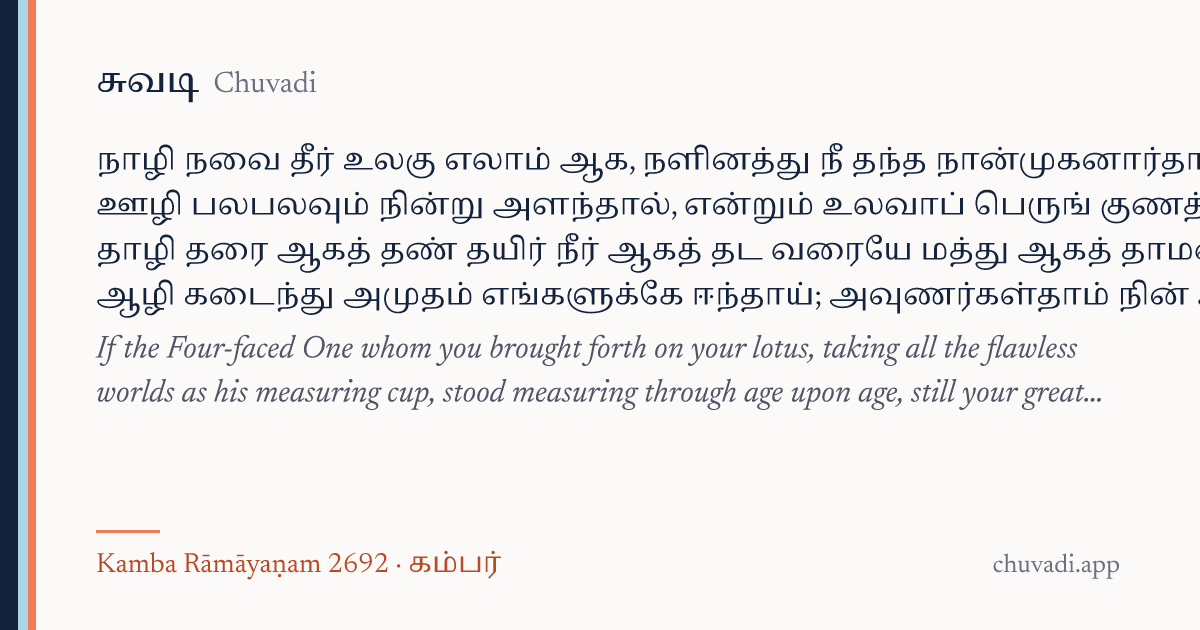
நீ நளினத்துத் தந்த நான்முகனார் தாமே - நீ உன் திரு உந்தித்தாமரையில் தோற்றுவித்த நான்கு முகங்களையுடைய பிரமதேவரே; நவைதீர் உலகு எலாம் நாழி ஆக - குற்றமற்ற உலகங்கள் யாவும் அளக்கும்படியாகக் கொண்டு; ஊழிபலபலவும் நின்று அளந்தால் - அனேக ஊழிக்காலங்களும் விடாமல் அளந்தாலும், என்றும் உலவாப் பெருங் குணத்து எம் உத்தமனே - என்றைக்கும் குறையாத அரும் பெரும் பண்புகளுடைய மேலானவனே!; மேல்நாள் - முற்காலத்தில்; தரை தாழி ஆக - பூமியே தாழியாகவும், நீர் தண் தயிர் ஆக - கடல் நீரே குளிர்ந்த தயிராகவும்; தடவரையே மத்து ஆக - பெரிய மந்தர மலையே கடையும் மத்தாகவும்; தாமரைக்கை நோவ - தாமரைமலர் போன்ற உன் கைகள் வருந்த; ஆழி கடைந்து அமுதம் எங்களுக்கே ஈந்தாய் - கடலைக் கடைந்து அதனின்று வந்த அமுதத்தைத் தேவர்களாம் எங்களுக்கே கொடுத்தருளினாய்; அவுணர்கள்தாம் நின் அடிமை அல்லாமை உண்டோ - (எங்களோடு ஒரு பக்கம் கடைந்த) அசுரர்கள் தாம் உனக்கு அடிமை அல்லாமை உளதோ?
உன் மகனாம் பிரமனாலும் அளந்தறிய முடியாத எல்லையற்ற கலியாண குணங்கள் எங்களால் சிறிதும் அறியத்தக்கவையோ எனக் கருதியதாம். அறங்காத்து மறங்கடியும் பண்பினால் தேவர்க்கு அமுதமீந்து அரக்கர்க்கு அதனை மறுத்தான். இறைவன் பண்புகளை அளக்கும் பொருளாகக் கொண்டு பல அண்டங்களை அளக்கும் கருவியாகக் கொண்டு அளந்தாலும் அளவிட முடியாது என்பது ஏகதேச உருவகம். தரைதாழியாகவும், நீர்தயிராகவும், வரை மத்தாகவும் உருவகம் செய்யப்பட்டன. இது உருவக அணி.
பாற்கடலைக் கடையும்போது அசுரர்களை வாசுகியின் தலையையும் தேவர்களை அதன் வாலையும் பிடித்துப் பாற்கடலில் நட்ட மந்தர மலையை மத்தாகக் கொண்டு நிற்குமாறு ஏவித் தானும் ஒரு திருமேனி பூண்டு வாசுகியின் வாலையும் தலையையும் பிடித்து வலம் இடமாகக் கடைந்ததாகப் புராண வரலாறு கூறும்.
ஆங்கிலம் · English translationAI
Translation
- If the Four-faced One whom you brought forth on your lotus, taking all the flawless worlds as his measuring cup,
- stood measuring through age upon age, still your great virtues would never run out, O our Highest! Long ago,
- with the earth for the churning-pot, the waters for cool curd, the great mountain for the churning-stick, your lotus hands aching,
- you churned the ocean and gave its nectar to us alone; yet is there any way the Asuras are not your servants too?
What the poem says
Even Piramaṉ, born from the lotus of Tirumāl's navel, could not measure his virtues if he used whole worlds as a measuring vessel for countless ages. Intiraṉ recalls the churning of the ocean of milk, pictured as churning curd: the earth is the pot, the sea the curd, Mount Mantaram the churning-stick.
The gods and demons pulled on the serpent Vācuki, and Tirumāl took a form to churn with them, but gave the nectar only to the gods. Yet Intiraṉ admits that the Asuras, too, are his servants.