



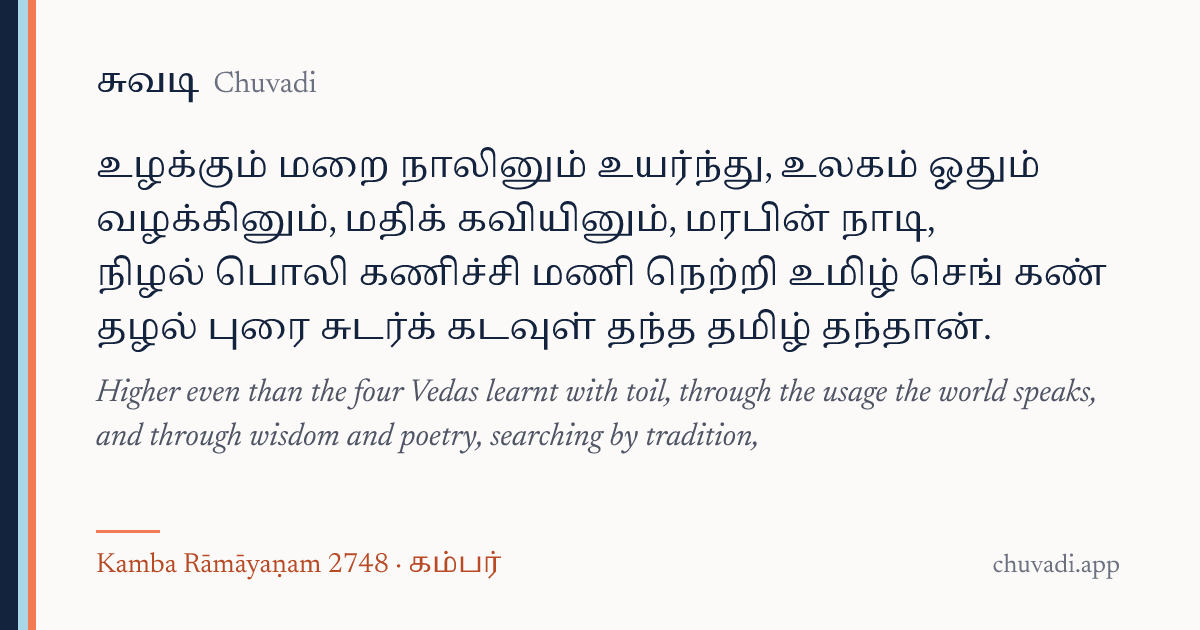
கம்பராமாயணம் 2748 · ஆரணிய 3.41
பாடல் · The poem
Tap a word to see its gloss in the commentary and where else it occurs.
பொருள் · Meaning in Tamil
நிழல்பொலி கணிச்சி மணி நெற்றி உமிழ் செங்கண் - ஒளி விளங்கும் மழுவாயுதத்தையும் அழகிய நெற்றியில் நெருப்பைக் கக்கும் சிவந்த கண்ணையும் உடைய,; தழல்புரை சுடர்க் கடவுள் - நெருப்பை ஒத்த ஒளிவடிவான சிவபெருமான்; தந்த தமிழ் - அருளிய தமிழ் மொழியை; உழக்கும் மறை நாலினும் - வருந்தி ஓதி அறியக்கூடிய வழக்கினாலும்; உயர்ந்து உலகம் ஓதும் வழக்கினும் - உயர்ந்தோராகிய உலகம் கூறுகின்ற உலகவழக்காலும்; மதிக் கவியினும் மரபின் நாடி - அறிவாலும் செய்யுள் வழக்காலும் மரபு நெறியாலும் முறைப்பட ஆராய்ந்து; தந்தான் - உலகினர்க்கு அருளினான்.
உழக்கும் மறை என்பது கனம் முதலிய முறையே பயின்று ஓசை தவறாமல் ஓதி உணரத்தக்க வேதம் என்பதாம். இதனால் வேதம் ஓதுதலிலுள்ள கடின நிலை புலப்படும். ஆதியில் தமிழ் நூல் அகத்தியற்குணர்த்திய மாதொரு பாகனை வழுத்துதும் எனச் சேனாவரையர் கூற்றையும் இதனோடு ஒப்பிடலாம். அகத்தியர் அருளிய இலக்கணம், சிற்றகத்தியம், பேரகத்தியம் எனப்படும். மதிக்கலையினும் எனப் பாடமோதிப் புத்தி கப்பு விட்டதனாலும் எனப் பழைய உரை கூறும். வடமொழி தென்மொழிகளுக்கு இறைவன் சிவபெருமானே முதல் என்ற கருத்தை இது புலப்படுத்தும். (ஒவ்வொரு சமயத்தாரும் தத்தம் கடவுளரே மொழிகளைப் படைத்தனர் என்று தம் கொள்கையைக் கூறுவர்) இப்பாடல்களால் கடலை உண்டது, வாதாபி வலம் அழித்தது, விந்தத்தை அடக்கியது, தென்திசை வட திசையைச் சமனாக்கியது, முதலிய அகத்தியரின் அருஞ்செயல்களை அறிய முடிகிறது. நீண்ட தமிழால் அளந்ததில் (2666) தொடங்கி இங்குத் தமிழ் தந்தான் எனக் கூறுவதால் அகத்தியரின் பெருமையில் தமிழே முதலும் முடிவுமாய் விளங்குவது புலனாம்.
ஆங்கிலம் · English translationAI
Translation
- Higher even than the four Vedas learnt with toil, through the usage
- the world speaks, and through wisdom and poetry, searching by tradition,
- he gave out the Tamil that was given by the god like blazing fire,
- with the shining axe and the red eye that spits flame from his lovely brow.
What the poem says
The praise of Akattiyaṉ closes where it began, with Tamil. Civaṉ, the fiery god with the axe and the flaming eye in his forehead, gave the Tamil language to Akattiyaṉ, and the sage, studying it through everyday speech, literary usage and tradition, set it in order and handed it to the world.
The commentary notes the old belief that Civaṉ is the source of both Sanskrit and Tamil, and that these verses together list the sage's wonders: drinking the sea, destroying Vātāpi, humbling the Vindhya and balancing north and south. Tamil frames the whole passage, from first to last.