



கம்பராமாயணம் 2763 · ஆரணிய 3.56
பாடல் · The poem
Tap a word to see its gloss in the commentary and where else it occurs.
பாட வேறுபாடு · Project Madurai reads
பொருள் · Meaning in Tamil
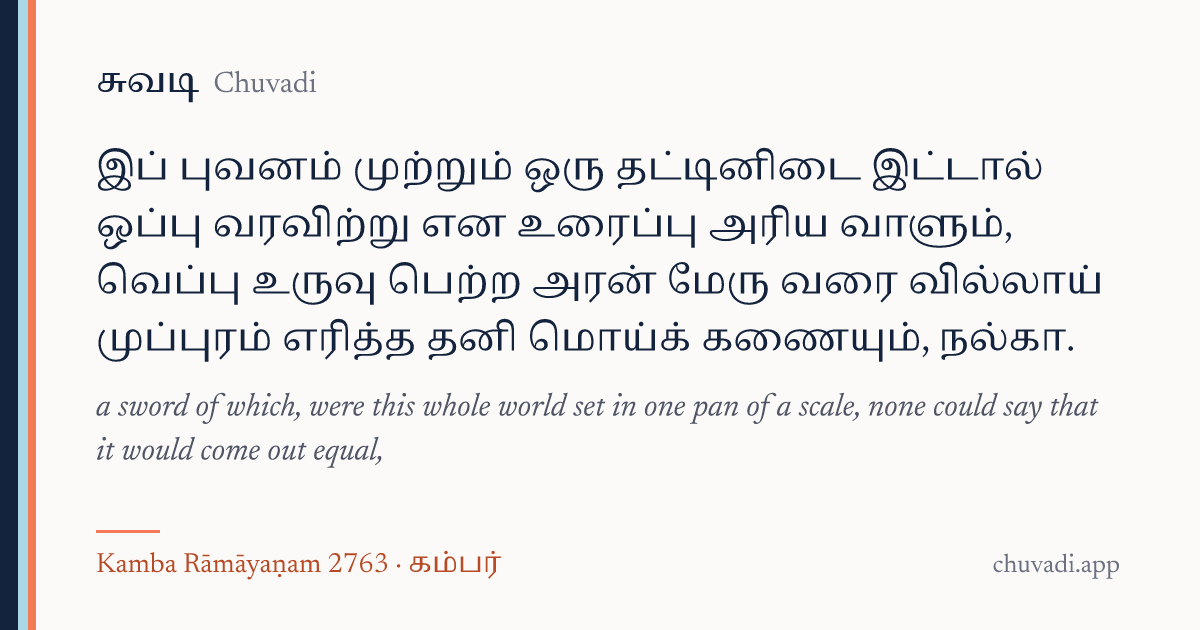
(மேலும் அகத்தியர்) இப்புவனம் முற்றும் ஒரு தட்டினிடை இட்டால் - இவ்வுலக முழுவதையும் ஒரு தராசுத் தட்டில் வைத்து நிறுத்தாலும்; ஒப்பு வரவிற்று என உரைப்பு அரிய வாளும் - ஒப்பாக வருதலை உடையது எனச் சொல்வதற்கு இயலாத ஓர் அரிதான வாளையும்; வெப்பு உருவு பெற்ற அரன் - தீ வடிவு கொண்ட சிவபெருமான்; மேருவரை வில்லாய் முப்புரம் எரித்த தனி மொய்க் கணையும் நல்கா - மகா மேரு மலையை வில்லாகக் கொண்டு திரிபுரங்களை எரித்த ஒப்பில்லாத வலிய அம்பையும் கொடுத்து,
ஒப்பு வரவு இற்று என - ஒப்பாக வருவது இல்லாதாகும் என - என்று பொருள் கொள்வர். நல்கா - நல்கி. சிவபெருமான் திரிபுரங்களை எரித்த போது மேருமலையை வில்லாகவும் திருமாலை அம்பாகவும் கொண்டார் எனப் புராணம் கூறும்.
மொய்கணை என்பதைச் சிலப்பதிகாரம் (6.40-41) எரிமுகப் பேரம்பு என்று கூறும். வான்மீகம், இந்த வில் விசுவகருமாவினால் செய்யப் பெற்றுத் திருமாலிடம் அளித்தது என்றும், அந்த அம்பு பிரமனால் அளிக்கப் பெற்றதென்றும், அவ்வம்புப் புட்டிலும் வாளும் இந்திரனால் கொடுக்கப் பெற்றவை என்றும் அகத்தியர் கூறி இராமனிடம் அளித்ததாகக் கூறும். 'மொய்க்கவச நல்கா' என்ற பாடம் கொண்டு அகத்தியர் இராமனுக்குக் கவசமும் அளித்தார் என்பர். இதற்குப் பிற நூல்களில் சான்றில்லை.
ஆங்கிலம் · English translationAI
Translation
- a sword of which, were this whole world set in one pan of a scale,
- none could say that it would come out equal,
- and the mighty peerless arrow with which Araṉ, who took the form of fire,
- burned the three cities with Mount Mēru as his bow, he gave.
What the poem says
Akattiyaṉ continues his gifts. Besides the bow and quiver, he gives Irāmaṉ a sword that the whole world could not outweigh, and the matchless arrow with which Civaṉ, using Mount Mēru as his bow, burned the three flying cities of the demons.
In the Purāṇic story, Civaṉ's arrow on that occasion was Tirumāl himself. The commentary adds that in the Sanskrit version the bow was made by the divine craftsman, the arrow was given by Piramaṉ, and the quiver and sword by Intiraṉ.