



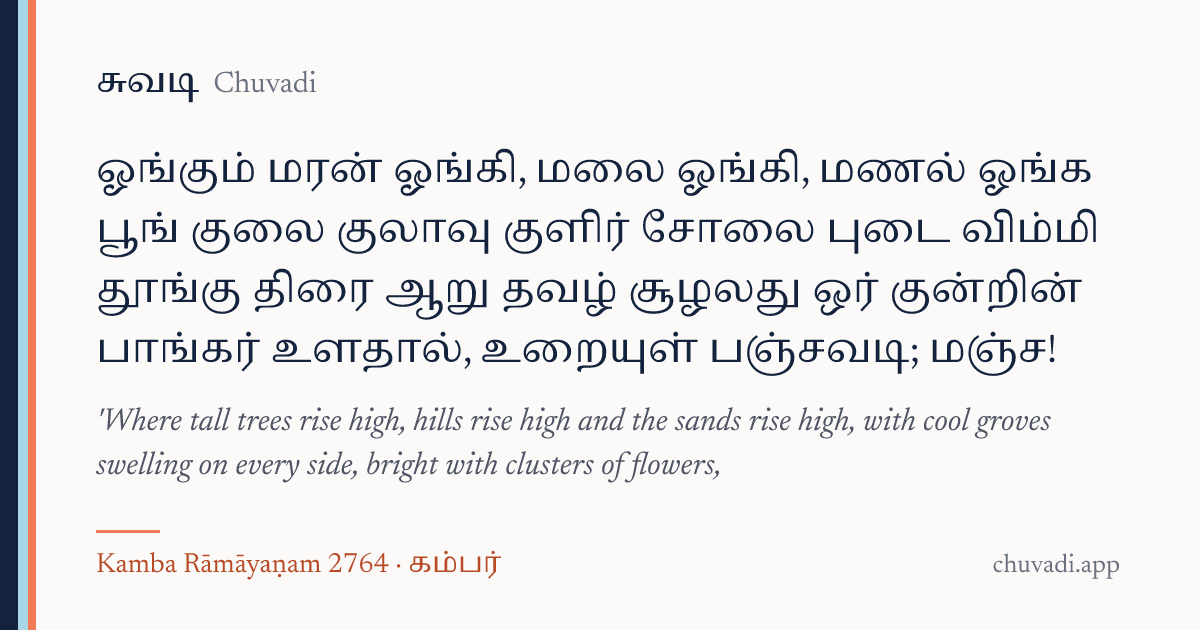
கம்பராமாயணம் 2764 · ஆரணிய 3.57
பாடல் · The poem
Tap a word to see its gloss in the commentary and where else it occurs.
பொருள் · Meaning in Tamil
மஞ்ச - மைந்தனே! ஓங்கும் மரன் ஓங்கி - உயர்ந்த மரங்கள் நிமிர்ந்து வளரப் பெற்றும்; மலை ஓங்கி - மலைகள் உயர்ந்து விளங்கப்பெற்றும்; மணல் ஓங்கி - மணற்குன்றுகள் உயர்ந்து விளங்கப் பெற்றும்; பூங் குலை குலாவு குளிர் சோலை புடைவிம்மி - பூங் கொத்துகள் விளங்கும் குளிர்ந்த சோலைகள் பக்கங்களில் விளங்கப் பெற்றும்; தூங்குதிரை ஆறுதவழ் சூழலது ஓர் குன்றின் பாங்கர் - குதிக்கும் அலைகளுடைய ஆறுகள் பாயப் பெற்றுமுள்ள சூழ்ந்த இடங்களையுடைய ஒரு சிறு மலையின் பக்கத்தில்; பஞ்சவடி உறையுள் உளது - பஞ்சவடி என்னும் வாழிடம் ஒன்று உள்ளது; ஆல் - அசை.
பஞ்சவடி - ஐந்து ஆலமரங்களின் கூட்டம். அதனை உடைய இடத்தைச் சுட்டியது. அகண்ட கோதாவரி ஆற்றின் கரையில் நாசிகாத்திரியம்பகத்துக்கு அருகில் உள்ளது பஞ்சவடி. அது இராமனின் கருத்திற்கியைந்த வாழிடமாம் என்பது. ஆறு - கோதாவரி முதலிய ஆறுகள். அகத்தியர் ஆசிரமத்திலிருந்து பஞ்சவடி இரண்டு யோசனை தூரம் என வான்மீகம் கூறும். பூங்குலை உம்மைத் தொகையாகக் கொண்டு பூக்களும் பழங்களும் என்றுமாம். மஞ்ச என்பது மைந்த என்பதன் போலி. ஓங்கு என்ற சொல் முதலடியில் நான்கு முறை ஒரு பொருளில் அடுக்கி வந்ததால் சொற்பொருட் பின்வரு நிலையணி.
ஆங்கிலம் · English translationAI
Translation
- 'Where tall trees rise high, hills rise high and the sands rise high,
- with cool groves swelling on every side, bright with clusters of flowers,
- in a setting where rivers with leaping waves creep along, beside a hill
- there is a dwelling place, Pañcavaṭi, young hero!'
What the poem says
Akattiyaṉ directs Irāmaṉ to Pañcavaṭi, 'the five banyans', a place by a hill where tall trees, high hills and sandbanks rise, cool flowering groves abound, and rivers flow with dancing waves. It lies on the banks of the Godavari, two leagues from the sage's hermitage according to the Sanskrit account.
The poet repeats the word 'rise' four times in the first line, a deliberate figure of repetition that conveys the lushness of the place.