



கம்பராமாயணம் 2765 · ஆரணிய 3.58
பாடல் · The poem
Tap a word to see its gloss in the commentary and where else it occurs.
பொருள் · Meaning in Tamil
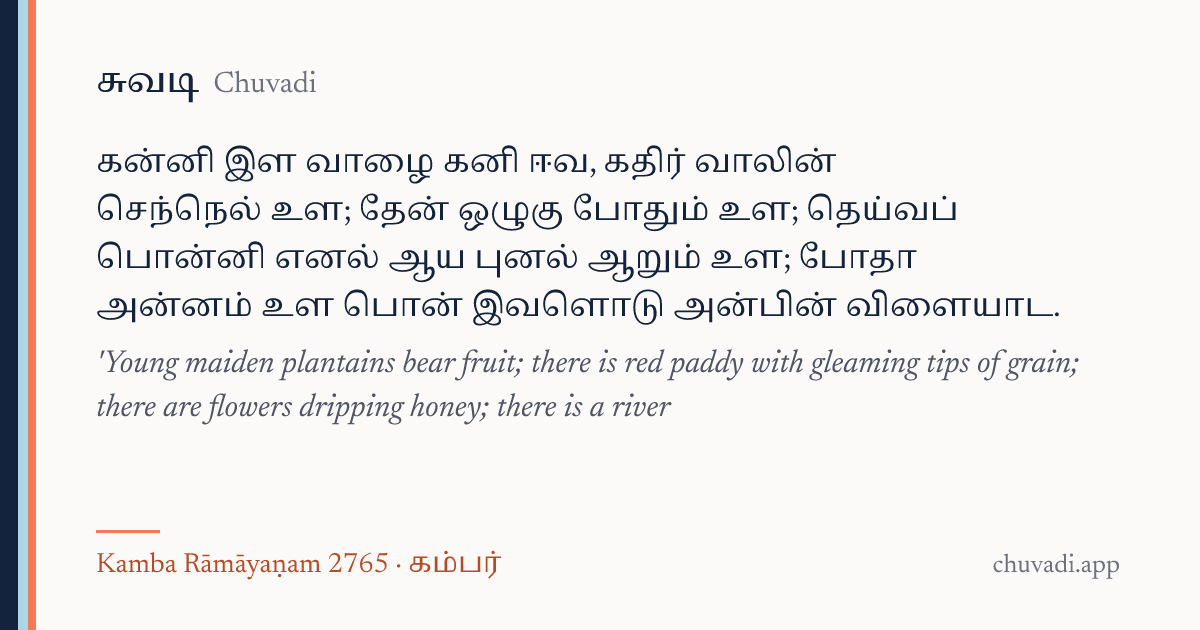
(பஞ்சவடியில்) கனி ஈவ கன்னி இளவாழை - பழங்களைத் தரும் மிக இளமையான வாழை மரங்களும், கதிர் வாலின் செந்நெல் உள - ஒளி பொருந்திய நுனியையுடைய செந்நெற்பயிர்களும் உள்ளன; தேன் ஒழுகு போதும் உள - தேன் வழிகின்ற மலர்களும் உள்ளன; தெய்வப் பொன்னி எனல் ஆய புனல் ஆறும் உள - தெய்வத் தன்மை பொருந்திய 'காவிரி என்று கூறத்தக்க நீர் வெள்ளம் பாயும் நதிகளும்' உள்ளன; பொன் இவளொடு அன்பின் விளையாட - பொன்னையொத்த இச்சீதையுடன் அன்போடு விளையாடுவதற்கு; போதா அன்னம் உள - பெருநாரைகளும் அன்னங்களும் உள்ளன.
கன்னி இளவாழை - ஒன்றன் பின் ஒன்றாக அழியாது ஈன்று கொண்டேயிருக்கும் வாழை எனலுமாம். பஞ்சவடி நீர்வளம் மிக்க இடமாதலால் வாழை, நெல், சோலை, நீர்ப்பறவைகள் ஆகியன விளங்கி நிற்கின்றன. கதிர்வால் - ஒளி பொருந்திய வாலோடு விளங்கும் என்பர். உணவுக்கும் நீருக்கும் அவ்விடத்தில் பஞ்சமில்லை என்பது இதனால் விளங்கும். மீண்டும் சீதைக்குப் பொழுது போகப் பறவைக் கூட்டங்கள் உள்ளன என்றார். பொன்னி யாற்றைக் கூறியதால் கவியின் நாட்டுப்பற்று நன்கு புலப்படும். கன்னி இள - ஒரு பொருட் பன்மொழி. கதிர்வாலின் செந்நெல் எனப் பாடங் கொண்டு ஒளிரும் வாலை உடைய ஒருவகைக் கெண்டை மீனைக் குறிக்கும் என்பர்.
ஆங்கிலம் · English translationAI
Translation
- 'Young maiden plantains bear fruit; there is red paddy
- with gleaming tips of grain; there are flowers dripping honey; there is a river
- whose waters could be called the divine Poṉṉi; there are storks
- and swans, to play lovingly with this golden lady.'
What the poem says
Akattiyaṉ describes the abundance of Pañcavaṭi: young plantains heavy with fruit, ripening red rice, honey-filled flowers, a river as holy as the Kāviri, and storks and swans to keep Cītai company in her play. Food and water will never be lacking.
The commentary sees the poet's love of his own Tamil country in the comparison with the Poṉṉi, another name for the Kāviri.