



கம்பராமாயணம் 2780 · ஆரணிய 4.14
பாடல் · The poem
Tap a word to see its gloss in the commentary and where else it occurs.
பொருள் · Meaning in Tamil
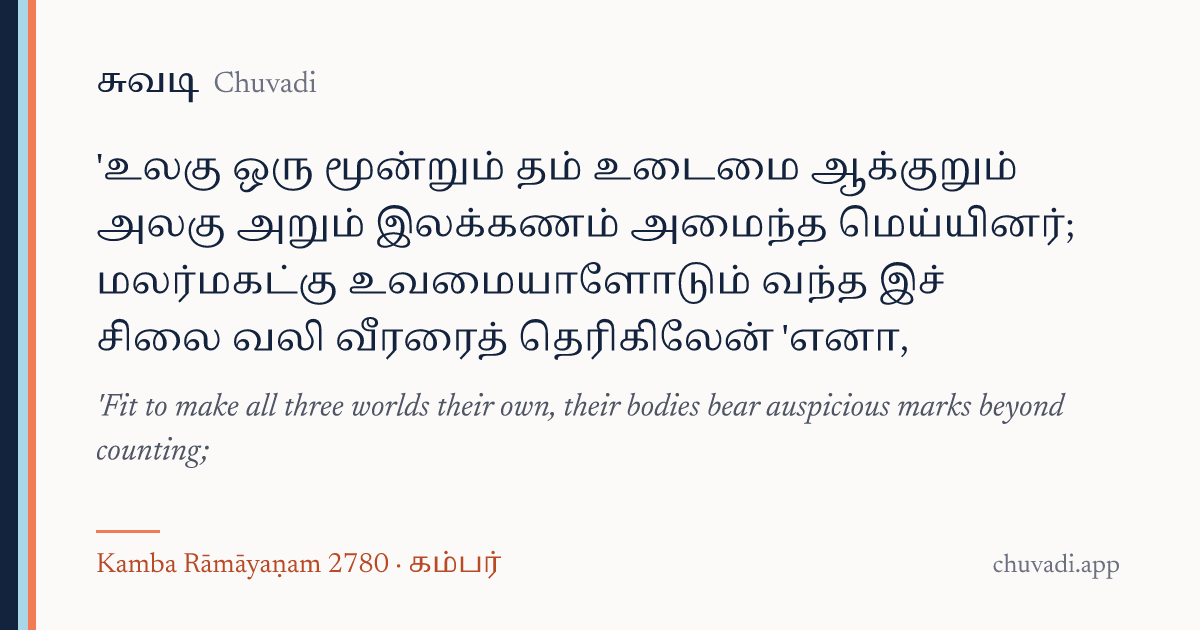
உலகு ஒரு மூன்றும் தம் உடைமை ஆக்குறும் - மூன்று உலகங்களையும் தமக்குரிய பொருளாகச் செய்யவல்ல; அலகு அறும் இலக்கணம் அமைந்த மெய்யினர் - அளவு சொல்ல முடியாத நல்ல ஆண்மக்களின் இலட்சணங்களோடு கூடிய திருமேனிகளை உடையவர்களாய், மலர்மகட்கு உவமையாளோடும் - தாமரை மலர்மேல் வீற்றிருக்கும் திருமகளுக்கு உவமையாகக் கூறத்தக்க பெண்ணோடும்; வந்த இச் சிலை வலி வீரரைத் தெரிகிலேன் எனா - இங்கு வந்த இந்த வில் வலிமையுடைய வீரர்களை இன்னார் என அறியேன் எனக் கருதி,
இவர்களின் உடல் உறுப்பின் இலக்கணங்களைப் பார்க்கும் போது இவர்கள் சுவர்க்கம், பூமி, பாதலம் ஆகிய மூன்று உலகங்களுக்கும் உரியவராதல் வேண்டும் என்றும், சீதையின் தெய்வத் தன்மையை அறிந்து திருமகள் போன்றவள் என்றும் சடாயு எண்ணுகிறார். முன்னர்க் காமனை இராமலக்குவர்க்கு உவமை ஆகான் எனக் கூறிய சடாயு சீதைக்குத் திருமகளை ஒப்புமை கூறியது காப்பிய நோக்குடன் ஒத்துச் செல்கிறது. மிதிலைக் காட்சிப் படலத்தில் சீதையின் உரு வெளிப்பாடு கண்ட இராமனும் 'பூமகள் ஆகும் கொலோ (620) எனக் காப்பியப் போக்குக்கு ஏற்ப எண்ணியது ஒப்பிடத்தக்கது.
ஆங்கிலம் · English translationAI
Translation
- 'Fit to make all three worlds their own,
- their bodies bear auspicious marks beyond counting;
- these heroes mighty with the bow, who have come with one like the Lady of the Lotus,
- I cannot make out,' he thought,
What the poem says
Caṭāyu notes the countless auspicious marks on the brothers' bodies, signs of men destined to rule all three worlds, and sees that the woman with them is like Tirumakaḷ, the goddess of fortune who sits on the lotus. Still he cannot tell who they are.
The commentary observes that while no god is a fit comparison for the brothers, Cītai is likened to the goddess Lakṣmī, in keeping with the epic's view of her; Irāmaṉ himself had the same thought on first seeing her in Mithilā.