



கம்பராமாயணம் 2779 · ஆரணிய 4.13
பாடல் · The poem
Tap a word to see its gloss in the commentary and where else it occurs.
பொருள் · Meaning in Tamil
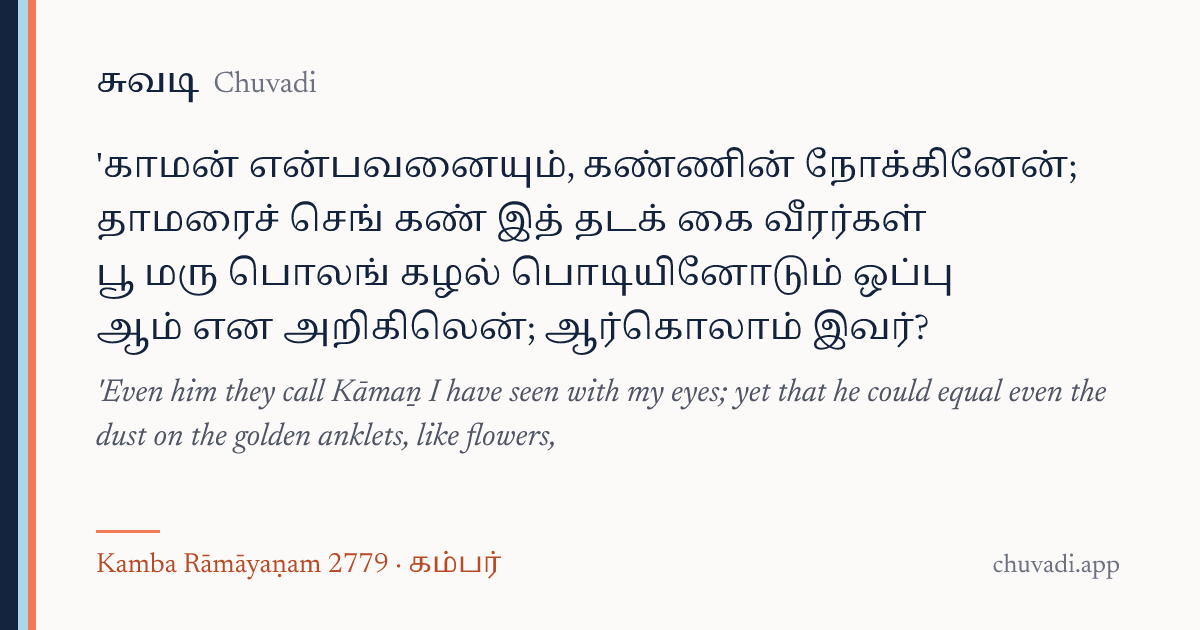
காமன் என்பவனையும் - மன்மதன் என்று அழகிற் சிறப்பித்துச் சொல்லப்படுகின்றவனையும், கண்ணின் நோக்கினேன் - கண்ணால் கண்டுள்ளேன்; தாமரைச் செங்கண் இத்தடக்கை வீரர்கள் - தாமரை இதழ் போன்ற சிவந்த கண்களையும் நீண்ட கைகளையுமுடைய இந்த வீரர்களின்; பூமரு பொலங் கழற் பொடியினோடும் - தாமரை மலர்போன்ற பொற் பாதங்களில் ஒட்டிய தூளியோடும்; ஒப்பு ஆம் என அறிகிலென் - ஒப்பாவான் என்று அறிகின்றேனில்லை; இவர் ஆர்கொலாம் - இவ்வீரர்கள் யாவரோ?
'ஒப்பாம் என அறிகிலேன்' என்றதால் 'ஒப்பாக மாட்டான் என அறிவேன்' என்பது தெளிவு. இவை இரு பாட்டாலும் சடாயு இராமலக்குவரைப் புலவரல்லர் எனத் தெளிந்தமை கூறப்பட்டது. இவர்கள் இருவராக இருந்ததாலும் புரந்தரன் முதலியோர் கொண்டுள்ள வச்சிரப்படை முதலியவை காணப் பெறாமையாலும் இம்முடிவுக்குச் சடாயு வந்தார். பழைய இராமாயணத் தனிச் செய்யுளில் சாம்பவன் கூற்றில் அலைகடல் கடையக் கண்டேன் எனத் தொடங்கிச் 'சிலை மதன் வடிவுகண்டேன்' என்ற தொடர் காணப்படுகிறது. இதனால் சடாயுவும் மன்மதன் சிவபெருமானால் எரிக்கப்படாமைக்கு முன் கண்ட செய்தி வெளிப்படுகிறது.
ஆங்கிலம் · English translationAI
Translation
- 'Even him they call Kāmaṉ I have seen with my eyes;
- yet that he could equal even the dust on the golden anklets, like flowers,
- of these heroes with red lotus eyes and long arms,
- I cannot believe; who can these be?'
What the poem says
Caṭāyu goes on wondering. He has seen Kāmaṉ, the god of love and the measure of male beauty, with his own eyes, before Civaṉ burned him; yet Kāmaṉ is not equal even to the dust on these heroes' feet. Who can they be?
The commentary concludes that, since they are two and carry none of the gods' weapons such as Intiraṉ's thunderbolt, Caṭāyu has decided they are not gods.