



கம்பராமாயணம் 2778 · ஆரணிய 4.12
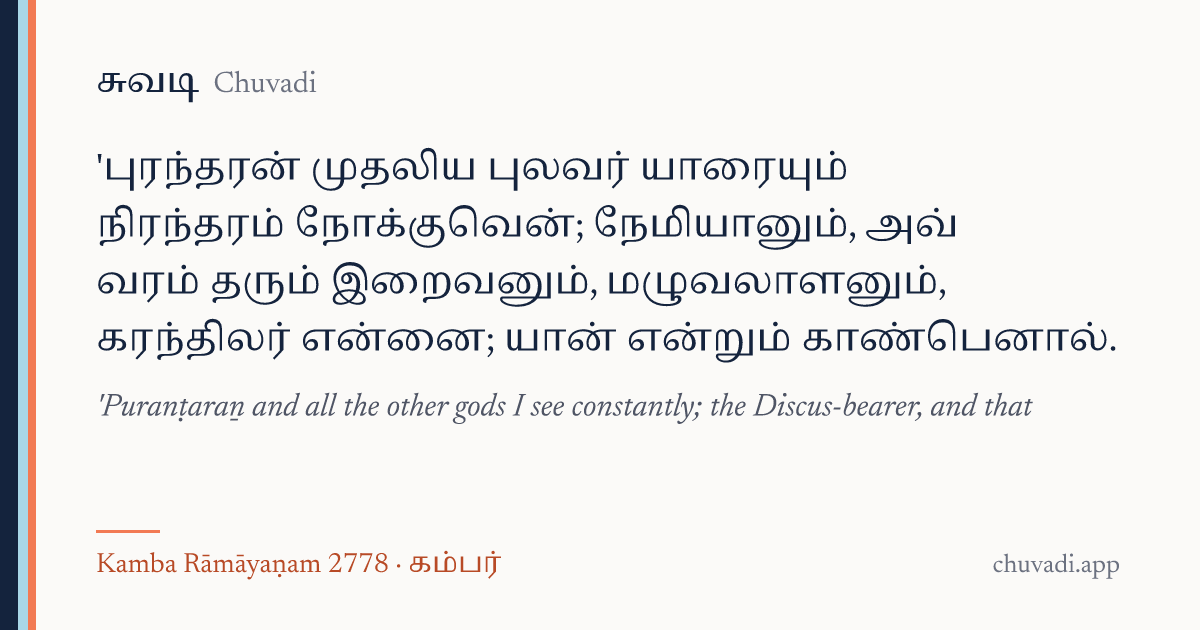
பாடல் · The poem
Tap a word to see its gloss in the commentary and where else it occurs.
பொருள் · Meaning in Tamil
புரந்தரன் முதலிய புலவர் யாரையும் - இந்திரன் முதலான தேவர்கள் அனைவரையும்; நிரந்தரம் நோக்குவென் - எப்போதும் பார்ப்பேன்; நேமியானும் - சக்கரப்படையுடைய திருமாலும், அவ்வரம் தரும் இறைவனும் - விரும்பிய வரங்களை அளிக்கும் அந்தப் பிரமனும்; மழுவலாளனும் - மழுப்படையுடைய சிவபெருமானும்; என்னைக் கரந்திலர் - எனக்கு மறைந்து கொள்ளமாட்டார்கள்; என்றும் யான் காண்பென் - எப்போதும் நான் அவர்களைப் பார்ப்பேன்; ஆல் - ஈற்றசை:
முன்னைய பாடலில் புலவரோ என ஐயுற்றதனை இதில் மேலும் விளக்கி காட்டுவார் 'கரந்திலர் என்னை; யான் என்றும் காண்பெனால்' என்றதால் இவர்கள் அத்தேவர்கள் அல்லர் என்பது புலப்படும். இச்செய்யுளால் சடாயு நாள்தோறும் திருமால், பிரமன், சிவபெருமான் ஆகியோரை நேரில் கண்டு வழிபாடு செய்பவர் என்பது பெறப்பட்டது. சடாயு சிவனை வழிபடப் புள்ளிருக்கும் வேளூர்க்கும், திருமாலை வழிபடத் திருப்புட்குழிக்கும் செல்வார் என்பதைச் சம்பந்தர் தேவாரமும் திருப்புள்ளிருக்கும் வேளூர்ப் பற்றிய (2.43.1. 4, 6, 9, 10 தருமைப் பதிப்பு) திருமங்கை மன்னர் பெரிய திருமொழிப் பாடலும் கூறும். (பெரிய திரு. 2.7.8) பிரமனை நோக்கியே பெரிதும் வரம் பெற முயல்வதை எண்ணி 'வரந்தரும் இறைவன் எனப்பட்டார் (சடாயு சூரியனின் மகனெனச் சம்பந்தர் குறிப்பிடுவதை எண்ணிப் பார்க்கத்தக்கது 2.43.9 தருமைப் பதிப்பு) என்னை உருபுமயக்கம்.
ஆங்கிலம் · English translationAI
Translation
- 'Puranṭaraṉ and all the other gods
- I see constantly; the Discus-bearer, and that
- Lord who grants boons, and the wielder of the axe,
- do not hide from me; I see them always.'
What the poem says
Caṭāyu reasons that these cannot be gods after all. He sees Intiraṉ and the other gods all the time, and even the three great gods, Tirumāl, Piramaṉ the giver of boons, and Civaṉ with his axe, never hide from him. He would have recognised them.
The commentary notes the Tamil devotional tradition that Caṭāyu worshipped Civaṉ and Tirumāl at particular shrines, mentioned in the hymns of Campantar and Tirumaṅkai Āḻvār.