



கம்பராமாயணம் 2777 · ஆரணிய 4.11
பாடல் · The poem
Tap a word to see its gloss in the commentary and where else it occurs.
பொருள் · Meaning in Tamil
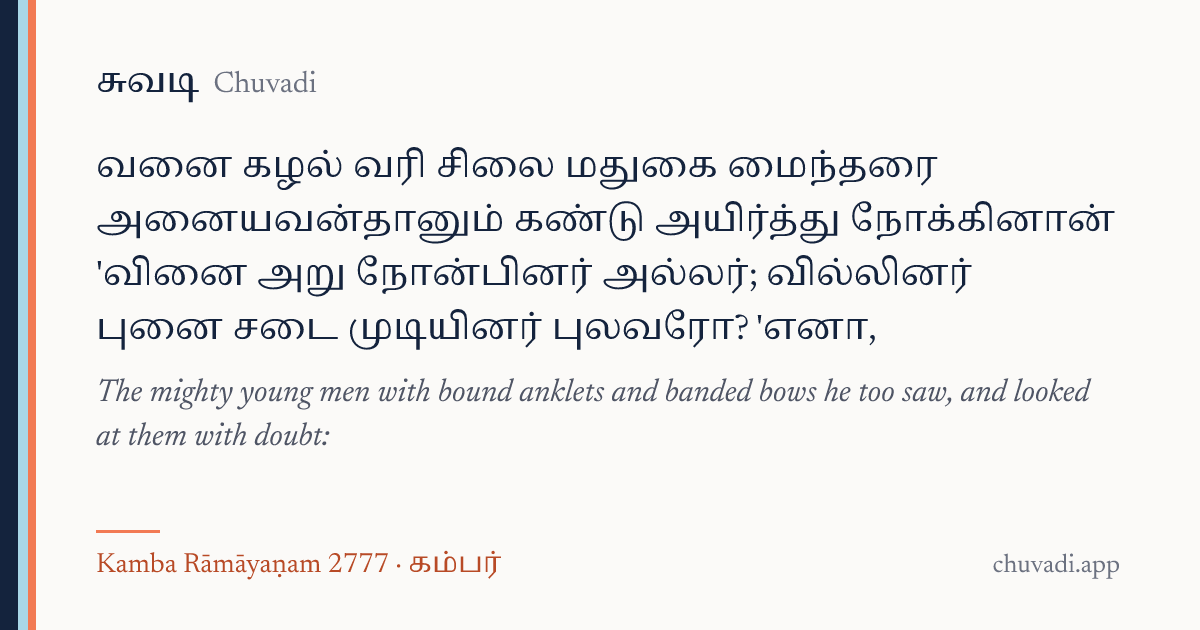
அனையவன் தானும் - அச்சடாயு தானும்; வனைகழல் வரிசிலை மதுகை மைந்தரை - கட்டிய வீரக்கழலையும் கட்டமைந்த வில்லையும் வலியையும் உடைய (தயரதன்) மக்களை; கண்டு - பார்த்து; வினை அறு நோன்பினர் அல்லர் - இருவினைகளை அறுத்திட முயலும் தவசிகள் அல்லர்; (மாறாக) வில்லினர் - வில்லுடையவராக விளங்குகின்றனர்; புனை சடை முடியினர் - தரித்த சடையோடு கூடிய முடியுடையவராயுள்ளனர்; (அதனால்) புலவரோ - தேவர்களோ; எனா அயிர்த்து நோக்கினான் - என்று எண்ணி ஐயுற்றான்
தவம் புரிகின்ற முனிவர் சடைமுடி பூண்டிருப்பர். ஆயின் வில்லேந்தி வாரார். இதனால் சடாயு ஐயுறுதற்குக் காரணம் ஏற்பட்டது. இராமலக்குவர் திருமேனியின் ஒளி கண்டு தேவரோ என எண்ணினார் எனலுமாம்.
இராமலக்குவர் சடாயுவைப் பார்த்து 'நீ யார்?' என்று கேட்ட போது நான் உன் தந்தை தயரதன் நண்பன் என்று என்னைத் தெரிந்து கொள்' என விடை கூறியதாக வான்மீகம் கூறும்.
ஆங்கிலம் · English translationAI
Translation
- The mighty young men with bound anklets and banded bows
- he too saw, and looked at them with doubt:
- 'They are not ascetics whose penance ends karma; they carry bows;
- yet they wear matted locks; are they gods?' he wondered,
What the poem says
Caṭāyu is just as puzzled by them. They wear the matted hair of ascetics, yet carry bows as no hermit would; perhaps, given their radiance, they are gods.
In the Sanskrit telling the meeting is simpler: when the brothers ask who he is, the bird at once introduces himself as a friend of their father Tacarataṉ.