



கம்பராமாயணம் 2776 · ஆரணிய 4.10
பாடல் · The poem
Tap a word to see its gloss in the commentary and where else it occurs.
பொருள் · Meaning in Tamil
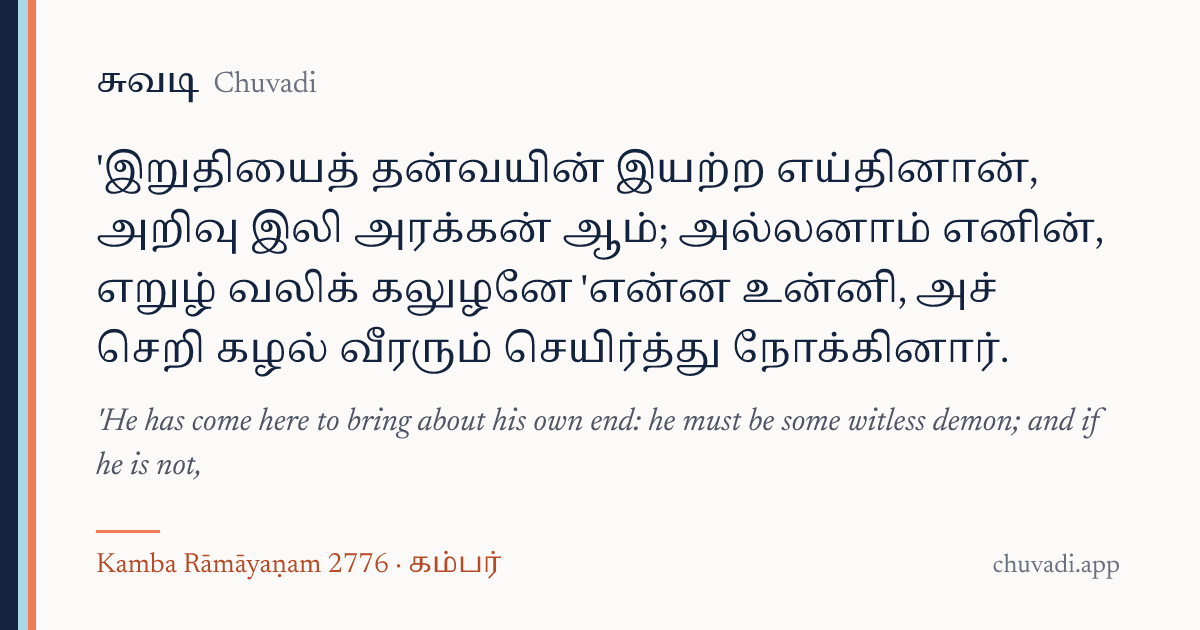
அச் செறி கழல் வீரரும் - அந்த நெருங்கிய வீரக்கழல் அணிந்த வீரர்களாம் இராமலக்குவர்களும்; (இவன்) தன்வயின் இறுதியை இயற்ற எய்தினான் - தனக்குச் சாவை உண்டாக்கிக் கொள்ள இங்கு வந்தவனாம் இவன்: அறிவு இலி அரக்கன் ஆம் - அறிவற்ற யாரோ ஓர் அரக்கன் ஆவான்; அல்லன் ஆம் எனின் - அவ்வாறு அரக்கன் அல்லாதவன் ஆனால்; எறுழ் வலிக் கலுழனே - மிக்க வலிமையுடைய கருடனே ஆவான்; என்ன உன்னி - என்று எண்ணி; செயிர்த்து நோக்கினார் - சந்தேகப்பட்டுப் பார்த்தனர்.
தன்வயின் இறுதி இயற்ற என்பதற்குத் தன்மூலமாக இராமலக்குவர்க்கு அழிவைச் செய்ய என்று கூறலுமாம். நல்லறிவின்றித் தீயவழிப் புகுந்து தனக்குத் தானே அழிவைத் தேடியதால் 'அறிவிலி அரக்கன் எனப்பட்டான். எறுழ் வலி - ஒருபொருட்பன்மொழி. இது வடிவு பற்றி வந்த ஐயநிலை உவமையணி.
ஆங்கிலம் · English translationAI
Translation
- 'He has come here to bring about his own end:
- he must be some witless demon; and if he is not,
- he is Kaluḻaṉ of mighty strength.' So thinking,
- those heroes with close-fitting anklets looked at him in anger.
What the poem says
Irāmaṉ and Ilakkuvaṉ, seeing the huge bird, eye him with suspicion. Either he is a foolish demon who has come to his own death by crossing their path, they think, or he is Kaluḻaṉ, the mighty Garuḍa, the eagle on which Tirumāl rides.
The demon is called witless because, lacking true understanding, he seeks out his own destruction.