



கம்பராமாயணம் 2786 · ஆரணிய 4.20
பாடல் · The poem
Tap a word to see its gloss in the commentary and where else it occurs.
பாட வேறுபாடு · Project Madurai reads
பொருள் · Meaning in Tamil
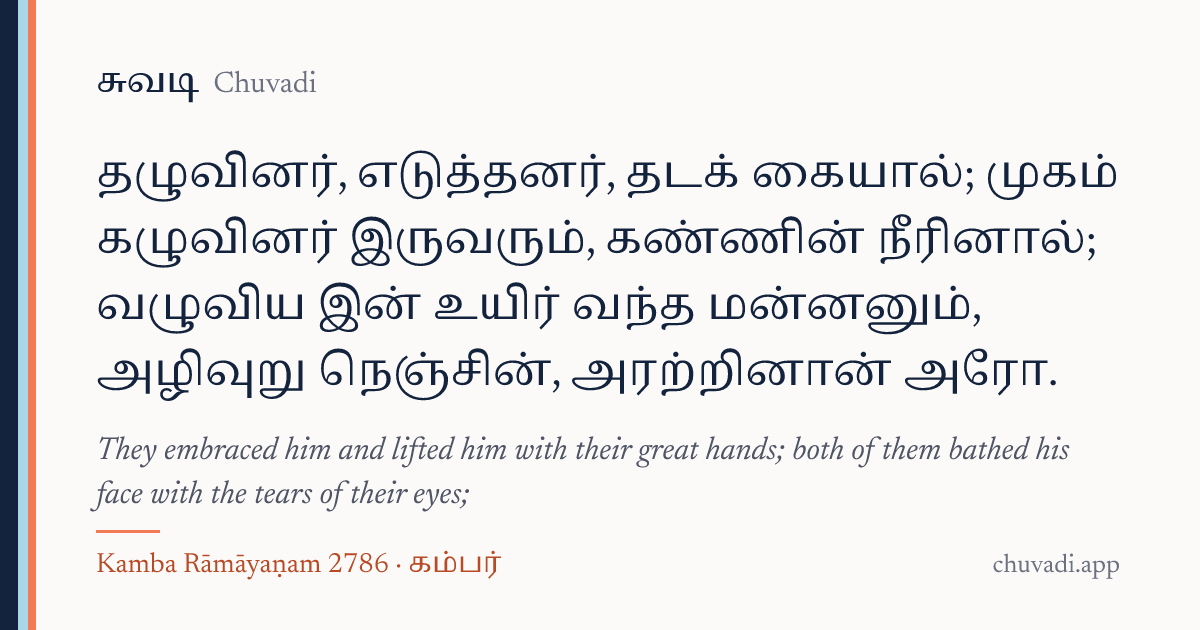
இருவரும் - இராமலக்குவராம் இருவரும்; தடக்கையால் தழுவினர் எடுத்தனர் - பெரிய கைகளால் தழுவி எடுத்தவர்களாய்; கண்ணின் நீரினால் முகம் கழுவினர் - கண்ணீரால் சடாயுவின் முகத்தைக் கழுவினார்கள்; வழுவிய இன்உயிர் வந்த மன்னனும் - நீங்கியது எனக் கருதப் பெற்ற இனிய உயிர் திரும்பவும் வரப் பெற்ற கழுகரசனும்; அழிவுறு நெஞ்சினன் அரற்றினான் - மனம் அழிந்தவனாய்ப் பின்வருமாறு வாய்விட்டுப் புலம்பினான்; அரோ - ஈற்றசை.
தயரதனின் மரணத்தைக் கேட்ட சடாயு உணர்வு நீங்கினார். அவரைத் தழுவி எடுத்துத் தம் கண்ணீரால் நீராட்டினர் இராமலக்குவர். அவர் அவ்வாறு ஆவன செய்ததால் சடாயுவுக்கு மூர்ச்சை தெளிந்து உணர்வு வந்தது. தம் நண்பன் இறந்த துன்பம் பெருக அவர் புலம்பலானார். தடக்கை - முழந்தாள் அளவு நீண்டகை, கண்ணீராற் கழுவுதல், பரதன் வசிட்ட முனிவனோடு தயரதனின் உருவைக் கண்டழுத நிலையில் 'கண்ண நீரினால் கழுவி ஆட்டினான்' என்ற நிலையோடு ஒப்பிடற் குரியது (2225).
ஆங்கிலம் · English translationAI
Translation
- They embraced him and lifted him with their great hands;
- both of them bathed his face with the tears of their eyes;
- and the king, whose sweet life had slipped away and come back,
- lamented with a broken heart.
What the poem says
The brothers lift the fallen Caṭāyu in their arms and wash his face with their own tears. Revived, the king of the vultures begins to lament his friend.
The commentary compares the scene to Paratan's grief earlier in the epic, when he too washed his father's body with his tears. With the next verse the metre changes to a longer six-foot line for Caṭāyu's lament.