



கம்பராமாயணம் 2785 · ஆரணிய 4.19
பாடல் · The poem
Tap a word to see its gloss in the commentary and where else it occurs.
பொருள் · Meaning in Tamil
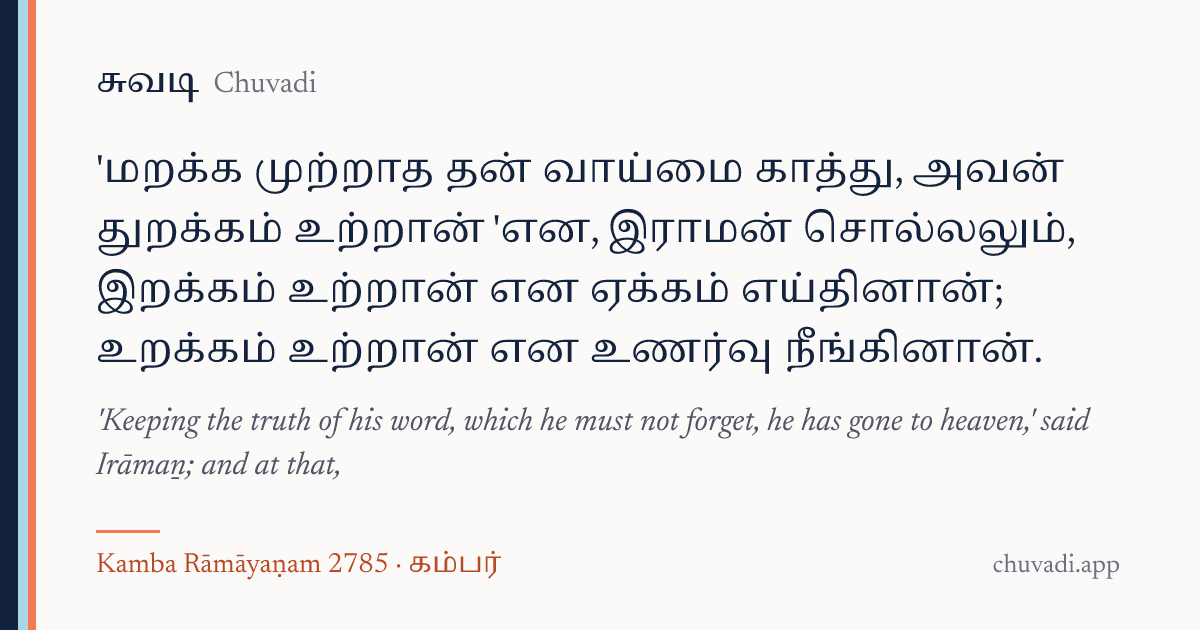
அவன் மறக்க முற்றாத தன் வாய்மை காத்து துறக்கம் உற்றான் - தயரதன் மறக்கக் கூடாததான தமக்குரிய சத்தியத்தைப் பாதுகாத்துச் சுவர்க்கம் அடைந்தார்; என இராமன் சொல்லலும் - என்று இராமன் கூறியதும்; இறக்கம் உற்றான் என ஏக்கம் எய்தினான் - தயரதன் மரணமடைந்தான் எனப் பெரிய ஏமாற்றம் அடைந்து; உறக்கம் உற்றான் என உணர்வு நீங்கினான் - தூக்கத்தில் ஆழ்ந்தவன் போல அறிவு நீங்கப் பெற்றார்.
தயரதன் இறந்ததைக் காரணத்தோடு இராமன் கூறியதும் சடாயு பெருந் துன்பமுற்று அறிவுணர்வு சோர்ந்தார் என்பதாம். தயரதன் வாய்மை காத்து அதனால் உயிர் துறந்தார் என்பதை 'மெய் விடக் கருதாது விண் ஏறினான்' எனச் சடாயு பின்னர்க் கூறுவதாலும் (2717) வாலி வதைப் படலத்தில் வாலி தயரதனை 'வாய்மையும் மரபும் காத்து மன்னுயிர் துறந்த வள்ளல்' (4018) எனக் கூறுவதாலும் தயரதன் வாய்மை காத்த நிலை நன்கு புலனாகும். ஏக்கம் - ஏமாற்றம். தயரதன் சடாயுவிடம் முன்னர் நீ உடல் நான் ஆவி! (2712) என்று கூறியதை நினைவிற் கொள்வதால் சடாயுவுக்கு ஏற்பட்ட ஏமாற்றத்தை இது குறிக்கும்.
உறக்கம் - சாவு எனலுமாம். பின்வரும் பாடல் இதைக் காட்டும் (2709).
ஆங்கிலம் · English translationAI
Translation
- 'Keeping the truth of his word, which he must not forget,
- he has gone to heaven,' said Irāmaṉ; and at that,
- as though he himself had died, he was overcome with grief;
- as though he had fallen asleep, he lost his senses.
What the poem says
Irāmaṉ tells Caṭāyu that Tacarataṉ has died, having kept his promise to the end. The old bird is so stricken that he faints, as if he too had died or sunk into sleep.
Tacarataṉ died because he would not break the word he had given Kaikēyi, which forced him to send Irāmaṉ into exile. The commentary notes that Tacarataṉ had once told Caṭāyu, 'you are the body and I the life', which makes the blow all the harder.