



கம்பராமாயணம் 2789 · ஆரணிய 4.23
பாடல் · The poem
Tap a word to see its gloss in the commentary and where else it occurs.
பொருள் · Meaning in Tamil
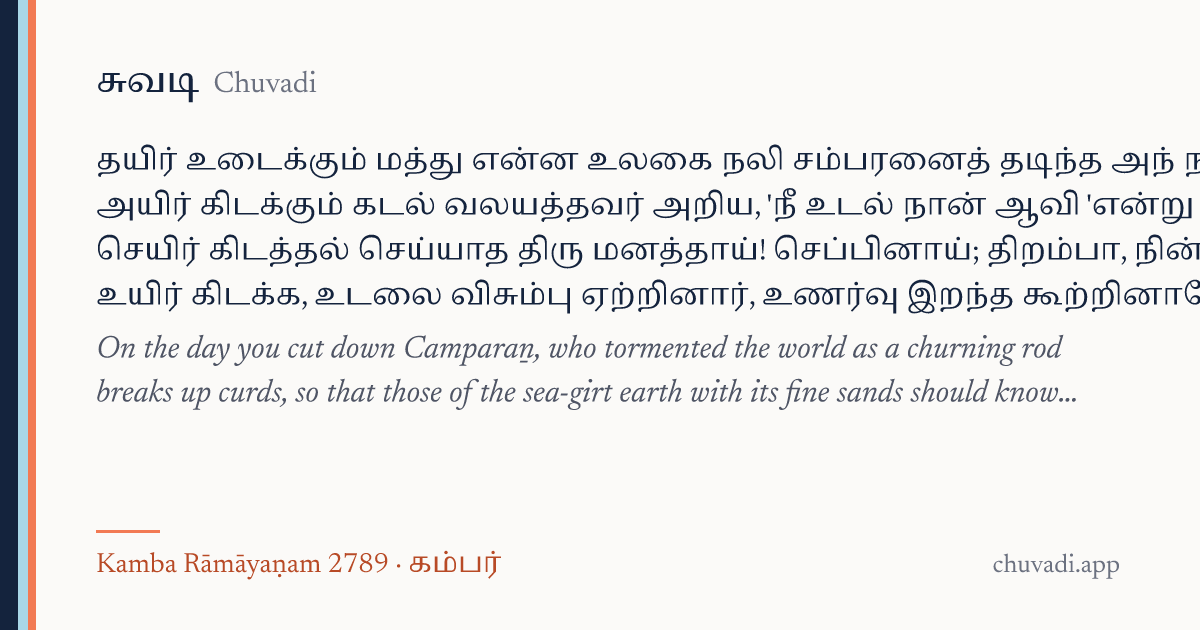
செயிர் கிடத்தல் செய்யாத திரு மனத்தாய் - குற்றம் சிறிதும் தங்காத அழகிய மனத்தை உடையவனே; தயிர் உடைக்கும் மத்து என்ன - தயிர்க் கட்டியை உடைத்துச் சிதறச் செய்யும் மத்துப் போல; உலகை நலி சம்பரனைத் தடிந்த அந்நாள் - உலக உயிர்களை வருத்திய சம்பராசுரனை வெட்டி வீழ்த்திய அன்று; அயிர் கிடக்கும் கடல் வலயத்தவர் அறிய - நுண் மணல் படிந்து கிடக்கும் கடல் சூழ்ந்த உலகினர் அறியுமாறு; நீ உடல் நான் ஆவி என்று செப்பினாய் - நீ உடல் என்றும் நான் உயிர் என்றும் கூறினாய்; நின் சொல் திறம்பா - உன்னுடைய அச்சொற்கள் மாறுபடா; உயிர் கிடக்க உடலை விசும்பு ஏற்றினார் - (ஆயினும்) உயிர் இம்மண்ணில் இருக்க உடம்பை விண்ணிற்குக் கொண்டு போனார்; உணர்வு இறந்த கூற்றினார் - அறிவில்லாத யமன்; ஏ - ஈற்றசை.
சம்பரனை அழித்த செய்தி, பாலகாண்டத்தில் விசுவாமித்திரன் புகழுரையில் 'சம்பரனைக் குலத்தோடும் தொலைத்து நீ கொண்டு அன்று அளித்த அரசு அன்றோ புரந்தரன் இன்று ஆள்கின்றது (822) என்ற தொடராக வெளிப்படும். அப்போது சடாயு தயரதனுக்கு உதவியதால் 'நீ உடல் நான் ஆவி' எனக் கூறினான். அதை எண்ணிய சடாயு, உலகில் யமன் உயிரைக் கொண்டு உடலை விட்டுச் செல்லும் இயல்புக்கு மாறாக உயிரை விட்டு விட்டு உடம்பாம் தயரதனைக் கொண்டு சென்றதை எண்ணி வருந்துகிறார். யமனின் அறிவற்ற செயலை எண்ணி உணர்வு இறந்த கூற்றினார் என்றார். கூற்றினார் என்பது யமனின் இழிந்த செயலை எண்ணி இகழ்ந்த எள்ளல் வெளிப்படும்.
உலகுக்குத் தயிரும் சம்பரனுக்கு மத்தும் உவமை. இதனைச் சிந்தாமணியுள் 'ஆயர் மத்தெறி தயிரினாயினார்' என்பதுடன் (சீவக. 421) ஒப்பிடலாம்.
'உணர்வு இறந்த கூற்றினார்' என்ற தொடரை உயிர் கிடக்க உடலை விசும்பு ஏற்றினார் என்ற தொடர் சமர்த்தித்து நின்றதால் இது தொடர்நிலைச் செய்யுட் குறியணி.
ஆங்கிலம் · English translationAI
Translation
- On the day you cut down Camparaṉ, who tormented the world as a churning rod breaks up curds,
- so that those of the sea-girt earth with its fine sands should know, 'You are the body and I the life,'
- you said, O you of the noble heart where no fault ever lodged! Your word does not fail;
- yet, leaving the life behind, they have carried the body to heaven, those senseless agents of Death!
What the poem says
Caṭāyu recalls the day when he helped Tacarataṉ kill the demon Camparaṉ, who churned the world like a rod breaking up curds. Then the king declared before all, 'You are the body and I am the life.' Death, in its folly, has done the reverse of what it always does: instead of taking the life and leaving the body, it has taken the body, Tacarataṉ, and left the life, Caṭāyu, behind.
The bitter name 'senseless Death' is justified by this very absurdity, the commentary notes.