



கம்பராமாயணம் 2790 · ஆரணிய 4.24
பாடல் · The poem
Tap a word to see its gloss in the commentary and where else it occurs.
பாட வேறுபாடு · Project Madurai reads
பொருள் · Meaning in Tamil
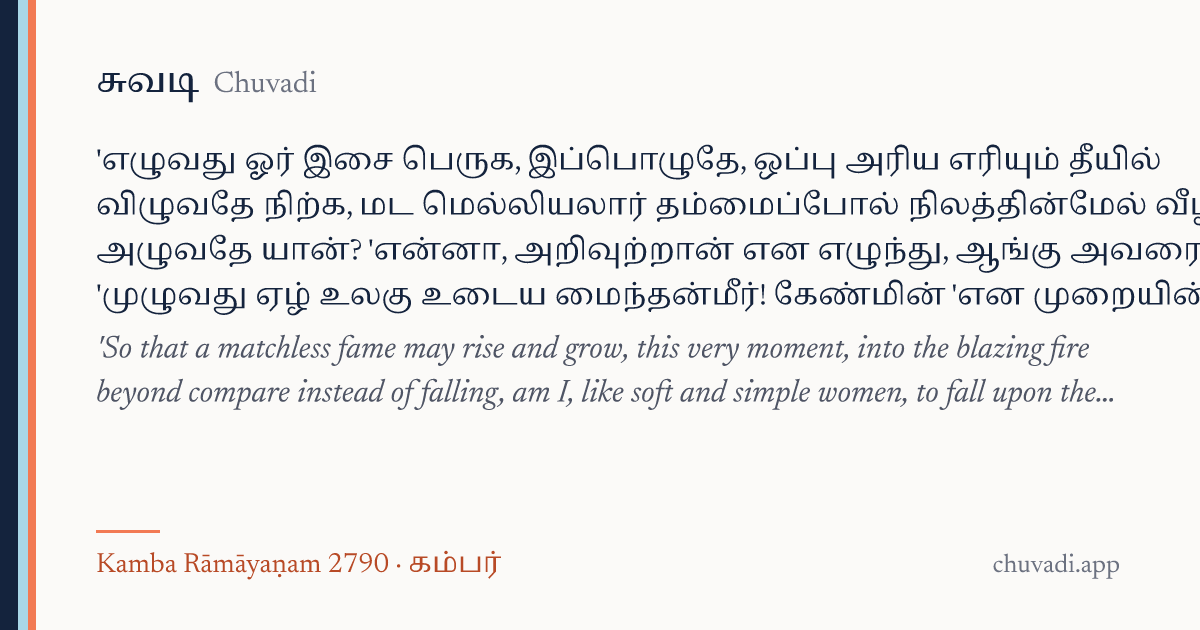
எழுவது ஓர் இசை பெருக - உண்டாகும் ஒப்பற்ற புகழ் வளர்ந்தோங்கும்படி,; இப்பொழுதே ஒப்பு அரிய எரியும் தீயில் விழுவதே நிற்க - தயரதன் மறைவைக் கேட்ட இக்கணமே ஒப்புரைக்க முடியாத சுடர் விட்டு எரியும் நெருப்பில் வீழ்ந்து மடியும் செயலைச் செய்யாமல் விட்டு; மடமெல்லியலார் தம்மைப் போல் - பேதமைப் பெண்களைப் போல; நிலத்தின்மேல் வீழ்ந்து யான் அழுவதே என்னா - பூமியின் மேல் விழுந்து அழுவது தகுமோ? என்று; அறிவுற்றான் என எழுந்து - மூர்ச்சை தெளிந்து அறிவு பெற்றவன் போல் எழுந்திருந்து; ஆங்கு அவரை நோக்கி - அப்பொழுது இராமலக்குவரைப் பார்த்து; முழுவது ஏழ் உலகு உடைய மைந்தன்மீர் கேண்மின் - ஏழு உலகங்கள் முழுதையும் உடைமைப் பொருளாகக் கொண்ட மக்களே! கேளுங்கள்; என முறையின் சொல்வான் - என்று முறையாகச் சடாயு கூறுவார்.
கணவன் இறந்த காலத்தில் பெண் நிலத்தின் மேல் வீழ்ந்து அழுதல் இயற்கை. அவ்வாறு அழுவதை விட்டு எரியில் புகும் உயர்ந்த மகளிர் போலத் தீயில் புகுவதே தான் செய்யத்தகுந்தது எனச் சடாயு கருதினார். 'பசைந்தாரின் தீர்தலின் தீப்புகுதல் நன்று' என்ற நான்மணிக் கடிகையின் (நான்மணி 13) கருத்து இங்குக் கருதத்தக்கது. 'முழுவதேழுலகுடையான் மைந்தன்மீர்' எனக் கொண்டு எழு உலகங்களையும் தன்னடிக் கீழ்க்கொண்ட தயரதனின் மக்களே என்றும் பொருள் உரைப்பர். இனிச் சடாயு எரியில் வீழ உறுதி கொண்டு அழுவதை விட்டு இராமலக்குவரிடம் தம் வரலாறு கூறலானார்.
தந்தையின் நண்பன் என்று சடாயு கூறியதும் அவரைப் பூரித்துப் பின் அவர் பெயர், குலம் வினவிய இராமனிடம் சடாயு கூறினார் என வான்மீகம் கூறும்.
ஆங்கிலம் · English translationAI
Translation
- 'So that a matchless fame may rise and grow, this very moment, into the blazing fire beyond compare
- instead of falling, am I, like soft and simple women, to fall upon the ground
- and weep?' So saying, he rose as one who had come to his senses, and looking at them there,
- said, 'Sons who own the whole of the seven worlds, listen,' and spoke in due order.
What the poem says
Caṭāyu checks his grief. Should he lie on the ground weeping, like a helpless widow, when the honourable course is to throw himself at once into a blazing fire, as a faithful wife would, and win lasting fame? Resolved to die, he stands up and asks the brothers to hear him as he tells them his story.
The commentary cites an old didactic verse: better to enter the fire than to be parted from those one loves.