



கம்பராமாயணம் 2798 · ஆரணிய 4.32
பாடல் · The poem
Tap a word to see its gloss in the commentary and where else it occurs.
பாட வேறுபாடு · Project Madurai reads
பொருள் · Meaning in Tamil
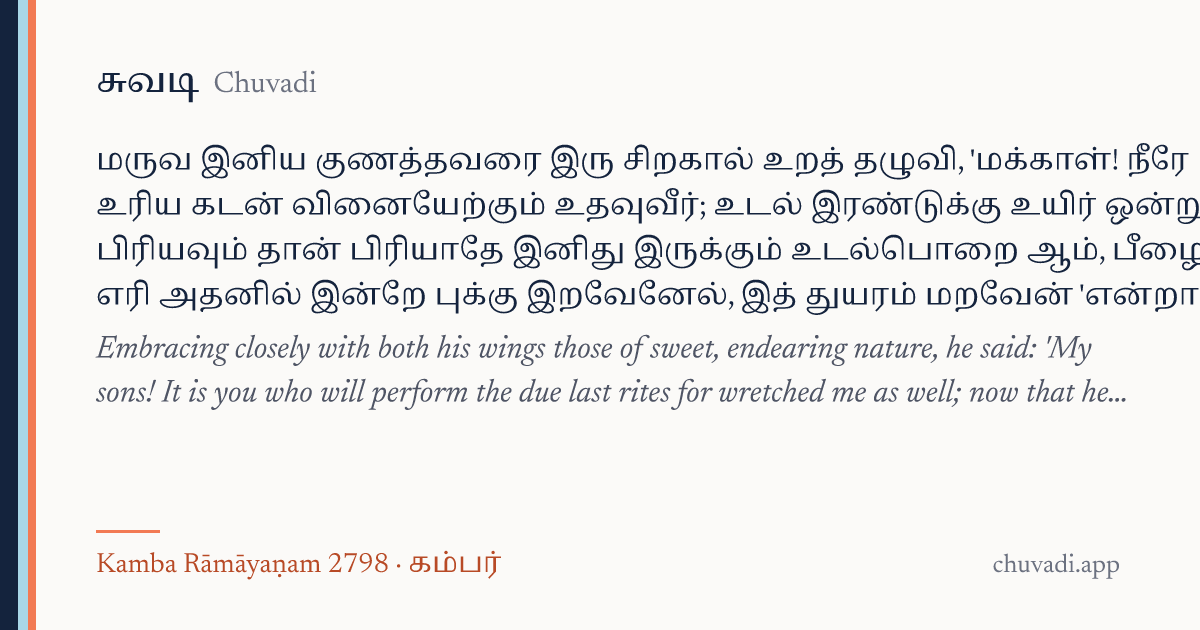
(பின் அச்சடாயு) மருவ இனிய குணத்தவரை இரு சிறகால் உறத் தழுவி - தழுவுவதற்கு ஏற்ற இனிய பண்புடைய இராமலக்குவரைத் தம் இரண்டு சிறகுகளாலும் நன்றாக அணைத்துக் கொண்டு; மக்காள் நீரே உரிய கடன் வினையேற்கும் உதவுவீர் - என் மக்களே! நீங்கள் தீ வினை செய்த எனக்கும் உரிய இறுதிக் கடன்களைச் செய்தருள்வீர்; உடல் இரண்டுக்கும் உயிர் ஒன்று ஆனான் பிரியவும் - இரண்டு உடல்களுக்கும் ஒருயிர் ஆன என் நண்பன் தயரதன் உயிர் பிரியவும்; தான் பிரியாதே இனிது இருக்கும் உடல் பொறை ஆம் - நான் மட்டும் இறவாமல் இனிதாக வாழ்ந்திருக்கும் என் உடலைச் சுமப்பது பெரும் சுமை ஆகும். பீழை பாராது - துன்பம் தருவதைப் பார்க்காமல்; எரி அதனில் இன்றே புக்கு இறவேனேல் - தீயில் இப்போதே இறங்கிச் சாகாவிட்டால், இத்துயரம் மறவேன் என்றான் - இந்தத் துன்பத்தை மறக்க மாட்டேன் என்றார்.
குஞ்சுகளைத் தாய்ப் பறவை சிறகால் தழுவுவது இயற்கை. அதனால் இராமலக்குவரைச் சடாயு தம் சிறகுக்கரங்களால் அணைத்துக் கொண்டார். நண்பரின் மக்களைத் தம் மக்கள் எனக் கொள்வதால் 'மக்காள்' எனச் சடாயு இராமலக்குவரை விளித்தார். 'வினையேன்' என்றது தம் நண்பனாம் தயரதனை இழந்த கொடிய வினையைக் குறித்தது. இது நண்பன் இறந்தது கேட்டுத் தாம் இறவாதிருக்கும் கொடிய நிலையையும் குறிக்கும். பிரிவின் கண் பீழை தருவது ஒன்றில் (குறள் 839) என்ற கருத்தின்படி 'பீழை பாராது' என்றார். எரியில் புக நினைந்தது சடாயுவின் பெரும் நட்புக் கிழமையை உணர்த்தும்.
வான்மீகத்தில் சடாயு இராமலக்குவரிடம் சீதைக்குக் காவலாக இருப்பேன் என அவர்கள் அவரை வணங்கிச் சீதைக்குக் காவலாக இருக்க வேண்டி பஞ்சவடி சேர்ந்தார் என உளது.
ஆங்கிலம் · English translationAI
Translation
- Embracing closely with both his wings those of sweet, endearing nature, he said: 'My sons! It is you
- who will perform the due last rites for wretched me as well; now that he who was one life to our two bodies
- has departed, this body that stays on in comfort without departing is a burden; heedless of the pain,
- unless I enter the fire this very day and die, I shall never forget this sorrow.'
What the poem says
Caṭāyu folds the two brothers in his wings, as a mother bird gathers her young, and calls them his sons. Since his friend, who shared one life with him in two bodies, is gone, his own body is now a burden. He asks them to perform his funeral rites, for he means to enter the fire that very day; nothing else will end his grief.
In the Sanskrit telling there is no such resolve: Caṭāyu simply offers to guard Cītai, and goes with them to Pañcavaṭi.