



கம்பராமாயணம் 2797 · ஆரணிய 4.31
பாடல் · The poem
Tap a word to see its gloss in the commentary and where else it occurs.
பாட வேறுபாடு · Project Madurai reads
பொருள் · Meaning in Tamil
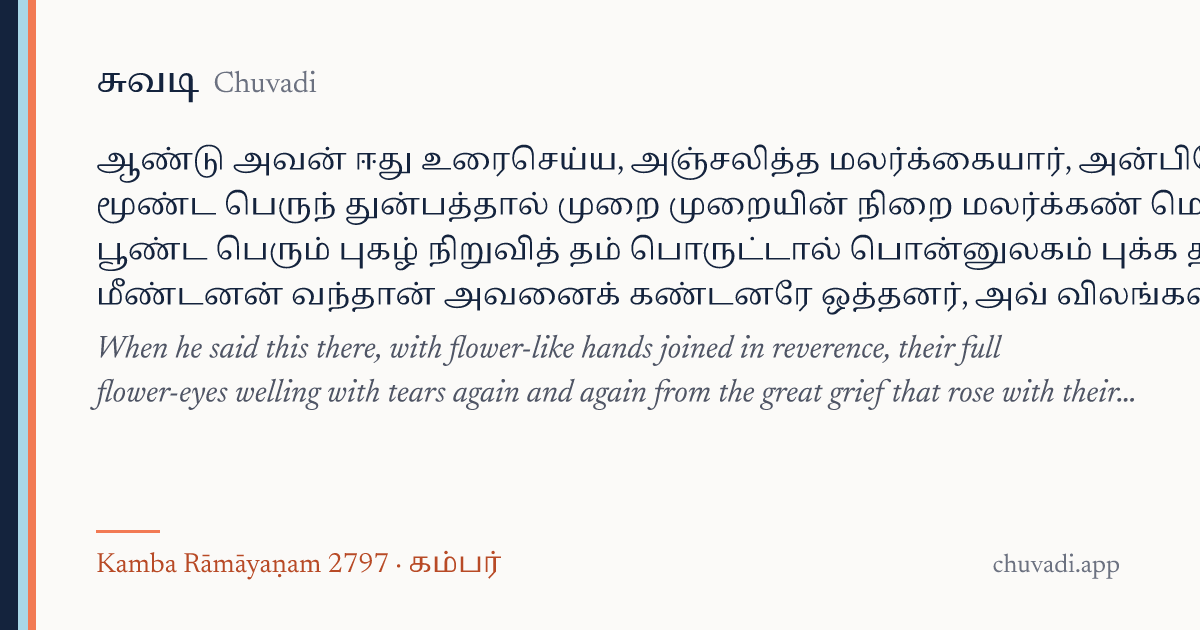
ஆண்டு அவன் ஈது உரை செய்ய - அப்போது சடாயு இவ்வரலாற்றைக் கூற; அவ் விலங்கல் தோளார் - மலைபோல் பெருமையும் வலிமையும் வாய்ந்த தோள்களை உடைய அவ்விராமலக்குவர்: அஞ்சலித்த மலர்க்கையார் - தாமரை மலர் போன்ற கூப்பிய கைகளை உடையவராய்; அன்பினோடும் மூண்ட பெருந்துன்பத்தால் - அன்போடும் கூடி மிகுந்த பெரிய வருத்தத்தால்; முறை முறையின் நிறை மலர்க்கண் மொய்த்த நீரார் - அடிக்கடி மேன் மேலும் தாமரை மலர்போலும் தம் கண்கள் நிறைந்த நீரையுடையவராய், பூண்ட பெரும் புகழ் நிறுவி - தான் தாங்கிய பெரிய புகழை உலகில் என்றும் நிலைநாட்டி; தம் பொருட்டால் பொன்னுலகம் புக்க தாதை - மைந்தராகிய தாம் வனம் சென்ற காரணத்தால் துறக்கம் சென்ற தம் தந்தையாம் தயரதன்; மீண்டனன் வந்தான் அவனைக் கண்டனரே ஒத்தனர் - மீண்டு தம்மைக் காண வந்தவனைப் பார்த்தவரையே போலானார்.
ஆண்டவன் எனக் கொண்டு பெருமை மிக்க பண்புகளை ஆண்ட சடாயு என்பாரும் உளர். இராமன் சடாயுவைத் தன் பெரிய தந்தை போல் பாராட்டும் பண்பு இதில் வெளிப்படும். தந்தை இறந்துவிட்டார் என இராமலக்குவர் எண்ணிய போது துக்கக் கண்ணீரும் தயரதனே மீண்டு வந்தது போல் சடாயுவைக் கண்டதால் மகிழ்ச்சிக் கண்ணீரும் மாறி மாறி நிறைந்தன.
முறை முறையே - தாரை தாரையாக எனக் கொள்வோருமுளர். வாய்மை காக்க இராமலக்குவரைக் காட்டிற்கு அனுப்பிவிட்டு அம்மைந்தரைப் பிரிந்த துக்கம் தாளாமல் துறக்கம் சென்றதை எண்ணிப் 'பூண்ட பெரும் புகழ் நிறுவி, தம் பொருட்டால் பொன்னுலகம் புக்க தாதை' எனத் தயரதனைக் குறித்தனர். கண்டனரே - ஏகாரம் தேற்றப் பொருளில் வந்தது.
ஆங்கிலம் · English translationAI
Translation
- When he said this there, with flower-like hands joined in reverence,
- their full flower-eyes welling with tears again and again from the great grief that rose with their love,
- it was as if the father who, having set up the great fame he bore, had gone to the golden world for their sake
- had come back again and they were seeing him: so were they, those heroes with mountain-like shoulders.
What the poem says
As Caṭāyu tells his story, the brothers stand with joined palms, their eyes filling with tears again and again. It is as though their father Tacarataṉ, who died of grief over their exile after keeping his word, had returned and stood before them.
Their tears are both of sorrow for their father and of joy at finding in Caṭāyu someone who seems to bring him back. From now on Irāmaṉ honours the bird as he would an elder of his own family.