



கம்பராமாயணம் 2806 · ஆரணிய 4.40
பாடல் · The poem
Tap a word to see its gloss in the commentary and where else it occurs.
பொருள் · Meaning in Tamil
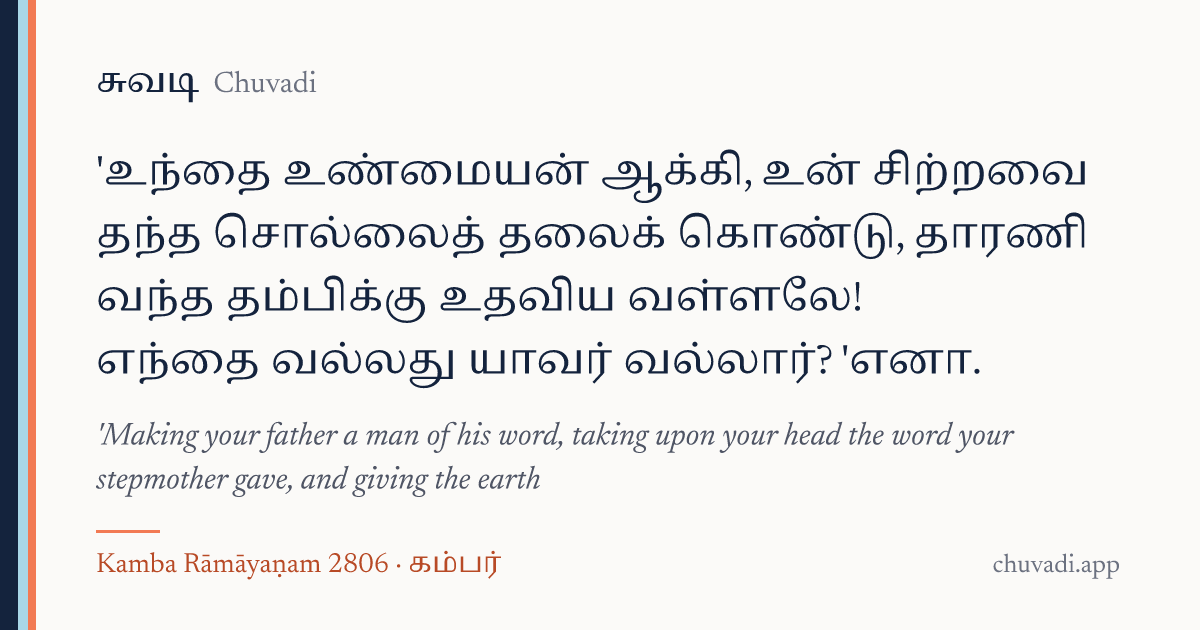
(அது கேட்ட சடாயு இராமனைப் பார்த்து) உந்தை உண்மையன் ஆக்கி - உன் தந்தையாம் தயரதனை வாய்மையாளன் என்று நிலை நாட்டி; உன் சிற்றவை தந்த சொல்லைத் தலைக் கொண்டு - உன் சிறிய தாயாம் கைகேயி கட்டளையைச் சிரமேல் கொண்டு, தாரணி வந்த தம்பிக்கு உதவிய வள்ளலே - உனக்கு உன் தந்தை அளித்த அரசுச் செல்வத்தை உன்பின் பிறந்த தம்பியாம் பரதனுக்குக் கொடுத்த கொடையிற் சிறந்தவனே!; எந்தை வல்லது யாவர் வல்லார் எனா - என் தந்தை போன்ற நீ செய்ததைப் போல யார் உலகில் செய்யத் திறமை உள்ளவர் ஆவார்? (ஒருவருமில்லை) எனக்கூறி,
தந்தை தயரதனை வாய்மையாளன் என நிலைநாட்டித் தனக்குக் கிடைத்த அரசைத் தன் தம்பிக்கு ஈந்த வள்ளன்மை கருதி 'வள்ளலே!' என விளிக்கின்றார் சடாயு. மேலும் உன் போலும் தன்னலமின்றிச் செயல் புரிபவர் யார் என வியக்கின்றார். 'எந்தை' என்பதை அண்மை விளியாகக் கொண்டும் பொருள் கொள்வர். தாரணி - தரணி என்பதன் நீட்டல் விகாரம். எந்தை என்பது என் தந்தை என்பதன் மரூஉச் சொல்.
சடாயுவை வைணவ மரபில் பெரியவுடையார் என ஏற்றிக் கூறுவதற்கேற்ப அவர் தம் உள்ளம் இதில் வெளிப்படுகிறது.
ஆங்கிலம் · English translationAI
Translation
- 'Making your father a man of his word, taking upon your head
- the word your stepmother gave, and giving the earth
- that came to you to your brother, O generous one!
- What you, my father, have achieved, who else could achieve?' he said,
What the poem says
Having heard the story, Caṭāyu turns to Irāmaṉ in admiration. By going into exile he kept his father's word true, obeyed his stepmother's command, and gave away to his younger brother the kingdom that was his own. No one else could match such selflessness.
Caṭāyu even calls Irāmaṉ 'my father', a mark of the reverence that led the Vaiṣṇava tradition to honour Caṭāyu himself as a great devotee.