



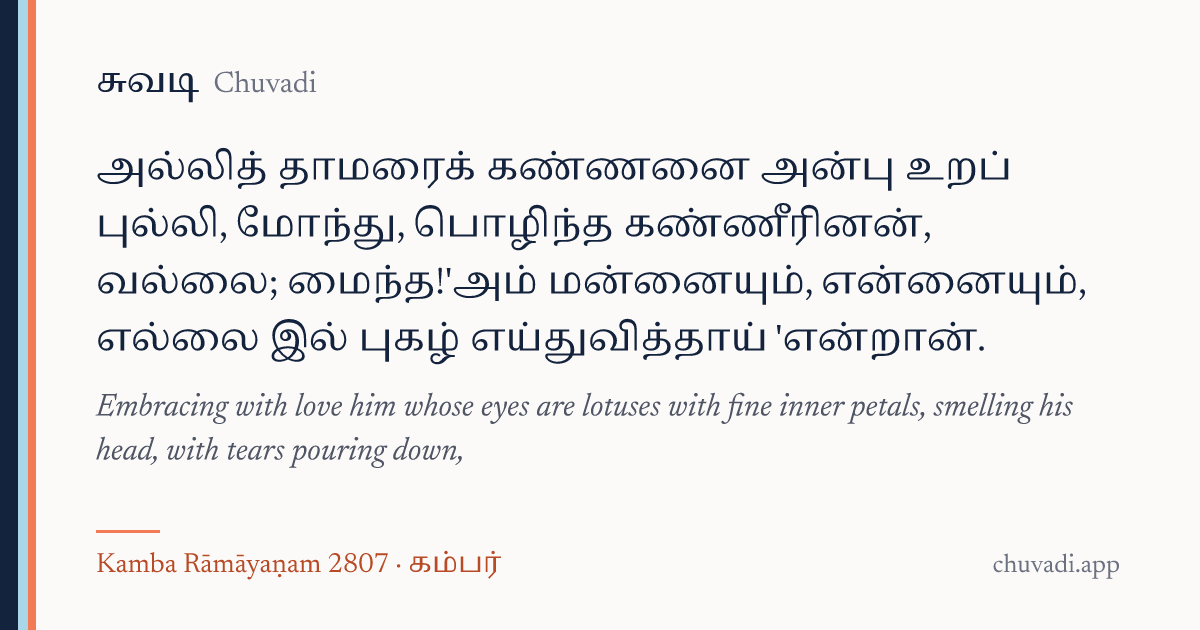
கம்பராமாயணம் 2807 · ஆரணிய 4.41
பாடல் · The poem
Tap a word to see its gloss in the commentary and where else it occurs.
பொருள் · Meaning in Tamil
(மேலும் சடாயு) அல்லித் தாமரைக் கண்ணனை - அகவிதழ்களையுடைய தாமரை மலர் போன்ற கண்களையுடைய இராமனை, அன்பு உறப்புல்லி மோந்து பொழிந்த கண்ணீரினன் - அன்பு மிக அணைத்து உச்சி மோந்து சொரிந்த கண்ணீரை உடையவனாய்; மைந்த அம்மன்னனையும் என்னையும் எல்லை இல் புகழ் எய்துவித்தாய் - மகனே! தயரதச் சக்கரவர்த்தியையும் என்னையும் அளவில்லாத பெரிய புகழ் அடையச் செய்தாய்; வல்லை என்றான் - நீயே வல்லவன் என்று கூறினார்.
அல்லி - அகவிதழ். புல்லிமோந்து அன்பைத் தெரிவித்தல். பெற்றோர் குழந்தையிடம் புரியும் முறை. இதனைச் சடாயு இராமனைத் தன் குழந்தையாகவே கருதியதால் செய்தார். மோத்தல் - மூக்கால் முகர்தல். 'மோப்பக் குழையும் அனிச்சம்' (குறள். 90) என்றார் வள்ளுவரும். சடாயு உயிர் நீங்கும் போது இராமலக்குவரை அருகில் அழைத்துத் 'தாக்கி அரக்கன் மகுடத் தலை தகர்த்த மூக்கினால் உச்சி முறை முறையே மோக்கின்றான்' (3204) என வருதல் காண்க. 'மன்னையும் என்னையும்' என்றதால் தயரதனையும் தம்மையும் ஒருவராகவே கருதியதும் அவன் புகழ் தம் புகழாகக் கொண்டதும் வெளிப்படும்.
வல்லை - சாமர்த்தியம் உடையவன் எனவும் கொள்வர். 'வல்லை உன் கட்டுரைகள்' என்றார் ஆண்டாளும் (திருப்பாவை 15). விரைவிலே என்றும் இச்சொல்லிற்குப் பொருள் கொள்வர்.
தாமரை கண்களுக்கும் அகவிதழ் இமைகளுக்கும் உவமை.
ஆங்கிலம் · English translationAI
Translation
- Embracing with love him whose eyes are lotuses with fine inner petals,
- smelling his head, with tears pouring down,
- he said, 'You are mighty indeed, my son! That king and me
- you have brought to fame without limit.'
What the poem says
Caṭāyu embraces Irāmaṉ with tears and smells the crown of his head, the gesture of a parent toward a beloved child. By his selfless deeds, he says, Irāmaṉ has won boundless glory both for his father and for Caṭāyu himself, since the bird counts himself one with his friend.
The commentary points ahead to Caṭāyu's death, when he will again caress the brothers' heads with the beak that has smashed the demon king's crowns.