



கம்பராமாயணம் 2838 · ஆரணிய 5.24
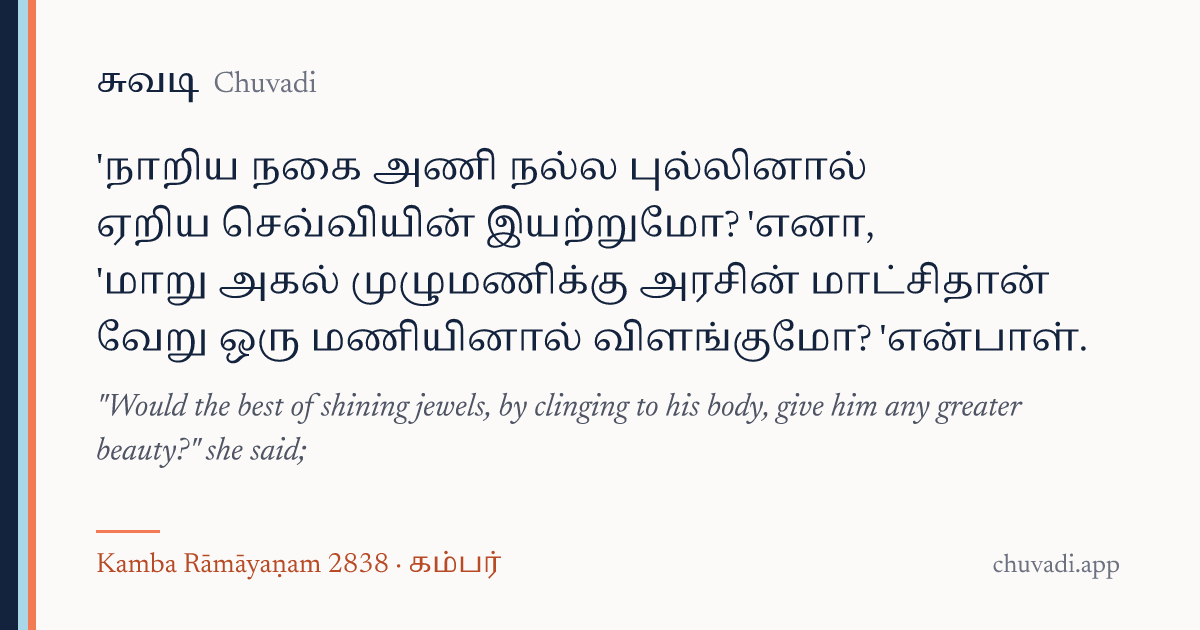
பாடல் · The poem
Tap a word to see its gloss in the commentary and where else it occurs.
பொருள் · Meaning in Tamil
நாறிய நகை அணி நல்ல புல்லினால் - விளங்கிய ஒளிமிக்க அணிகலன்களில் சிறந்தவை இவன் திருமேனியைத் தழுவினால், ஏறிய செவ்வியின் இயற்றுமோ எனா - மிக்க அழகினால் விளங்கல் கூடுமோ? என்று சொல்லி; மாறு அகல் முழுமணிக்கு அரசின் மாட்சிதான் - ஒப்பிலா நல்லிலக்கணம் பொருந்திய சிறந்த இரத்தினங்களுக்கெல்லாம் அரசாக விளங்கும் கெளத்துவ மணியின் சிறப்பு; வேறு ஒரு மணியினால் விளங்குமோ என்பாள் - மற்றோர் இரத்தினத்தைத் தன் மேல் பூணுவதால் ஒளி விடுமோ (விடாதன்றே) என்று எண்ணினாள்.
நாறுதல் - விளங்குதல், தோன்றுதல். முழுமணிக்கு அரசு - கெளத்துவ மணி. ஊர்தேடு படலத்தில் 'மணிகள் எத்துணை பெரியவும் மால் திரு மார்பின் அணியும் காசினுக்கும் அகன்றன உள' (4842) என்ற கருத்துடன் ஒப்பிடலாம். இயல்பில் சிறந்து மிகுந்த அழகுடன் விளங்கும் முழுமணிக்கு அழகு செய்யவே ஒரு மணி வேண்டாம். அதுபோல் அழகினுக்கெல்லாம் தலைவனாம் இராமனுக்கு வேறு அணிகலம் வேண்டுவதில்லை என்பதாம். 'முற்ற முழு மணிப் பூணுக்குப் பூண் வேண்டார் யாரே அழகுக் கழகுசெய்வார்' (நீதி நெறி. 12) என்பதும் ஒப்பிடத்தக்கது. இயற்றுமோ - ஓகாரம் எதிர்மறைப் பொருள் குறித்தது. இதில் எடுத்துக் காட்டுவமை அணி உளது.
ஆங்கிலம் · English translationAI
Translation
- "Would the best of shining jewels, by clinging to his body,
- give him any greater beauty?" she said;
- "would the glory of the matchless king of perfect gems
- shine any brighter for another gem?" she thought.
What the poem says
Cūrppaṇakai goes on marvelling at Irāmaṉ. He wears no ornaments in the forest, and she decides that he needs none: jewels could add nothing to a body already so beautiful. The "king of gems" is the Kaustubha jewel worn by Viṣṇu, which shines by itself and is not made brighter by setting another gem on it.
The figure is an example drawn in parallel: as the perfect gem needs no ornament, so Irāmaṉ, the lord of all beauty, needs none.